



Emodin

$46.99
Kimerachems Emodin for sale. Intended for controlled laboratory and analytical research only.
Review available formats, product specifications and batch documentation before ordering. Not for human consumption.
1000 in stock
Kimerachems Emodin for sale. This material is supplied exclusively for controlled laboratory and analytical research. Review available formats, technical specifications and batch documentation before ordering. Not for human consumption.
Emodin
Emodin (1,3,8-trihydroxy-6-methylanthraquinone) is a naturally occurring anthraquinone derivative frequently isolated from higher plant species such as Rheum palmatum (rhubarb) and Polygonum cuspidatum (Japanese knotweed). Characterized by its highly stable planar aromatic backbone, Emodin is widely studied in preclinical research settings for its distinct redox properties and multi-target signaling pathways. Within controlled in vitro configurations, this small molecule serves as an essential reference agent for interrogating oxidative stress responses, inflammatory cascades, enzyme inhibition dynamics, and mitochondrial bioenergetics.
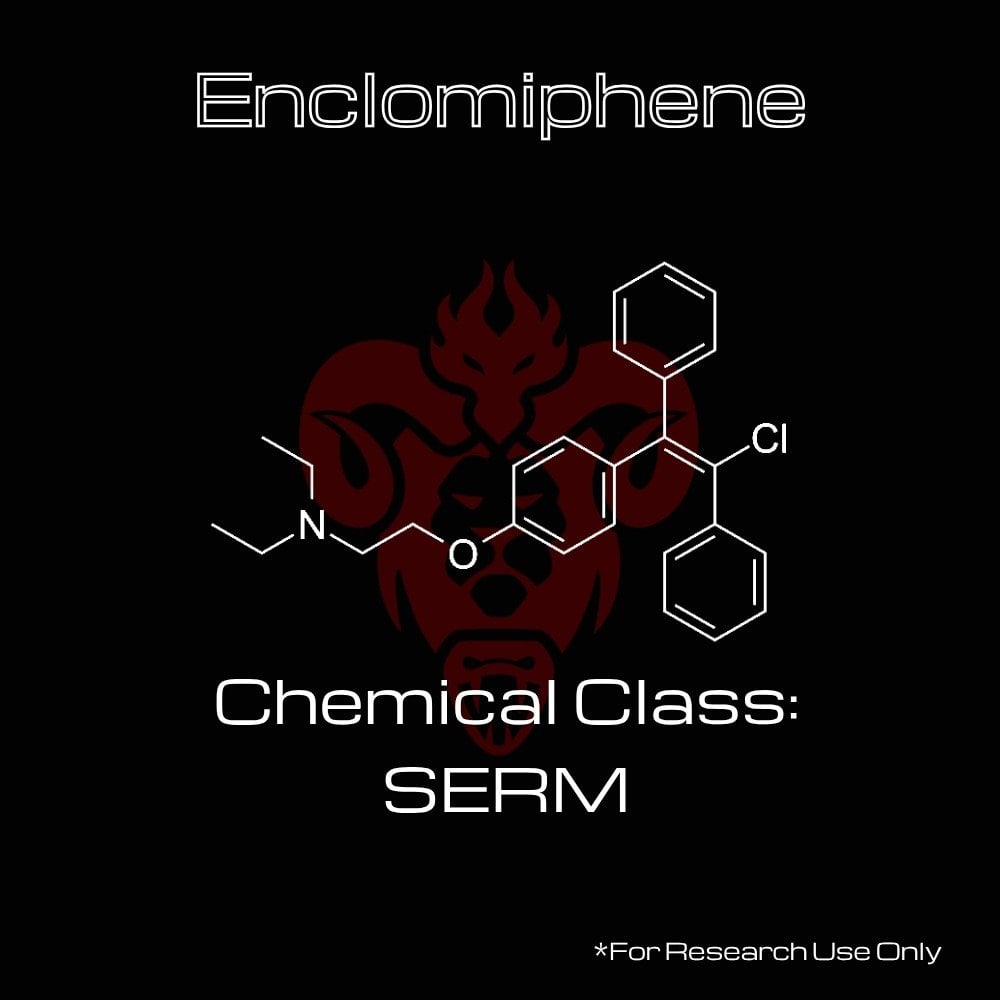
Structural Elements to Observe: The diagram above details the tricyclic core that defines Emodin’s chemical behavior. The anthraquinone ring features three strategically positioned hydroxyl groups (-OH) at positions 1, 3, and 8, balanced by a single methyl group (-CH₃) at position 6. This exact spatial arrangement creates a highly functional, conjugated system that investigators leverage to study electron transport interceptions, competitive kinase bindings, and membrane-permeation kinetics.
Technical Specifications
| Property | Specification |
| Product Name | Emodin |
| CAS Number | 518-82-1 |
| IUPAC Name | 1,3,8-trihydroxy-6-methylanthracene-9,10-dione |
| Molecular Formula | C₁₅H₁₀O₅ |
| Molecular Weight | 270.24 g/mol |
| Chemical Class | Substituted Anthraquinone |
| Physical Appearance | Orange to reddish-orange crystalline powder |
| Melting Point | 255–257 °C |
| Solubility Baseline | Poorly soluble in water; highly soluble in DMSO and Ethanol |
Research Applications & Mechanisms of Interest
Because of its planar structure and electronic configurations, Emodin exhibits a highly versatile profile when interacting with isolated proteins, liposomes, and cellular matrices.
Primary fields of investigative laboratory research include:
-
Oxidative Stress & ROS Dynamics: Tracking how the anthraquinone skeleton participates in cellular redox cycles. Researchers utilize Emodin to modulate reactive oxygen species (ROS) pathways, evaluating cell survival boundaries under induced oxidative duress.
-
Inflammatory Cascade Signaling: Investigating downstream changes in cellular transcription factors and cytokine networks. Emodin is frequently studied for its role in blocking specific nuclear translocation mechanisms and modulating cellular inflammation markers.
-
Kinase & Phosphatase Modulation: Deploying the compound in cell-free screening models to measure competitive or allosteric enzyme inhibition, specifically charting its influence on tyrosine kinases and protective phosphatase systems.
-
Mitochondrial Respiration Modeling: Evaluating the molecule’s interaction with the inner mitochondrial membrane to observe shifts in proton gradient management, mitochondrial membrane potential, and overall ATP synthesis efficiencies.
-
Comparative Anthraquinone Analysis: Serving as an organic structural benchmark alongside related compounds (such as aloin, rhein, or chrysophanol) to construct comprehensive structure-activity relationship (SAR) models.
Storage & Handling Guidelines
To safeguard the compound from premature photo-oxidation and maintain rigorous, multi-batch reproducibility:
-
Thermal Logistics: Store the dry crystalline powder inside a cool, dry, and climate-controlled environment.
-
Photolytic Barriers: Aromatic anthraquinones are highly sensitive to UV-induced degradation. Keep the material sealed tightly within original opaque or high-grade amber laboratory containment vessels.
-
Solvent Reconstitution: Because Emodin is virtually insoluble in purely aqueous buffer lines, initial master assays should be completely dissolved using anhydrous organic solvents like DMSO or pure ethanol before dilution into working media.
-
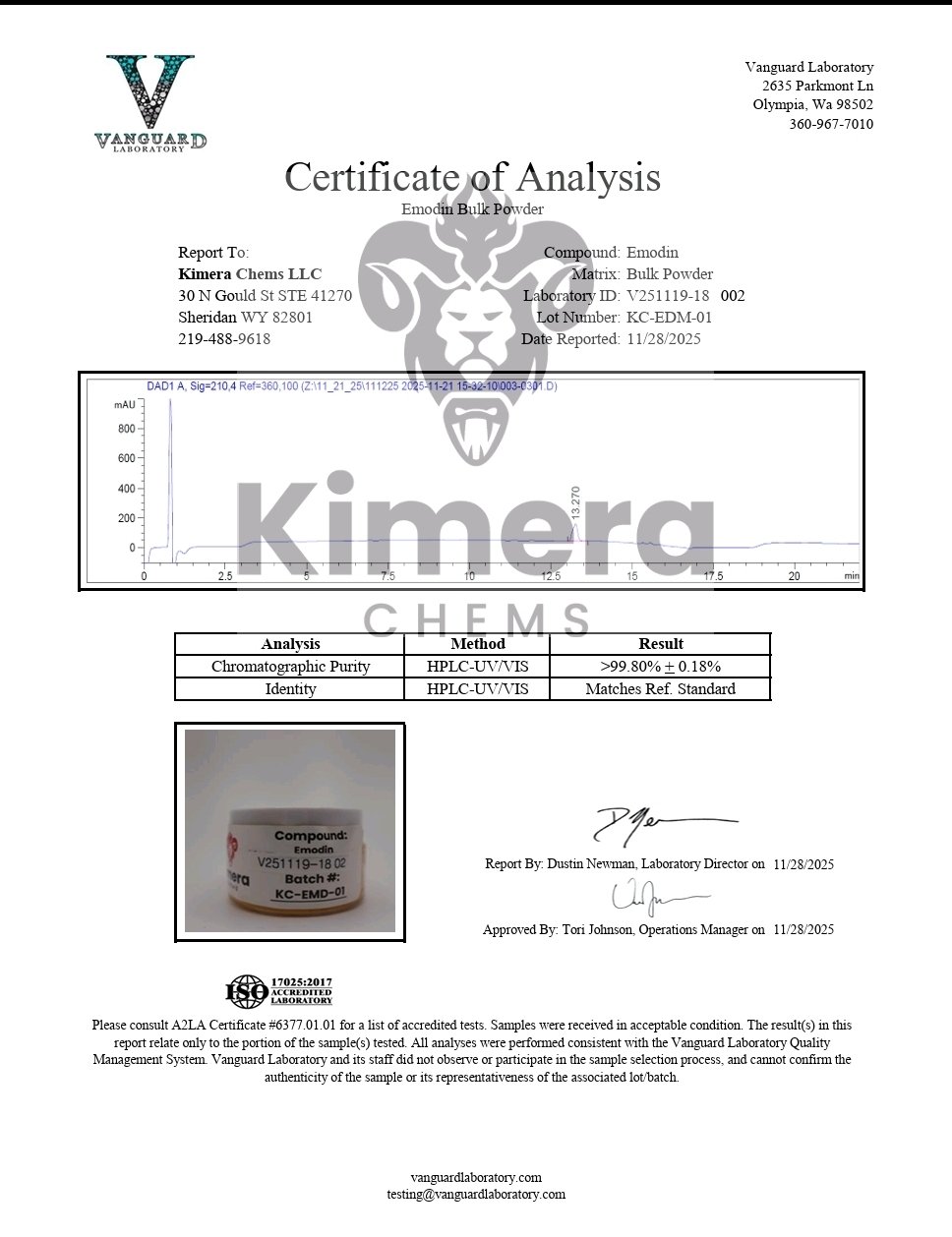
Analytical Auditing Standards: Kimera Chems subjects every production batch to a strict dual-method verification protocol combining High-Performance Liquid Chromatography (HPLC) and CHN elemental analysis to independently audit mass distribution, chemical uniformity, and structural purity boundaries of ≥98%.
Research Use Only Disclaimer: This product is engineered, isolated, and distributed strictly as a Research Use Only (RUO) laboratory reference chemical intended exclusively for non-clinical analytical and scientific investigation. It is not a dietary supplement, drug formulation, cosmetic base, or food additive, and is strictly prohibited for human or veterinary consumption. Kimera Chems supplies these premium chemical reference materials solely to accredited academic institutions, professional research centers, and qualified investigators.
| CAS Number | 518-82-1 |
| Other Names | 1,3,8-Trihydroxy-6-methylanthracene-9,10-dione |
| Molecular Formula | C15H10O5 |
| Molecular Weight | 270.24 |
Product FAQs
What is Emodin supplied for?
This material is supplied strictly for controlled, non-clinical laboratory and analytical research. It is not intended for human or animal consumption.
Which formats are available for Emodin?
Available formats or options are shown in the product selector above. Current availability can change.
Where can I review product documentation?
Where available, batch documentation can be reviewed in the Certificate of Analysis library before ordering.
Research Documentation Guides
Review these supporting analytical guides before evaluating this material for a controlled research protocol:
Related products


Analytical Reagents


Analytical Reagents
Analytical Reagents


Analytical Reagents

Analytical Reagents
Analytical Reagents

Analytical Reagents
Analytical Reagents