
Kimerachems Analytical reagents for sale
Analytical reagents for sale from Kimerachems include documented small-molecule compounds, research materials and reference compounds intended for controlled analytical, biochemical and preclinical laboratory workflows.
This catalog is designed to help researchers move beyond selecting a material by name alone. Each material should be evaluated according to the intended method, required evidence level, available format and supporting batch documentation. Products in this category are supplied exclusively for laboratory research and are not intended for human or veterinary consumption.

Analytical Reagents


Analytical Reagents

Analytical Reagents


Analytical Reagents
Analytical Reagents


Analytical Reagents
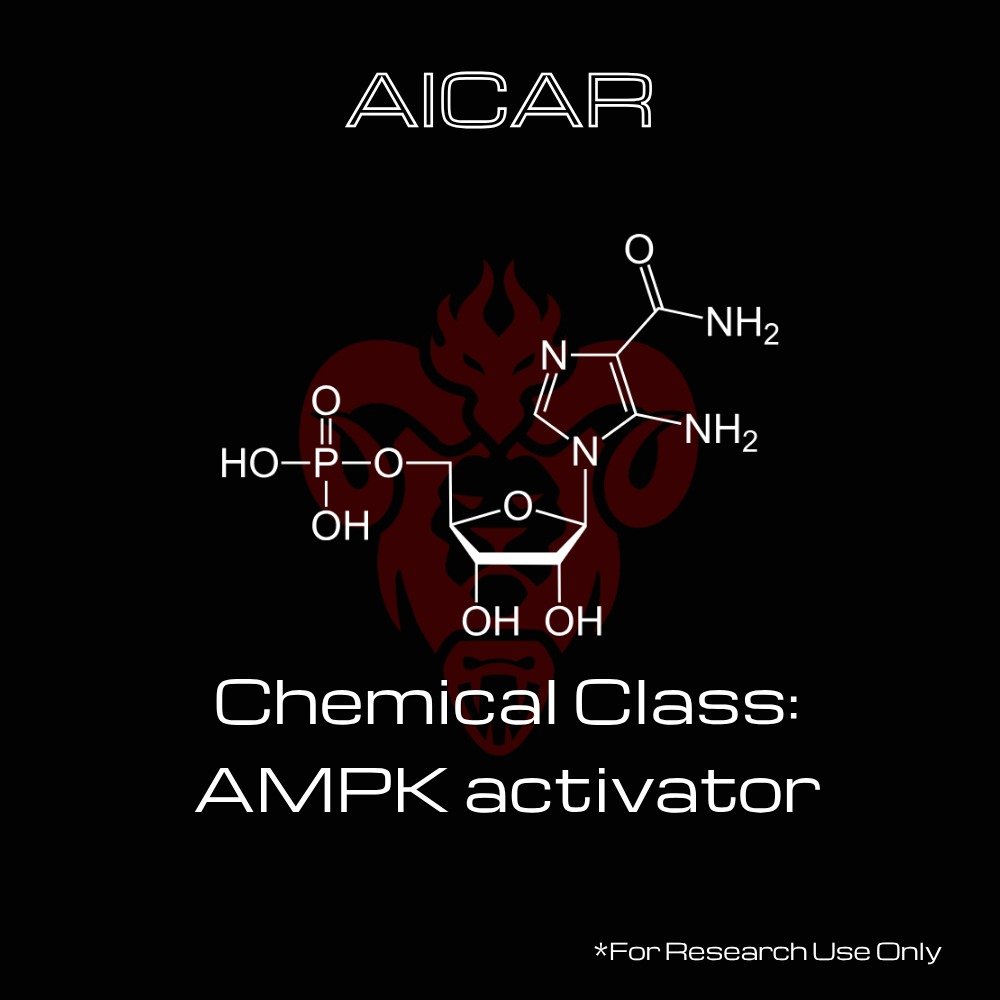
Analytical Reagents


Analytical Reagents
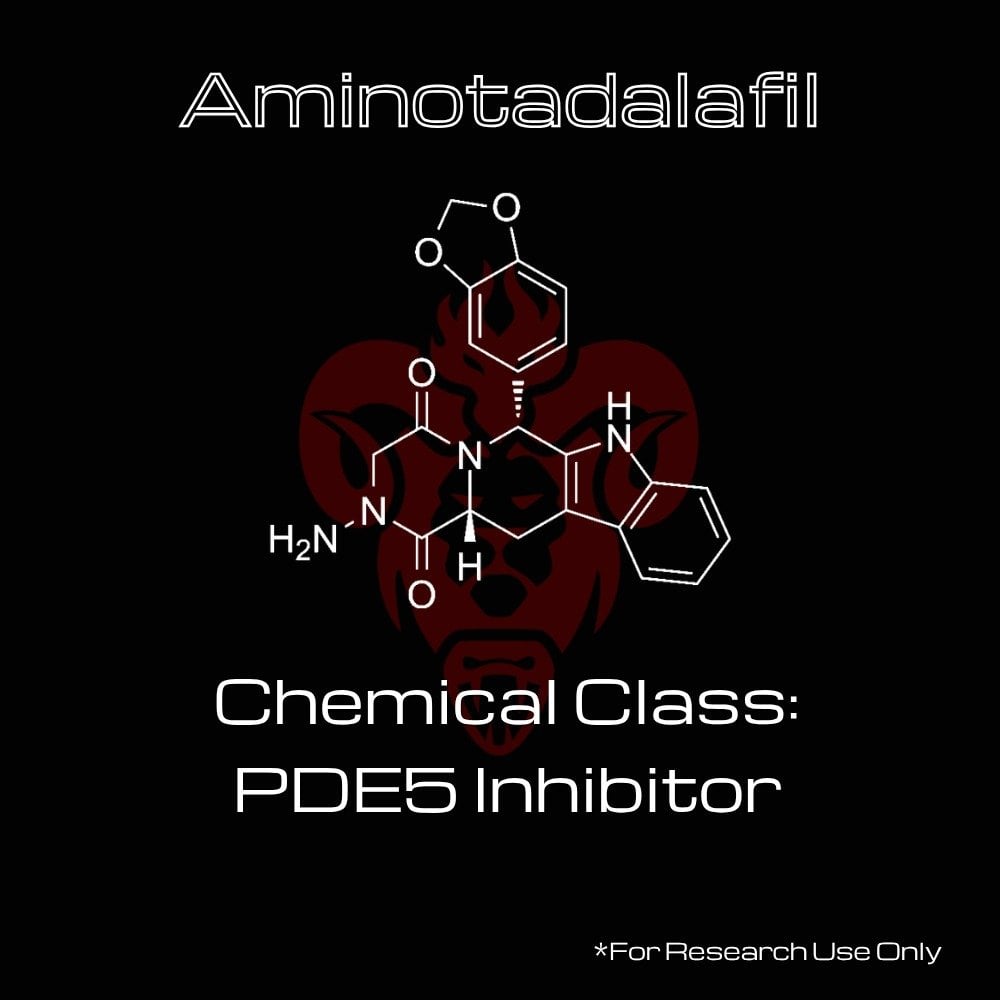

Analytical Reagents


Analytical Reagents

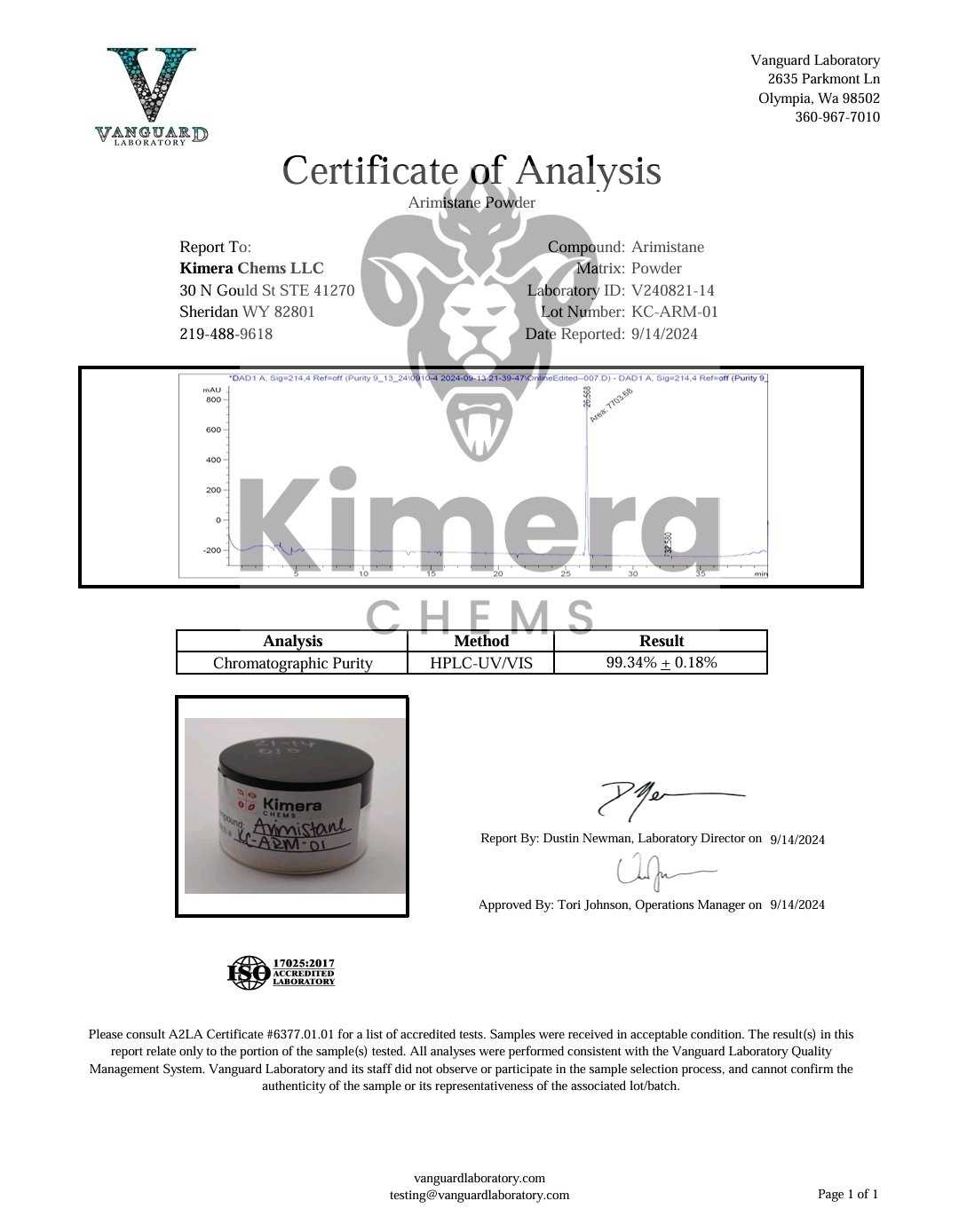
Analytical Reagents

Analytical Reagents


Analytical Reagents

Analytical Reagents


Analytical Reagents

Analytical Reagents
Analytical Reagents


Analytical Reagents

Analytical Reagents

Analytical Reagents

Analytical Reagents


Analytical Reagents


Analytical Reagents


Analytical Reagents

Analytical Reagents
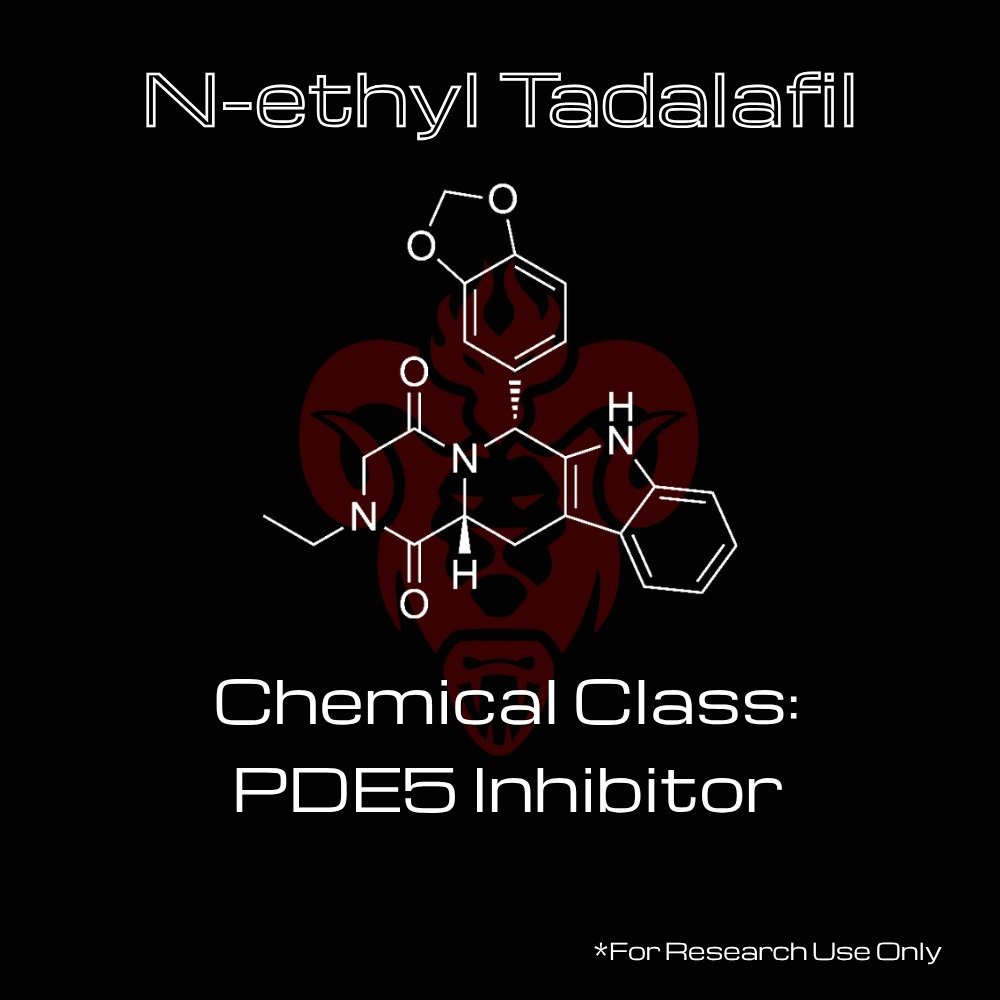
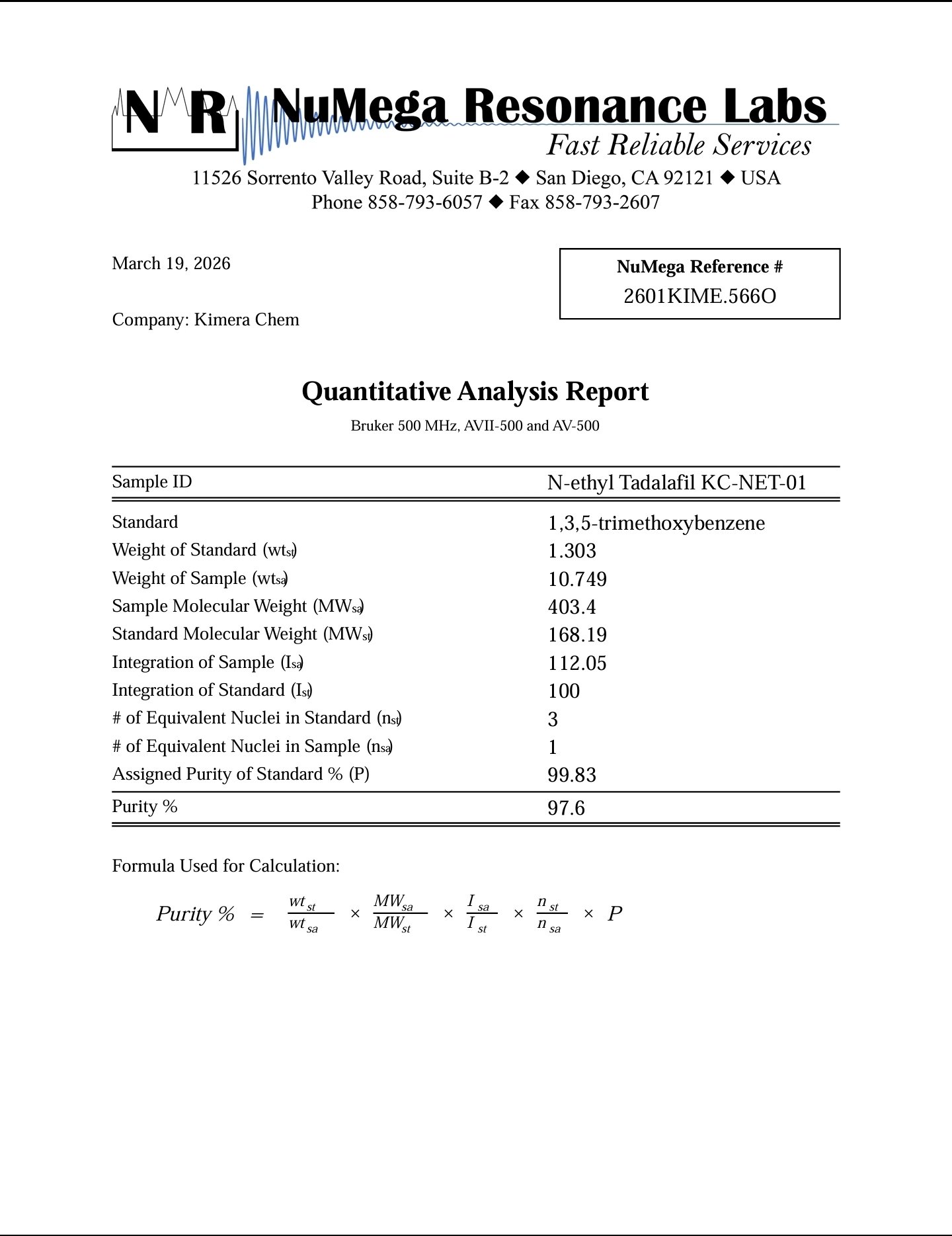
Analytical Reagents
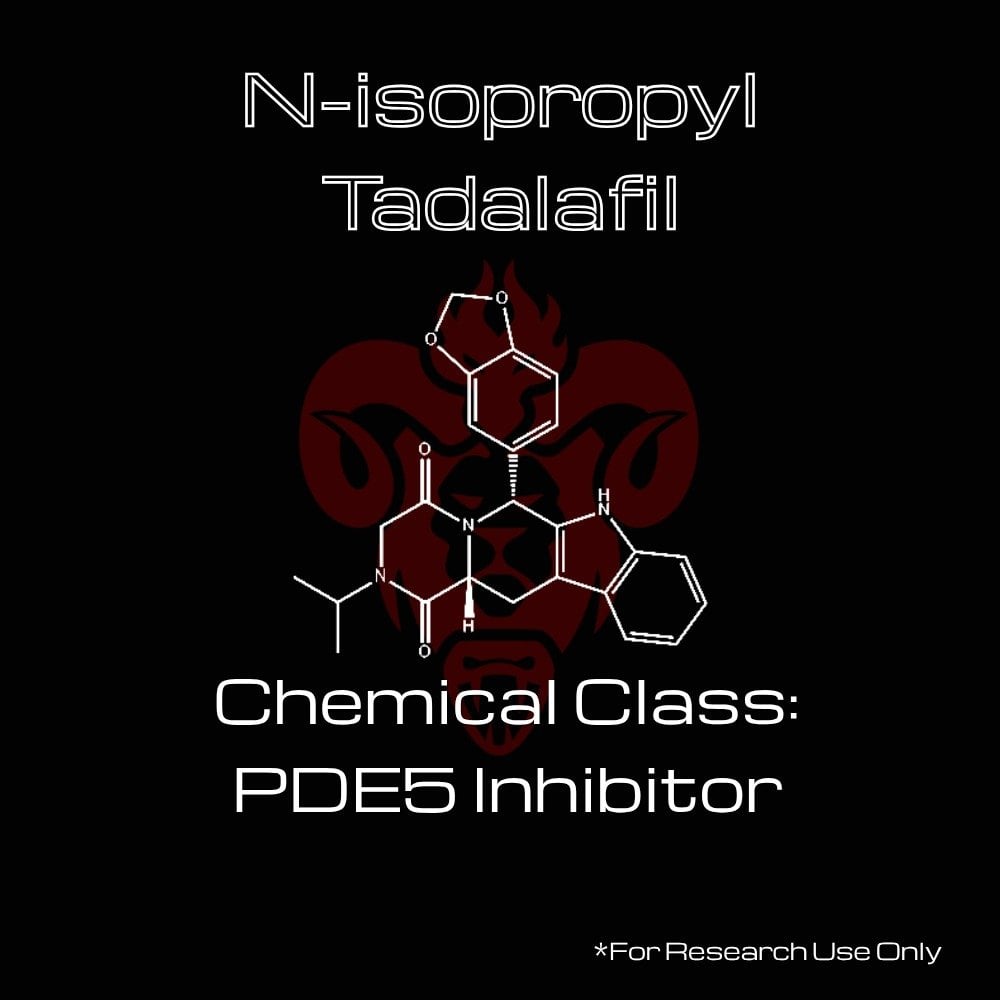
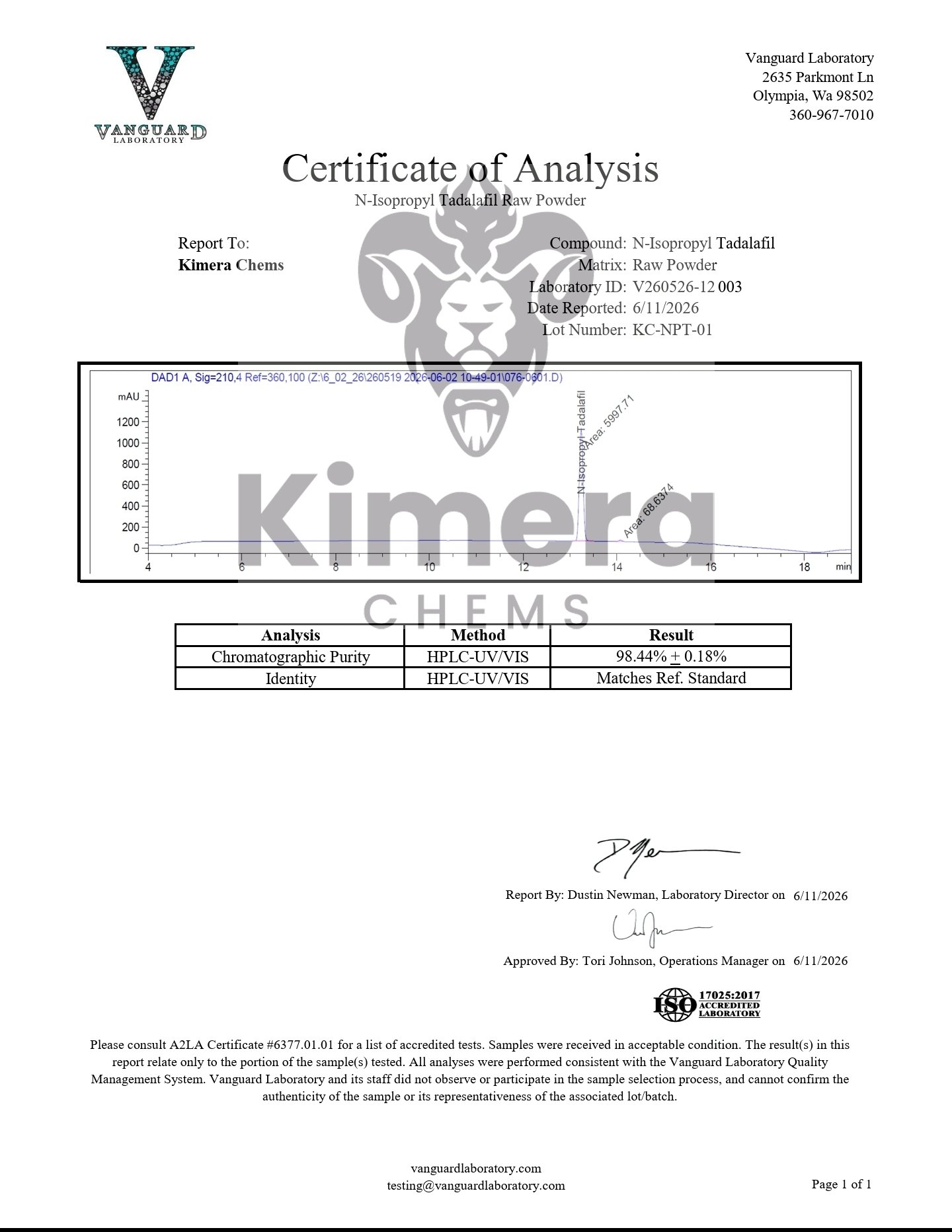
Analytical Reagents

Analytical Reagents


Analytical Reagents


Analytical Reagents


Analytical Reagents


Analytical Reagents


Analytical Reagents

Analytical Reagents


Analytical Reagents


Analytical Reagents


Analytical Reagents


Analytical Reagents


Analytical Reagents
Browse Analytical Reagents and Research Compounds
Analytical reagents can serve different purposes within a laboratory workflow. A material may be used for exploratory compound evaluation, chromatographic method development, mass spectrometry research, comparative analysis, receptor studies, or preparation of laboratory controls.
The Kimerachems catalog includes materials such as
Available quantities, concentrations and physical formats differ by product. Researchers should review the relevant product page and confirm that the listed material matches the requirements of the intended procedure before ordering.
Start With the Analytical Question
A reagent should be selected according to the question the laboratory needs to answer. Beginning with the method and evidence requirement helps prevent a common mistake: choosing a material based only on a familiar compound name or a single purity percentage.
Before selecting an analytical reagent, determine whether the planned work requires:
- Qualitative compound identification
- Chromatographic retention comparison
- Mass-spectrometry method development
- NMR comparison or structural investigation
- Impurity or degradation monitoring
- Exploratory biochemical research
- Instrument-response evaluation
- Quantitative calibration
The same material may not be equally suitable for every purpose. An exploratory research compound can be useful in a controlled investigation without meeting the traceability or characterization requirements expected of a certified reference material.
Research Reagent vs Analytical Reference Standard
The terms research reagent and analytical reference standard should not automatically be treated as interchangeable.
A research reagent may be appropriate for general laboratory investigation, comparative experiments or early method development. A reference standard usually requires a more clearly defined identity, assigned value, characterization history, uncertainty statement or traceability framework, depending on the intended use.
| Material consideration | Research reagent | Analytical reference standard |
|---|---|---|
| Primary purpose | Exploratory or controlled laboratory investigation | Method comparison, calibration or defined analytical measurement |
| Identity documentation | Product and batch-dependent | Normally supported by detailed characterization |
| Assigned content | May not be established for quantitative use | May include an assigned value under stated conditions |
| Traceability | Depends on available documentation | Typically requires stronger documented traceability |
| Suitability | Determined by the researcher and intended procedure | Determined by characterization, certification and method requirements |
Researchers requiring a calibration or certified-reference application should confirm that the selected material meets the applicable method, quality-system and traceability requirements. Learn more in Analytical Reference Standards Explained.
Evaluate Identity, Purity and Content Separately
A strong analytical review separates identity, chromatographic purity and quantitative content rather than reducing them to one number.
Identity
Identity testing evaluates whether the observed material is consistent with the expected compound. Evidence may include molecular mass, fragmentation data, NMR features, spectral characteristics or comparison with an appropriate reference.
Chromatographic purity
Chromatographic purity describes the relative detector response assigned to the principal peak under specified analytical conditions. The result depends on separation performance, detector response, wavelength, integration settings and reporting thresholds.
Assay or content
Assay evaluates the measured amount or concentration of a defined component. It is not automatically equivalent to HPLC area purity because the total material may also contain water, residual solvents, counterions or components that respond differently to the detector.
For a detailed comparison, read Research Compound Purity vs Identity and HPLC Purity Percentage Explained.
A Practical Evidence-Level Framework
Researchers can organize the available information into four evidence levels when evaluating a reagent.
Level 1: Product identification
Confirm the product name, listed synonyms, CAS number where applicable, molecular formula and physical format. Conflicting identifiers should be resolved before the material is incorporated into a protocol.
Level 2: Batch traceability
Confirm that the product, lot or batch number on the supporting report corresponds with the material being evaluated. A report for another batch should not automatically be treated as representative of the current material.
Level 3: Analytical evidence
Review the methods used to support identity, purity or content. Determine what each method establishes and whether complete chromatograms, spectra, integration tables or calculation details are available.
Level 4: Method suitability
Determine whether the available evidence is sufficient for the intended experiment. A material may be suitable for exploratory research but unsuitable for quantitative calibration, regulated testing or another application requiring formally assigned values.
How to Review a Certificate of Analysis
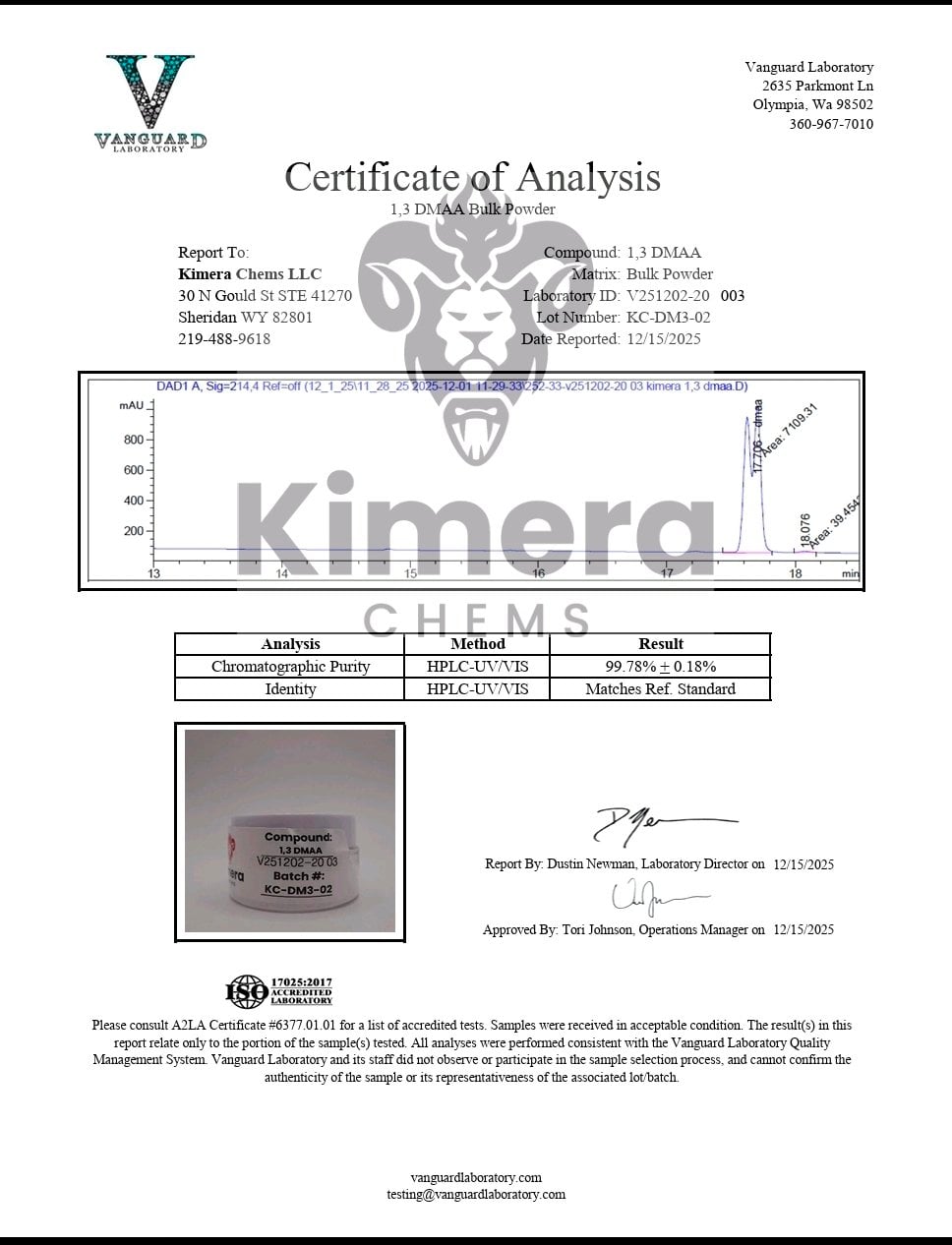
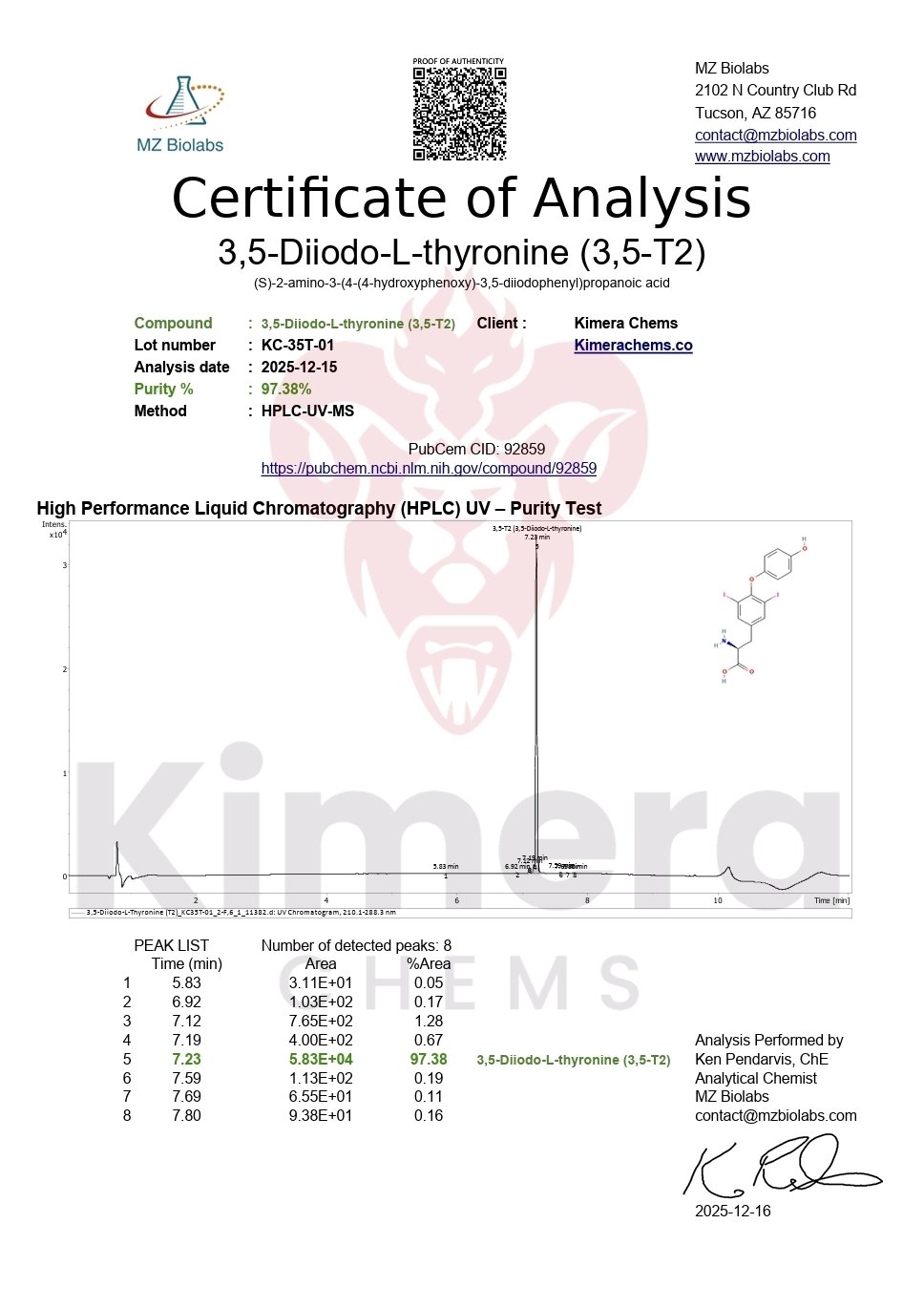
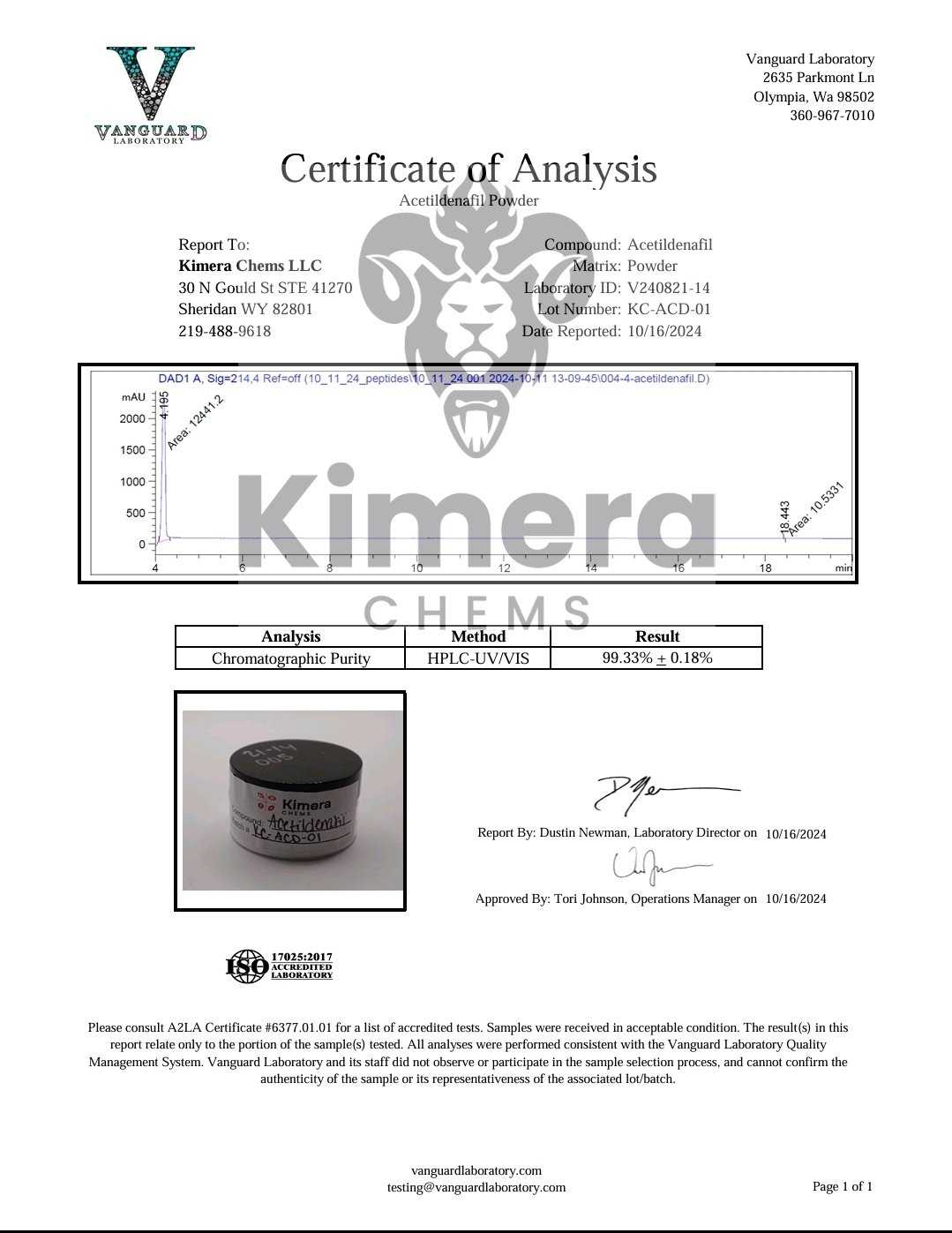
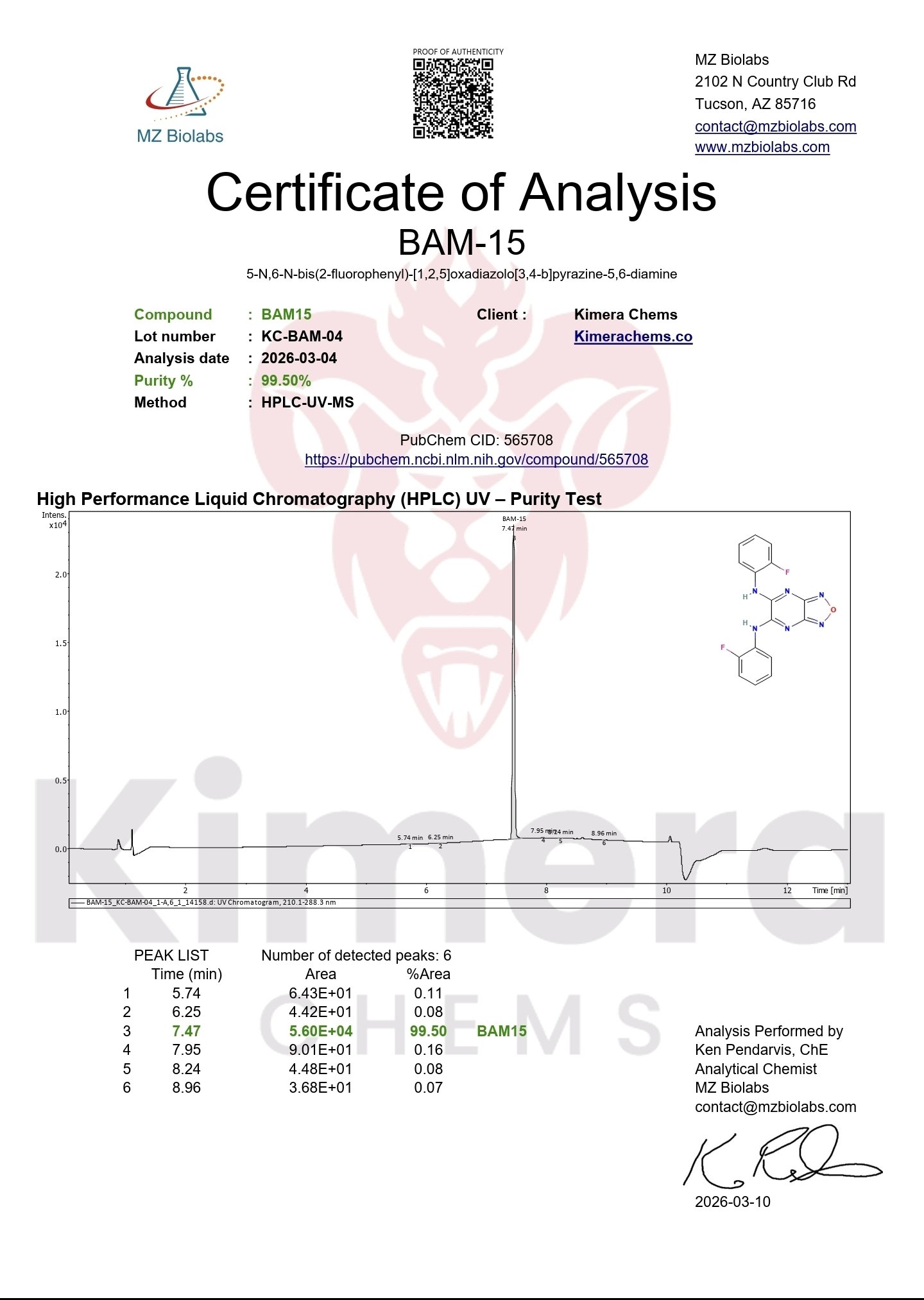
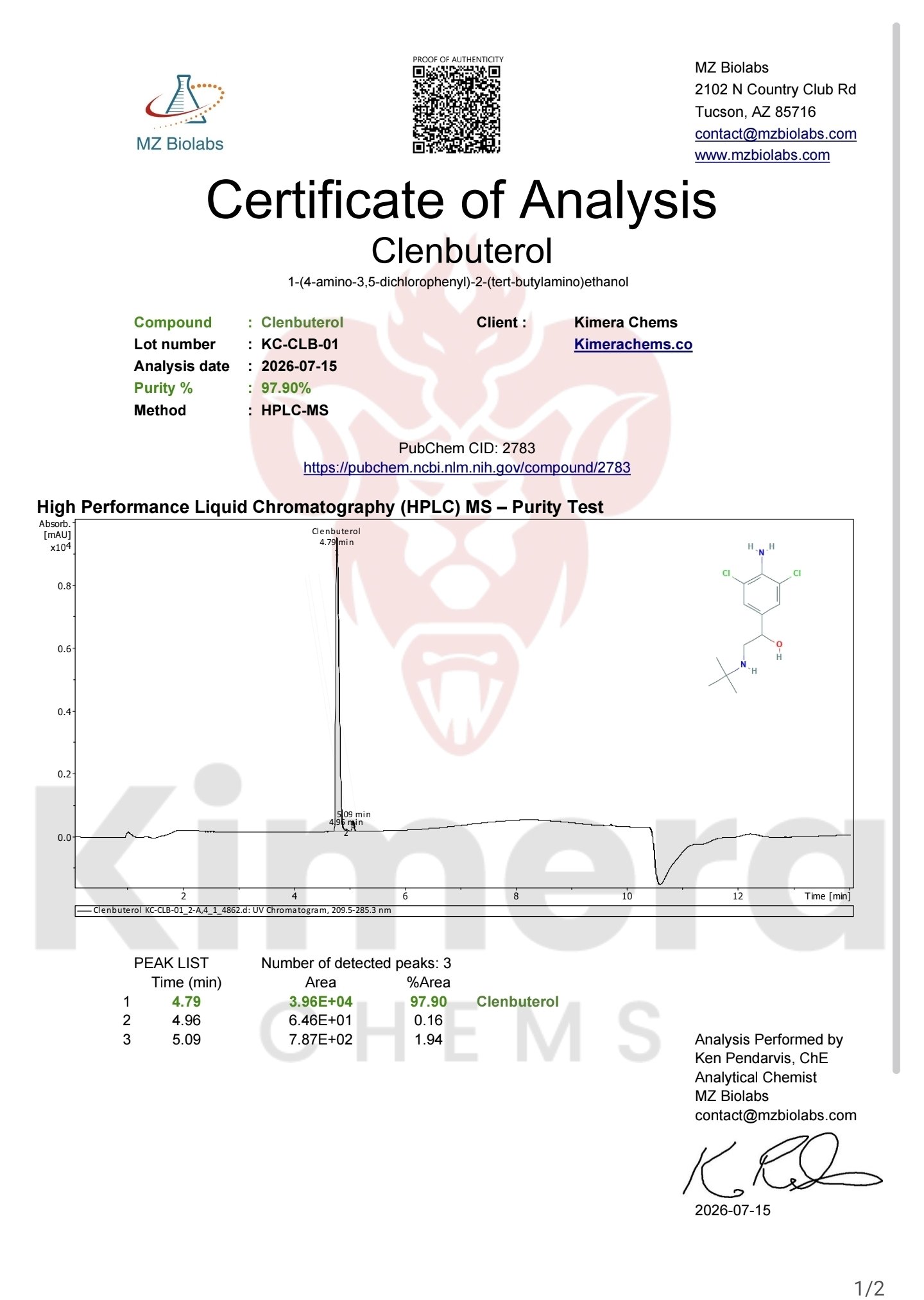
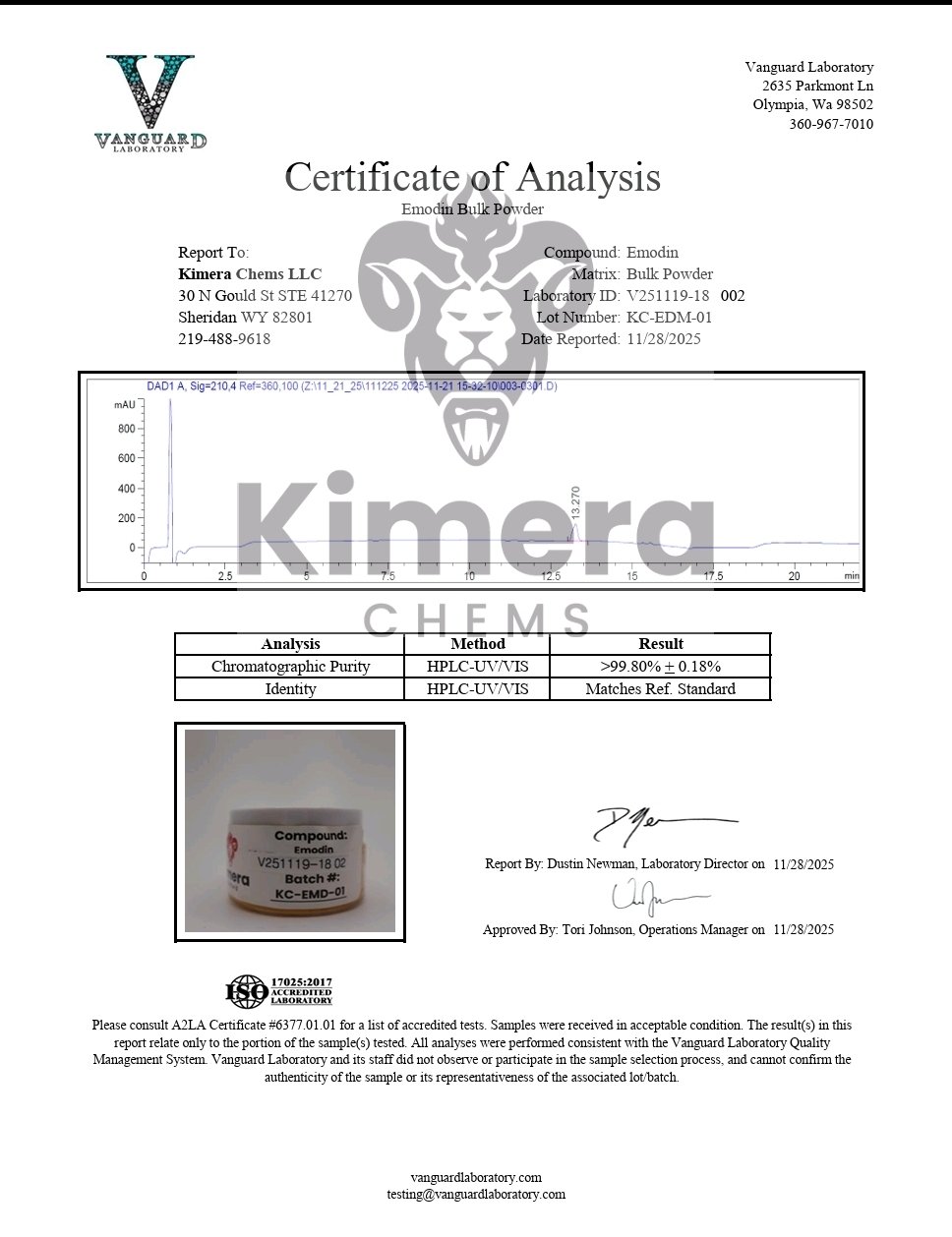
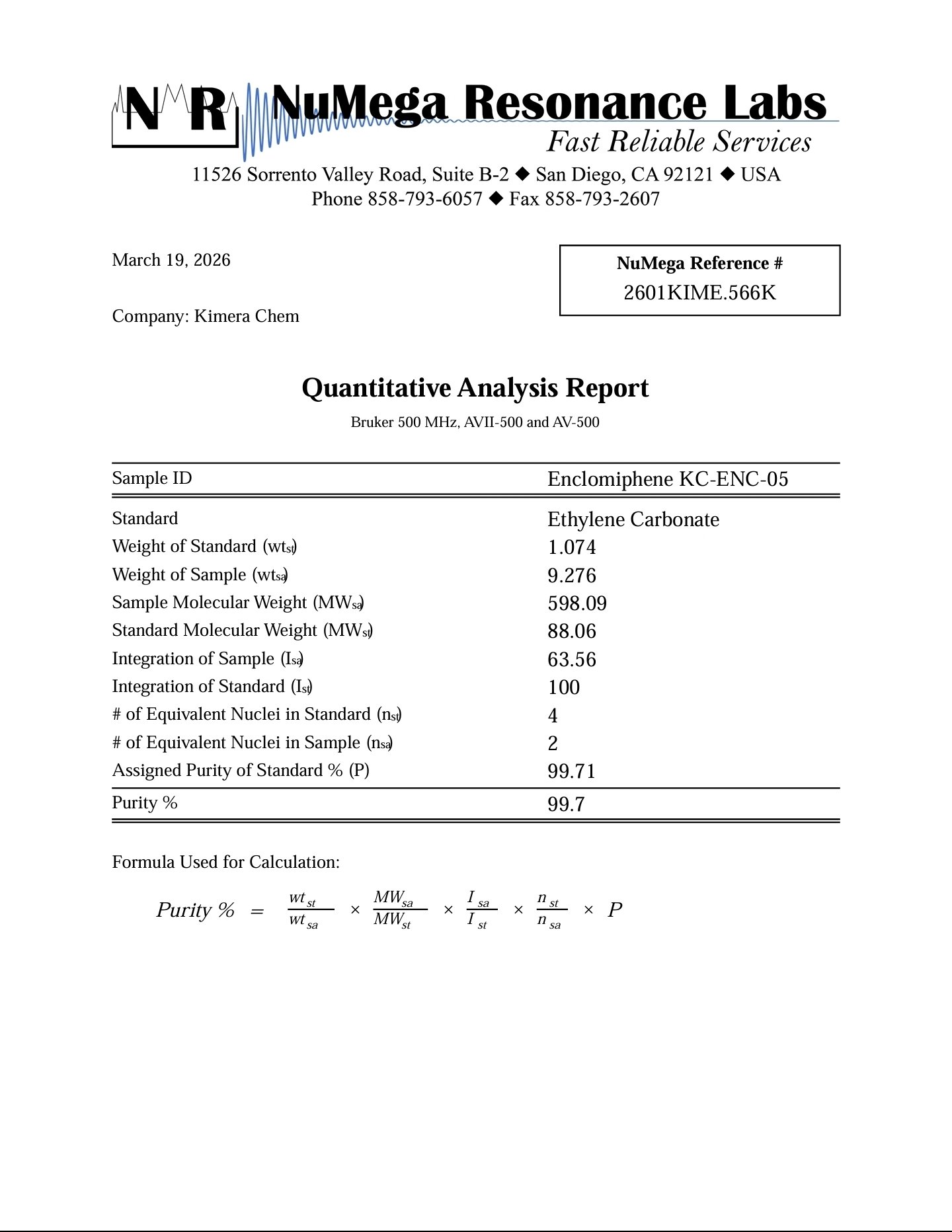
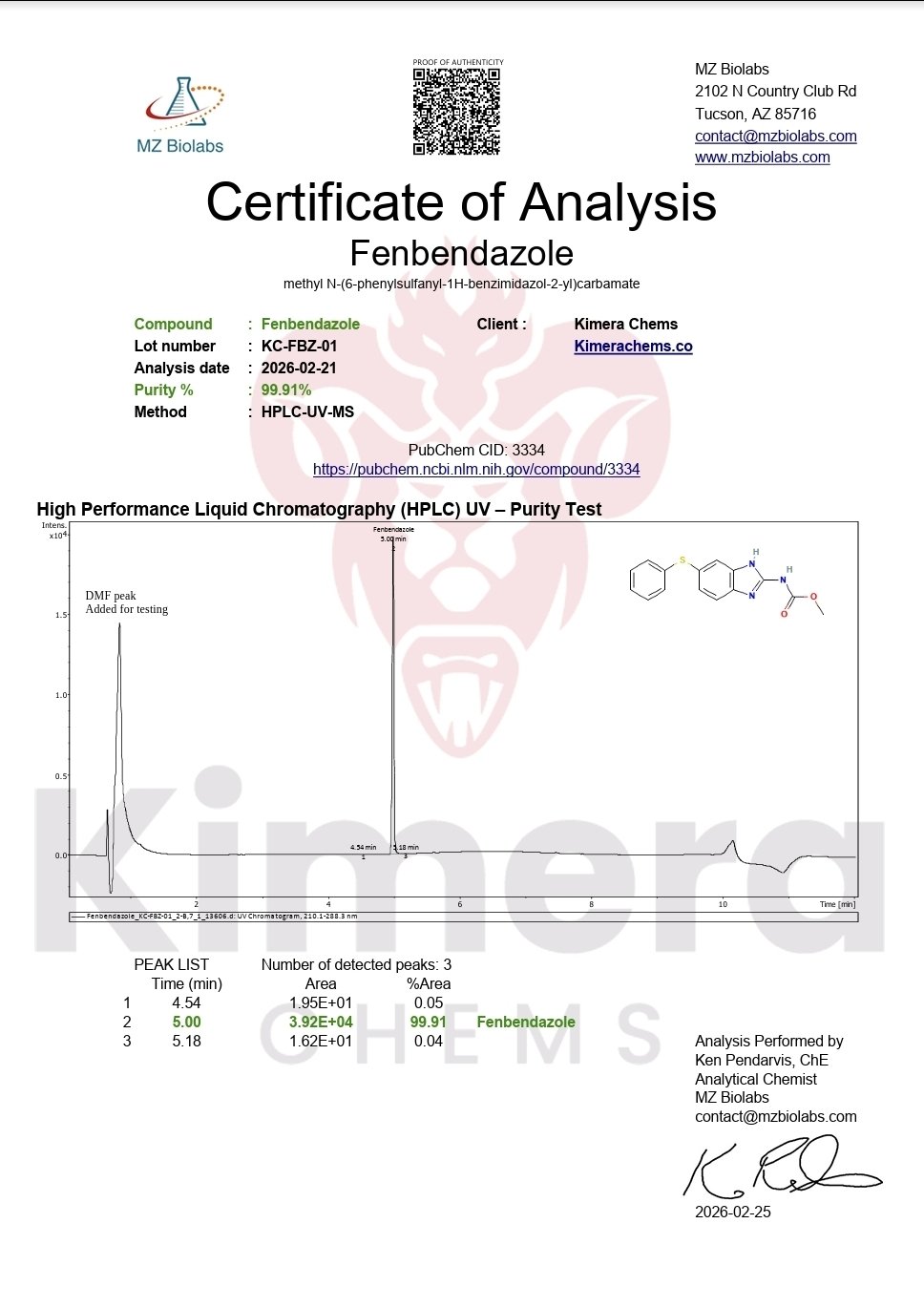
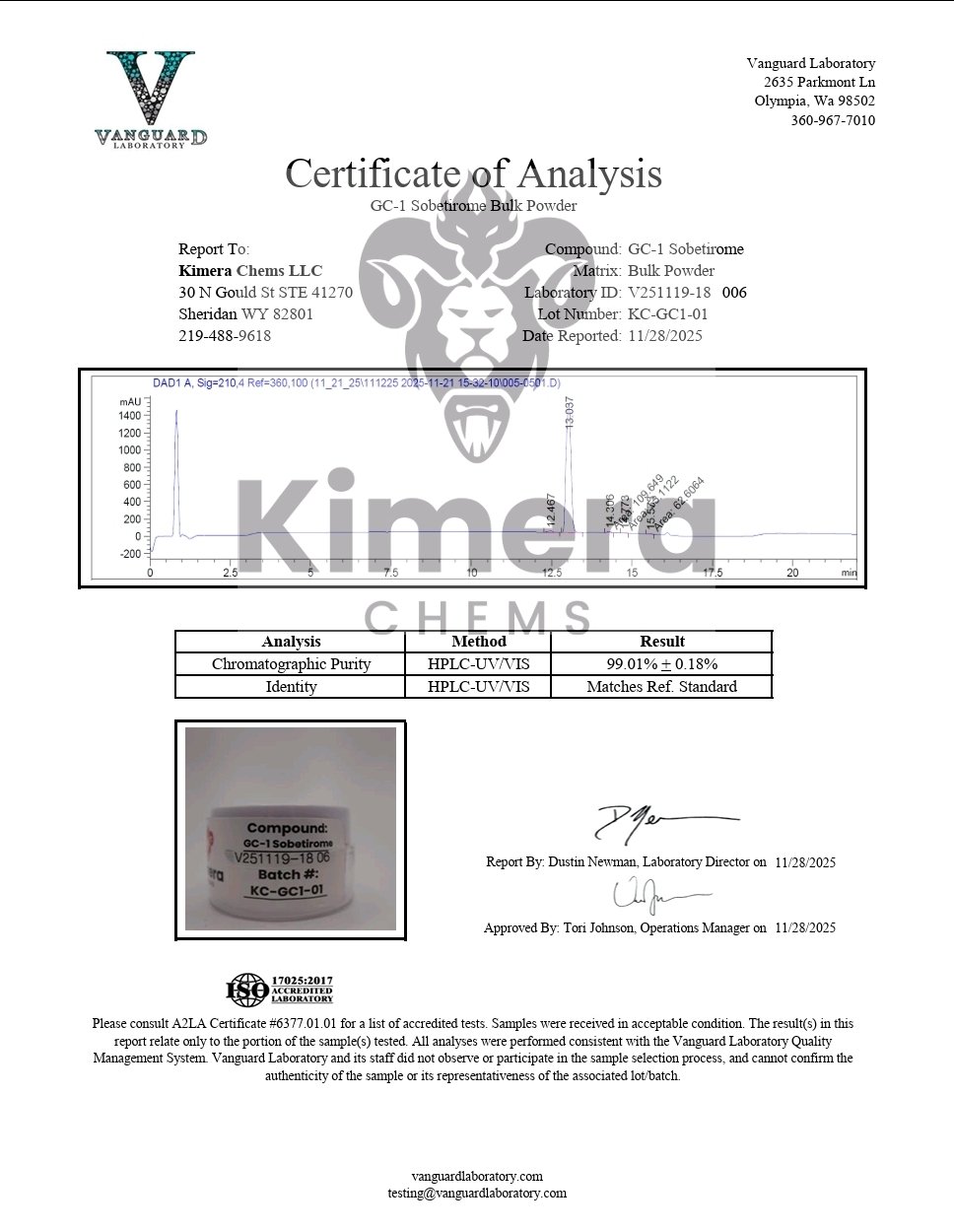
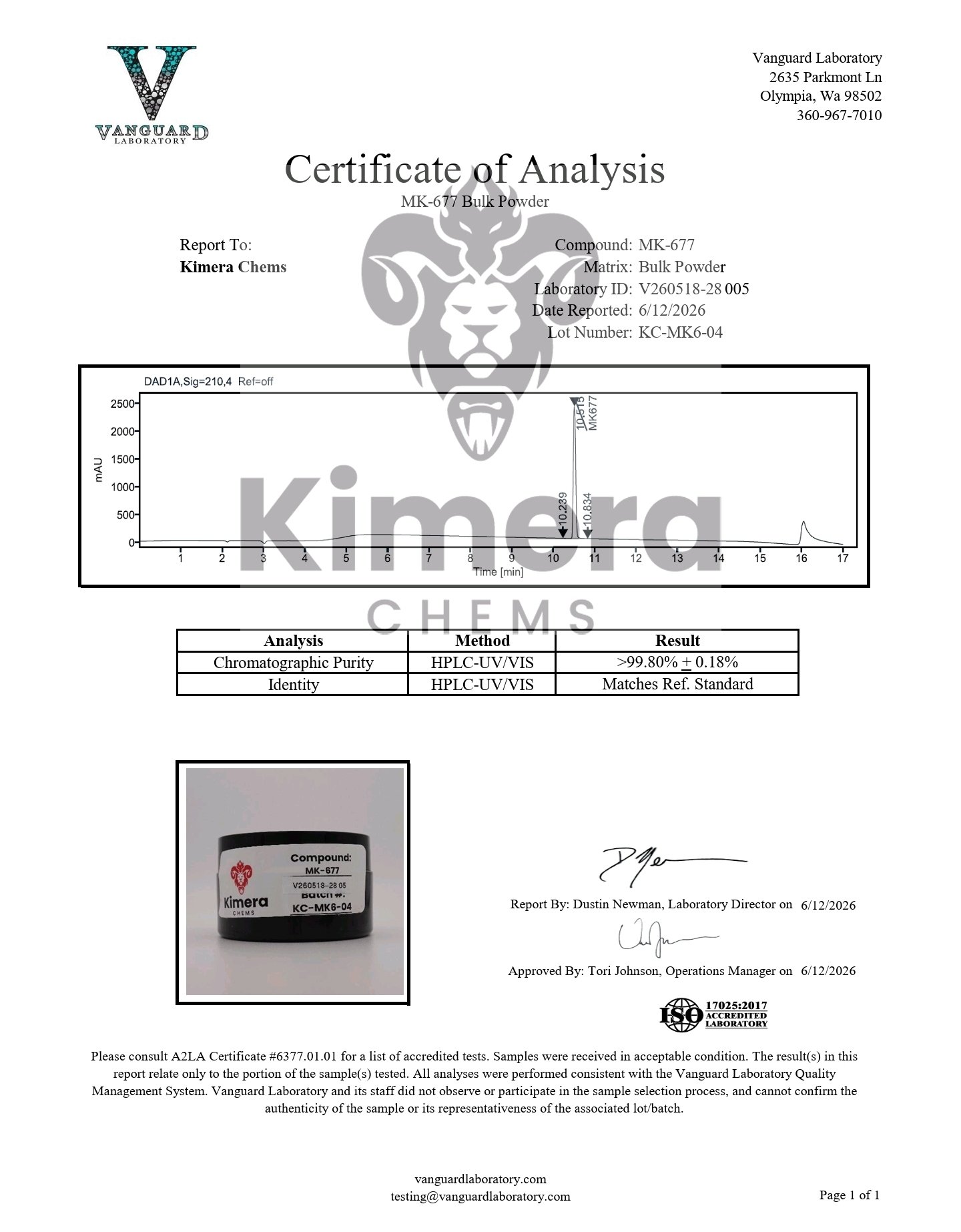
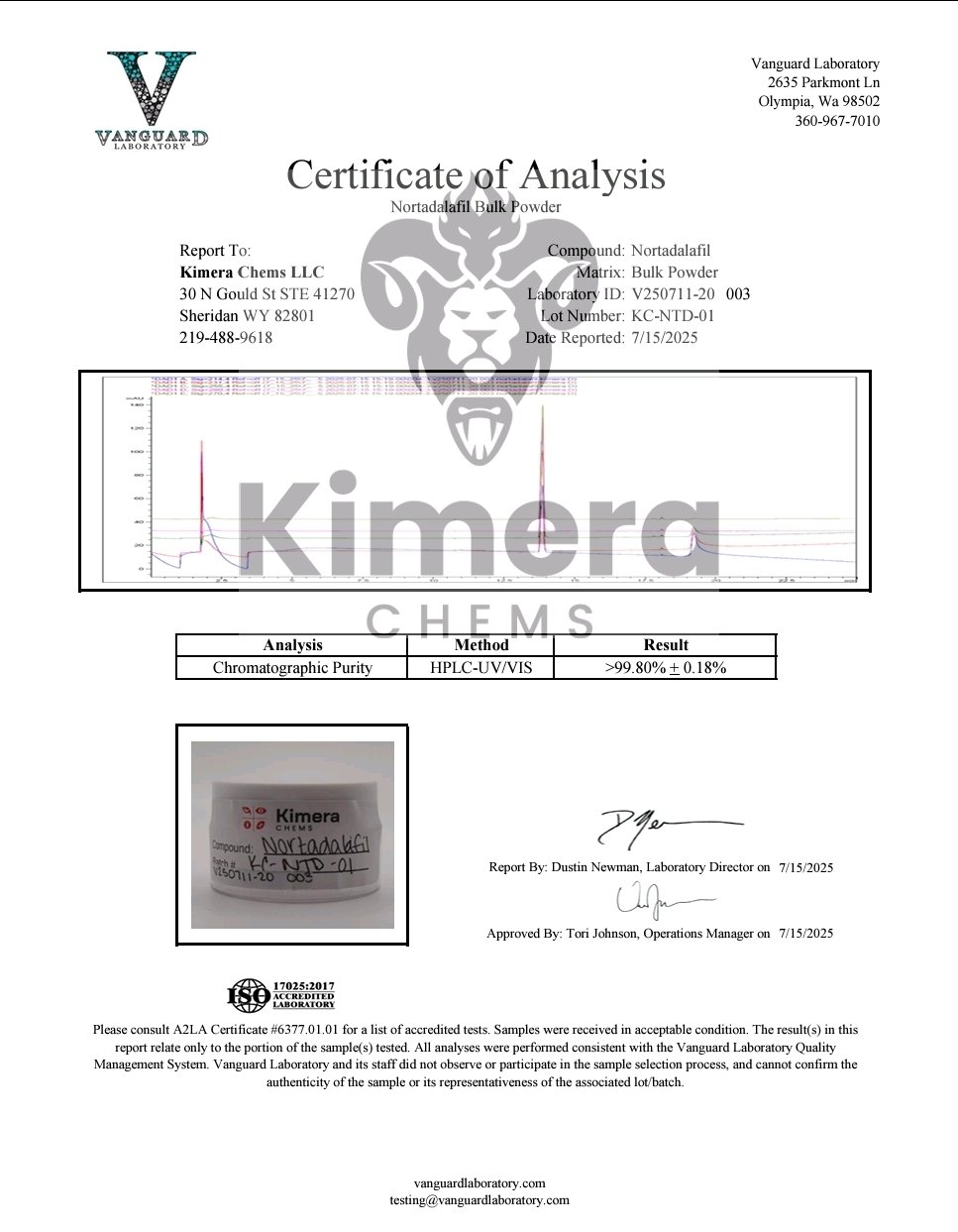
A certificate of analysis should connect the reported results to an identifiable product, batch and testing procedure. Before relying on a report, check:
- Product and compound name
- Batch or lot number
- Testing date
- Laboratory identity
- Analytical methods used
- Expected and observed results
- Units and specifications
- Attached chromatograms or spectra
- Authorization or review information
- Reported limitations or deviations
Available documentation can be reviewed through the Kimerachems Certificate of Analysis library. Researchers should match every report with the correct material and batch before using the information in a laboratory record.
For a complete review workflow, see How to Read a Research Compound COA.
Method Fit Matters More Than a Single Percentage
A reported purity percentage should be interpreted within the conditions that produced it. Column chemistry, mobile phase, detector type, wavelength, sample preparation, integration parameters and method sensitivity can all influence the chromatographic result.
Likewise, a molecular-mass match can provide valuable identity evidence without proving every structural characteristic. Orthogonal analytical procedures are often used because chromatography, mass spectrometry and NMR answer different questions.
Researchers developing chromatographic procedures may also find these guides useful:
- HPLC Calibration Curves
- HPLC System Suitability
- HPLC Peak Resolution
- HPLC Peak Integration
- HPLC LOD and LOQ
Storage, Handling and Documentation
Storage requirements depend on the chemical properties and format of the individual reagent. Researchers should follow product-specific documentation and established institutional procedures rather than applying one storage condition across the entire category.
A controlled material-handling record should document:
- Date received
- Product and batch identifier
- Storage location and conditions
- Date opened
- Preparation or dilution details
- Laboratory personnel responsible
- Observed changes or deviations
- Disposal or final-use record
Appropriate personal protective equipment, ventilation, compatible containers and disposal procedures should be selected according to the substance and laboratory risk assessment.
Why Researchers Choose Kimerachems Analytical Reagents
- Catalog of documented small-molecule research compounds
- Multiple product formats where available
- Compound-specific technical information
- Batch documentation where provided
- Certificate of Analysis library
- Educational resources covering HPLC, MS, NMR and COA review
- Research-use-only product positioning
Kimerachems provides product information and documentation to support informed laboratory review. The qualified researcher remains responsible for determining whether a material, method and evidence package are suitable for the intended procedure.
Frequently Asked Questions
What are analytical reagents used for?
Analytical reagents may be used in controlled laboratory workflows such as method development, compound comparison, instrument-response evaluation, identity investigation and exploratory biochemical research. Suitability depends on the material and intended procedure.
Is every analytical reagent a certified reference standard?
No. A research reagent should not be considered a certified reference standard unless the required characterization, assigned value, certification and traceability documentation are specifically provided.
Does a high HPLC purity result prove compound identity?
No. HPLC purity and compound identity are different analytical measurements. Identity may require complementary evidence such as mass spectrometry, NMR or comparison with a suitable reference.
Can one COA represent every batch?
No. Analytical results describe the sample or batch tested. Researchers should match the batch number on the report with the material being evaluated.
What should be checked before ordering an analytical reagent?
Review the compound name, identifiers, available format, technical specifications, storage requirements, analytical documentation and suitability for the intended laboratory method.
Are these analytical reagents intended for personal use?
No. Products in this category are supplied exclusively for controlled laboratory, analytical and preclinical research. They are not intended for human or veterinary consumption, diagnostic use, therapeutic use, household use or clinical application.