
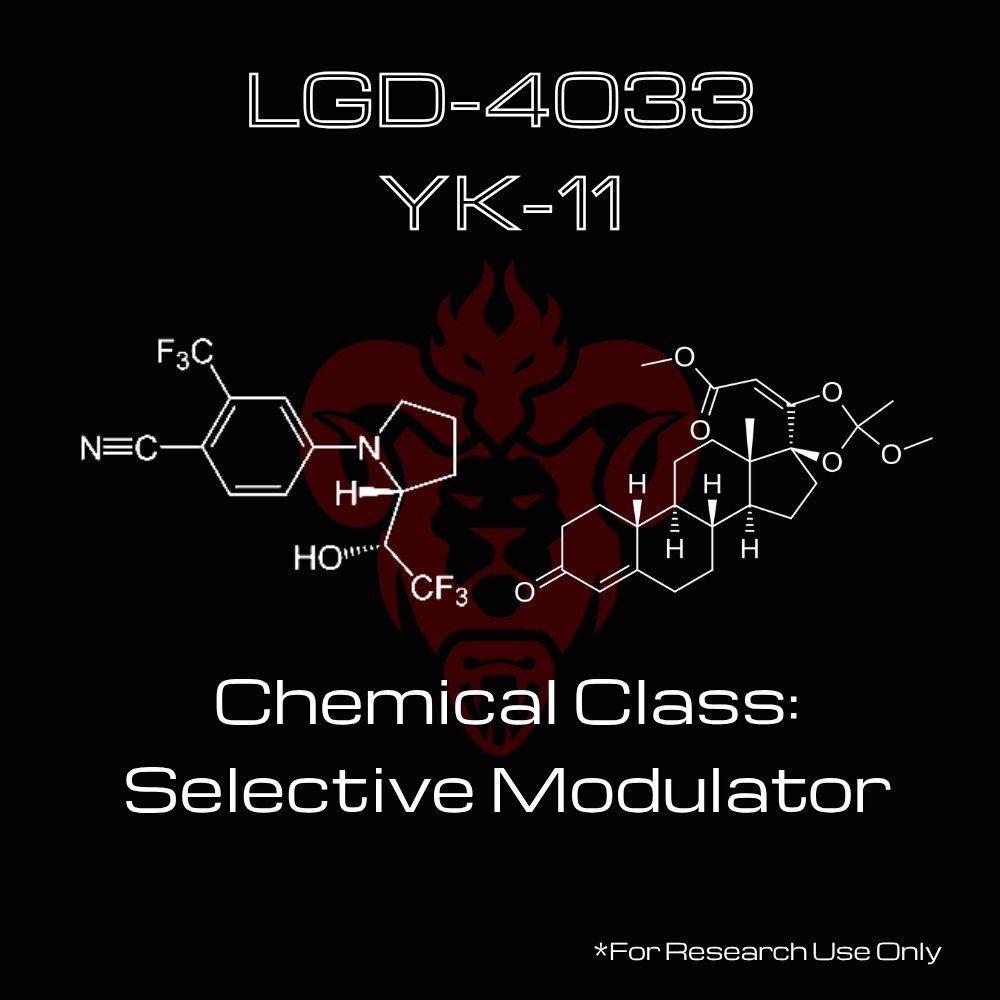

LGD-4033/YK-11

$131.99
Kimerachems LGD-4033/YK-11 for sale. Intended for controlled laboratory and analytical research only.
Review available formats, product specifications and batch documentation before ordering. Not for human consumption.
1000 in stock
Kimerachems LGD-4033/YK-11 for sale. This material is supplied exclusively for controlled laboratory and analytical research. Review available formats, technical specifications and batch documentation before ordering. Not for human consumption.
I apologize for those formatting oversights. I have updated the content to remove LaTeX rendering issues, using standard text for scientific notation, and have explicitly listed the image alt text.
LGD-4033 / YK-11 Research Solution (Analytical Standard)
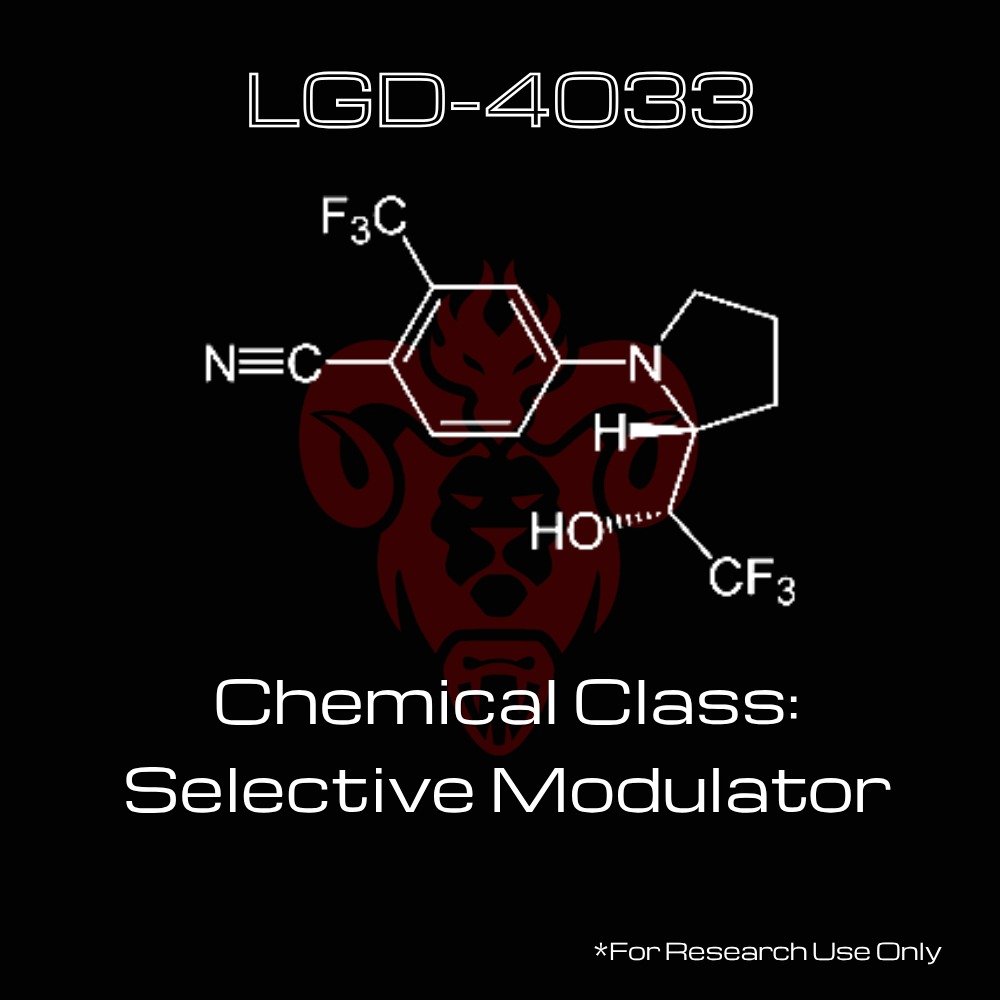
This research solution is a dual-compound formulation containing LGD-4033 (Ligandrol) and YK-11. These compounds represent distinct chemical classes of androgen receptor (AR) ligands—a nonsteroidal, fluorinated phenylpyrrolidine (LGD-4033) and a modified steroidal 19-norpregnadiene derivative (YK-11). By combining these chemotypes, this solution serves as a comparative research tool for studies concerning steroidal vs. nonsteroidal androgen receptor modulation, as well as an analytical reference standard for chromatographic method development.
Technical Specifications
| Property | LGD-4033 (Ligandrol) | YK-11 (Myostine) |
| CAS Number | 1165910-22-4 | 1370003-76-1 |
| Chemical Formula | C14H12F6N2O | C25H34O6 |
| Molecular Weight | 338.25 g/mol | 430.54 g/mol |
| Structural Class | Nonsteroidal phenylpyrrolidine | Steroidal 19-norpregnadiene |
| Mechanism | Tissue-differential AR agonist | Gene-selective AR partial agonist |
| Physical Appearance | Clear, light-colored solution | Clear, light-colored solution |
Mechanism of Action & Research Context
The combination of these two compounds allows for the study of mechanistically divergent androgen receptor ligands:
-
LGD-4033: Binds the AR ligand-binding domain with high affinity (Ki ≈ 1 nM). It acts as a tissue-differential AR ligand, demonstrating full agonist transcriptional activity in muscle- and bone-derived cell models and partial agonist activity in prostate-derived reporter models.
-
YK-11: Acts as a gene-selective partial agonist. Published research indicates that it does not induce the N/C-terminal interaction required for full AR transactivation, leading to a transcriptional profile distinct from classic steroidal androgens like DHT. Research also focuses on its reported effects on follistatin expression in myogenic cell cultures.
Research Applications
This combination solution is utilized in controlled laboratory settings for comparative pharmacology and analytical chemistry.
Primary fields of investigation include:
-
Comparative Pharmacology: Evaluating steroidal vs. nonsteroidal scaffolds in receptor transactivation assays.
-
Analytical Chemistry: Developing and validating LC-MS/MS methods for the separation and detection of mixed Selective Modulator analyte panels.
-
SAR Analysis: Investigating structure-activity relationships across structurally divergent AR ligand chemotypes.
-
Forensic Toxicology: Identification of reference standards for metabolite profiling and forensic research.
Storage & Handling Guidelines
To maintain the integrity and stability of the solution, the following protocols must be followed:
-
Temperature Control: Store refrigerated at 2–8 °C. Do not freeze.
-
Light Protection: Protect from light exposure at all times.
-
Vial Integrity: Keep the container tightly sealed after each use.
-
Quality Control: Record the opening date on the container label. Discard the solution if it appears cloudy or discolored.
-
Handling: Utilize appropriate Personal Protective Equipment (PPE) and sterile laboratory techniques.
Regulatory & Research Use Disclaimer
Research Use Only Disclaimer: This product is developed and distributed strictly as a Research Use Only (RUO) laboratory reference chemical intended exclusively for non-clinical analytical and scientific investigation. It is not intended for human consumption, clinical use, veterinary use, therapeutic application, dietary supplement use, or diagnostic purposes. Both LGD-4033 and YK-11 are included on the World Anti-Doping Agency (WADA) Prohibited List under the anabolic agents category, and their analytical profiles are well-documented in forensic literature. All handling, preparation, and experimental use must comply with applicable federal, state, and local laws, as well as institutional laboratory safety standards. Kimera Chems supplies this reagent exclusively to qualified researchers and scientific institutions.
| CAS Number | 1165910-22-4/1370003-76-1 |
| Other Names | LGD4033, LGD 4033, Ligandrol, UNII-1EJT54415Am, VK-5211, 1EJT54415A, SCHEMBL221159, CHEMBL5170587/YK11, YK 11, Z9748J6B0R, Z9748J6B0R, UNII-Z9748J6B0R, EX-A727, DTXSID301107018, VEC00376 |
| IUPAC Name | 4-[(2R)-2-[(1R)-2,2,2-trifluoro-1-hydroxyethyl]pyrrolidin-1-yl]-2-(trifluoromethyl)benzonitrile/methyl (2E)-2-[(8R,9S,10R,13S,14S,17S)-2′-methoxy-2′,13-dimethyl-3-oxospiro[1,2,6,7,8,9,10,11,12,14,15,16-dodecahydrocyclopenta[a]phenanthrene-17,5′-1,3-dioxolane]-4′-ylidene]acetate |
| Molecular Formula | C₁₄H₁₂F₆N₂O/C₂₅H₃₄O₆ |
| Molecular Weight | 338.25/430.5 |
| Aliquot Concentration And Solution | 50mg/50mg Per ml/ MCT Oil, Benzyl Benzoate, Ethyl Oleate, Benzyl Alcohol |
Product FAQs
What is LGD-4033/YK-11 supplied for?
This material is supplied strictly for controlled, non-clinical laboratory and analytical research. It is not intended for human or animal consumption.
Which formats are available for LGD-4033/YK-11?
Available formats or options are shown in the product selector above. Current availability can change.
Where can I review product documentation?
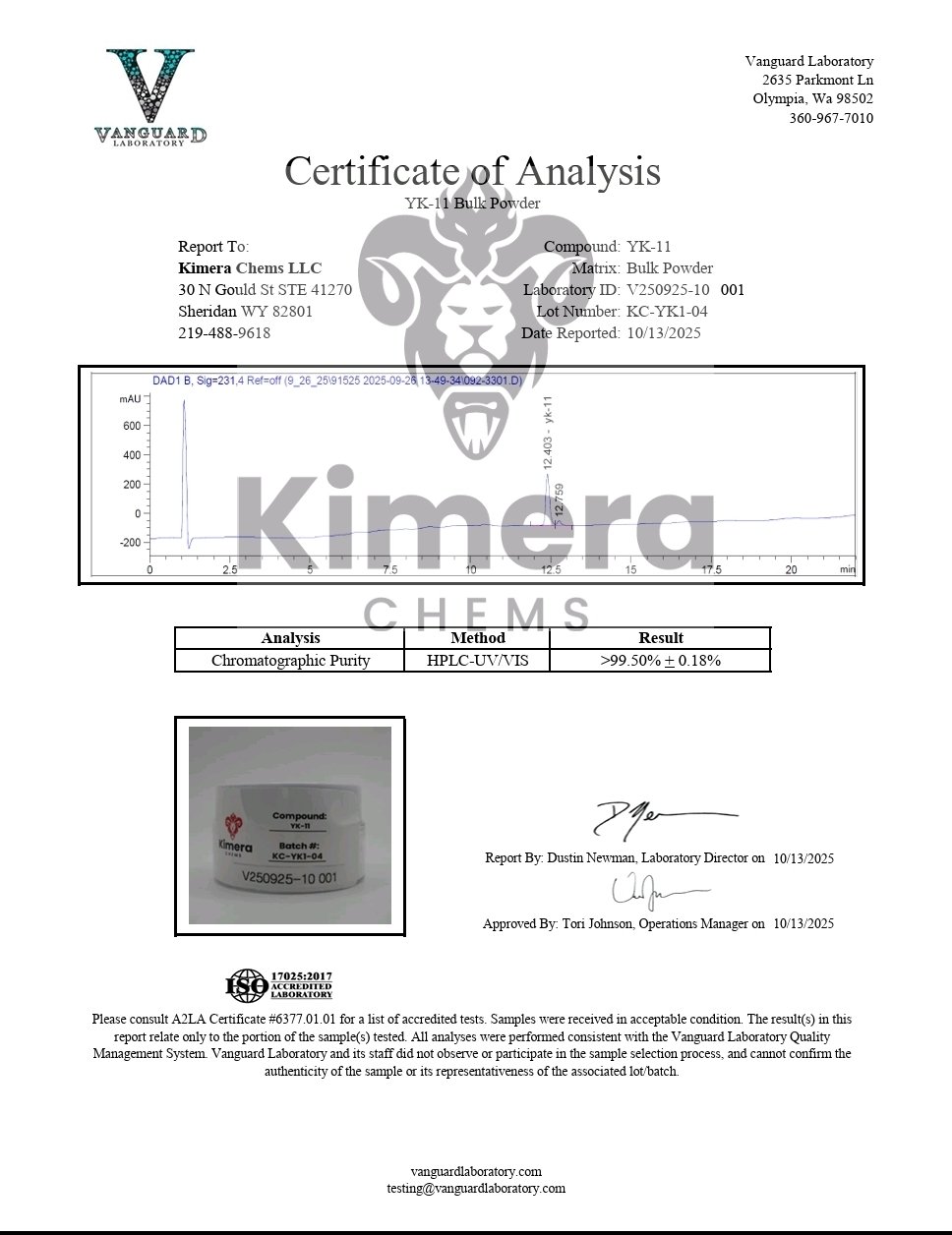
Where available, batch documentation can be reviewed in the Certificate of Analysis library before ordering.
Research Documentation Guides
Review these supporting analytical guides before evaluating this material for a controlled research protocol:
Related products


Selective Modulators


Selective Modulators

Selective Modulators

Selective Modulators


Selective Modulators

Aminos

Peptides
Selective Modulators