
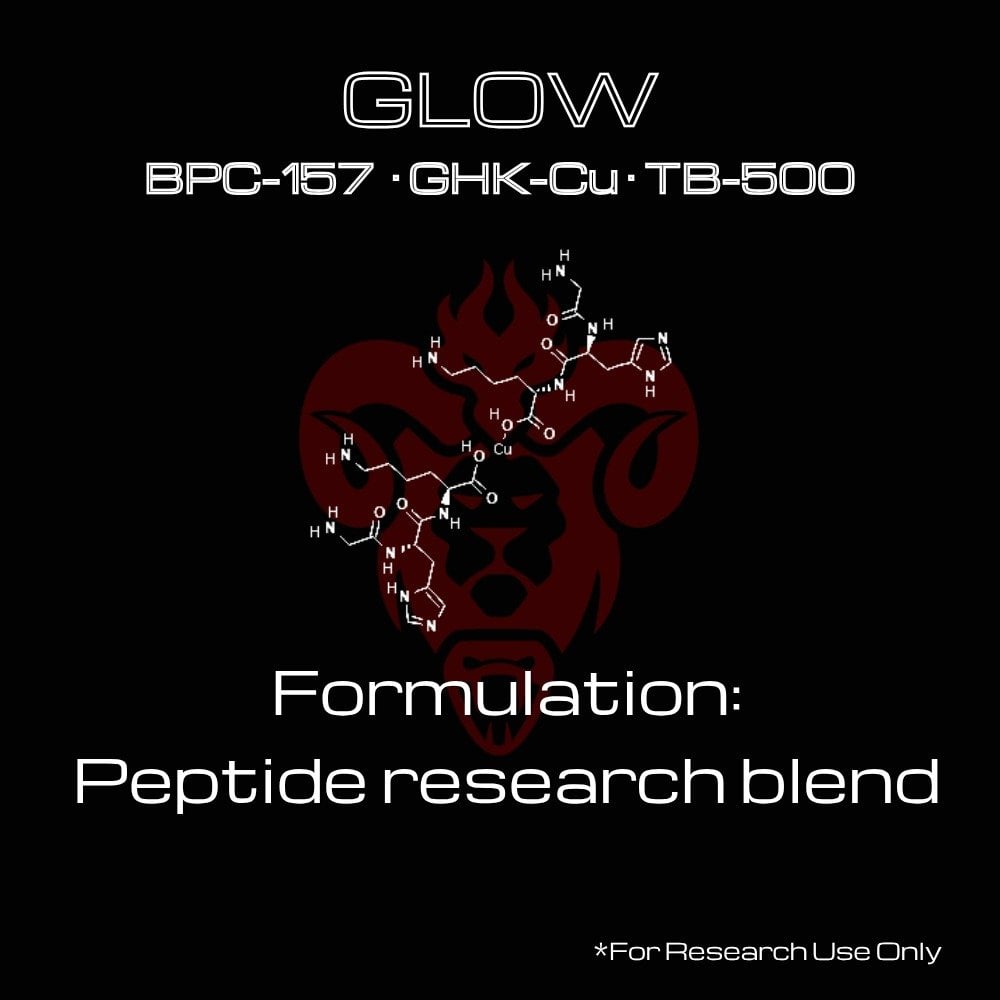
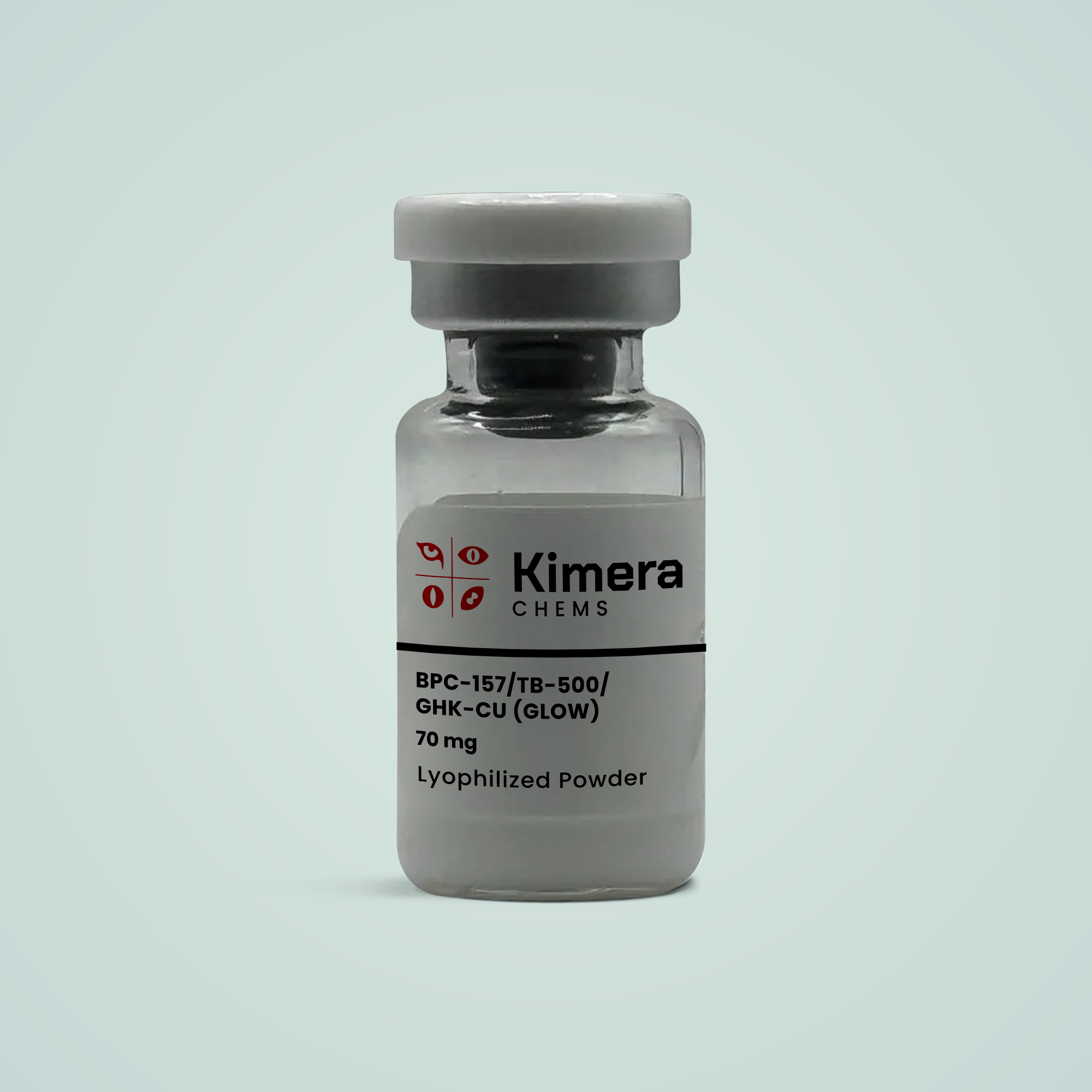


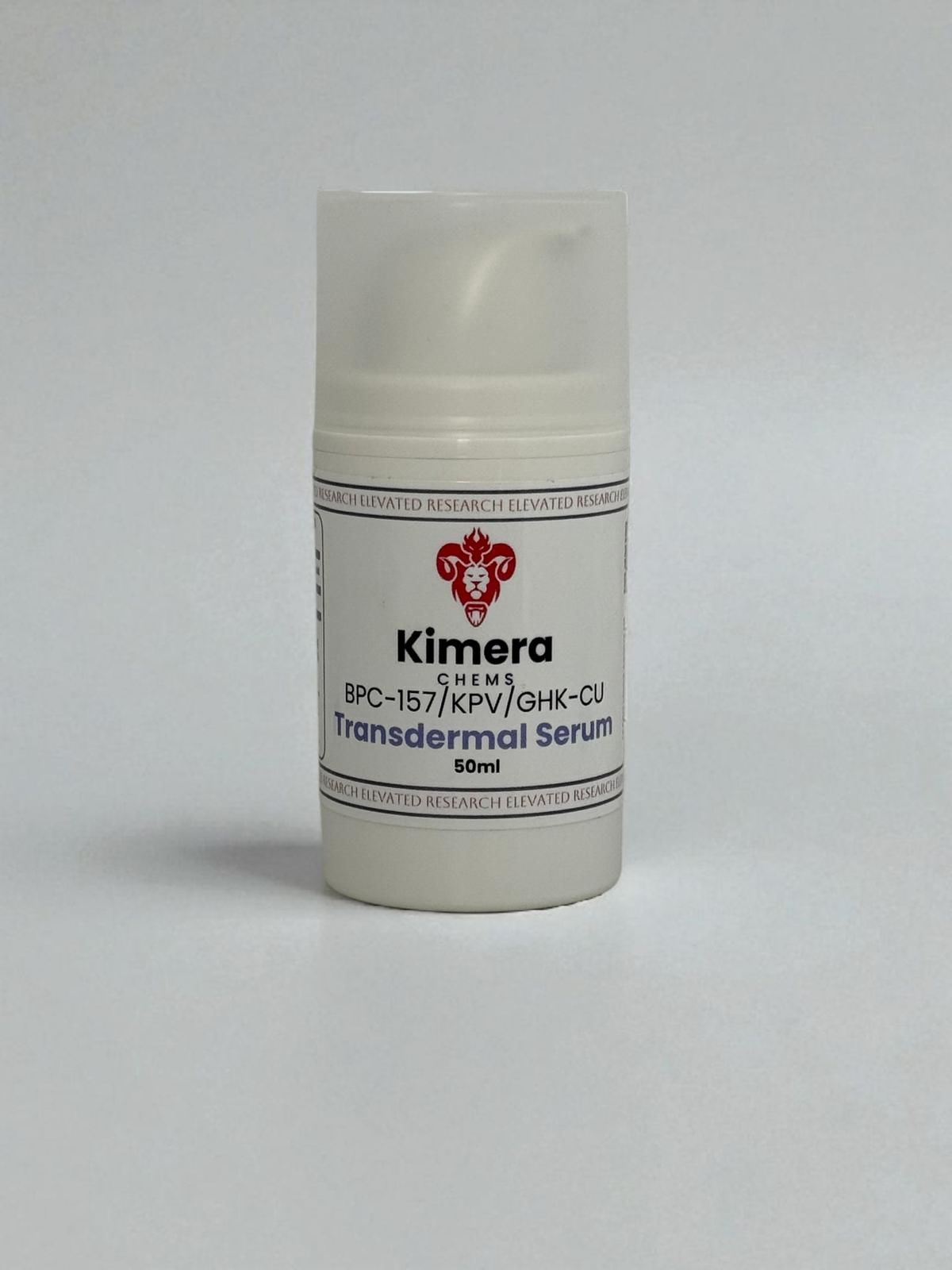
BPC-157/TB-500/GHK-CU (GLOW)
$84.99
Kimerachems BPC-157/TB-500/GHK-CU (GLOW) for sale. Intended for controlled laboratory and analytical research only.
Review available formats, product specifications and batch documentation before ordering. Not for human consumption.
1000 in stock
Kimerachems BPC-157/TB-500/GHK-CU (GLOW) for sale. This material is supplied exclusively for controlled laboratory and analytical research. Review available formats, technical specifications and batch documentation before ordering. Not for human consumption.
BPC-157 / TB-500 / GHK-Cu GLOW
The BPC-157 / TB-500 / GHK-Cu GLOW peptide matrix is a highly specialized, multi-component chemical preparation engineered for advanced laboratory research and analytical method development. By combining a gastric juice-derived pentadecapeptide fragment, a full-length 43-amino acid actin-sequestering protein, and a copper-complexed metallopeptide, this formulation serves as an essential multi-analyte standard. It is designed to support the optimization of complex chromatographic separations, high-resolution mass spectrometry (LC-MS) calibrations, and comparative stability studies involving metal-peptide coordination kinetics.
Technical Specifications
Because the GLOW matrix is a multi-component system, its technical profile is defined by its individual active constituents:
| Component | CAS Number | Molecular Formula | Molecular Weight | Chemical Class |
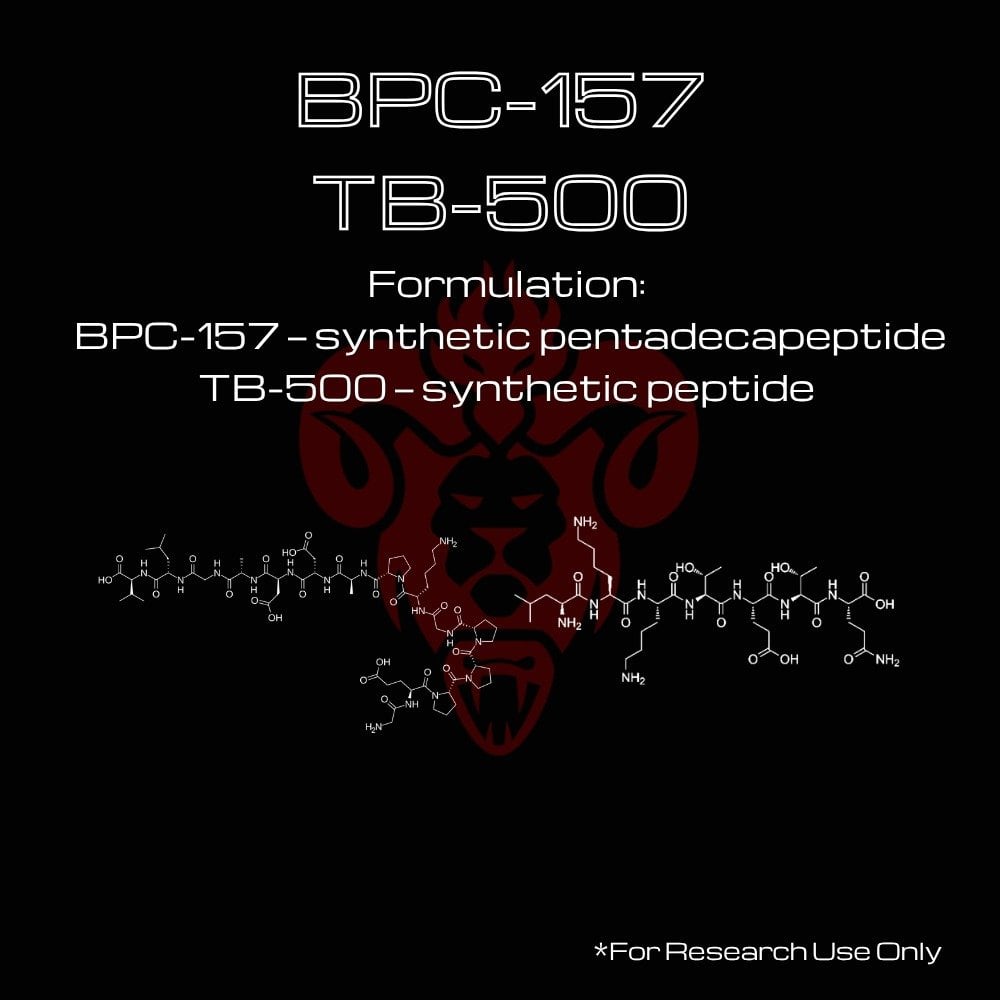
| BPC-157 | 137525-51-0 | C₆₂H₉₈N₁₆O₂₂ | 1419.56 g/mol | Synthetic Pentadecapeptide |
| TB-500 (Thymosin β4) | 77591-33-4 | C₂₁₂H₃₅₀N₅₆O₇₈S | 4963.50 g/mol | 43-Amino Acid Actin-Sequestering Peptide |
| GHK-Cu | 89030-95-5 | C₁₄H₂₂CuN₆O₄ | 403.93 g/mol | Copper-Chelated Metallopeptide Complex |
Component IUPAC Identifiers:
-
BPC-157: glycyl-L-alpha-glutamyl-L-prolyl-L-prolyl-L-prolylglycyl-L-lysyl-L-prolyl-L-alanyl-L-alpha-aspartyl-L-alpha-aspartyl-L-alanylglycyl-L-leucyl-L-valine
-
TB-500 (Thymosin β4): N-acetyl-L-seryl-L-alpha-aspartyl-L-lysyl-L-prolyl-L-alpha-aspartyl-L-methionyl-L-alanyl-L-alpha-glutamyl-L-isoleucyl-L-alpha-glutamyl-L-lysyl-L-phenylalanyl-L-alpha-aspartyl-L-lysyl-L-seryl-L-lysyl-L-leucyl-L-lysyl-L-lysyl-L-threonyl-L-alpha-glutamyl-L-threonyl-L-glutaminyl-L-alpha-glutamyl-L-lysyl-L-asparaginyllprolylleucylprolyserylglycylglutamlythreonylisoleucylglutaminylglutamyllysylglutaminylalanylglycylglutamylserine
-
GHK-Cu: [N2-(N-glycyl-L-histidyl)-L-lysinato(2-)]copper
Note: Kimera Chems enforces a strict analytical standard, verifying each compound independently via High-Performance Liquid Chromatography (HPLC) and CHN elemental analysis before blending to ensure a component baseline purity of ≥98% and absolute mass ratio consistency.
Research Applications & Analytical Context
The GLOW matrix is highly valued in analytical biochemistry for testing complex peptide mixtures with highly divergent physical properties:
-
LC-MS Calibration and Resolution Testing: Establishing baseline separation metrics and resolving power for multiple concurrent analytes across a broad mass spectrum—ranging from the light copper-chelated GHK-Cu complex (403.93 g/mol) to the heavy, full-length 43-amino acid Thymosin β4 chain (4963.50 g/mol).
-
Comparative Peptide-Metal Stability Profiling: Observing and measuring the comparative degradation rates and structural tolerance of a highly stable metallopeptide (GHK-Cu) alongside unmodified, linear peptide chains (BPC-157 and Thymosin β4) under various thermal and pH stressors.
-
Actin-Sequestering Mechanisms: Utilizing the full-length Thymosin β4 component to investigate baseline G-actin monomer binding dynamics, which are critical to cytoskeletal polymerization and cell-migration models.
-
Intracellular and Extracellular Signaling: Analyzing BPC-157 and GHK-Cu within isolated cell-free systems to track proposed interactions with growth factor pathways, nitric oxide synthesis, and copper-dependent feedback loops.
Experimental Design Advisory: This pre-blended formulation is optimized for analytical, separation, and calibration studies. For individual physiological or mechanistic pathway mapping, single-compound target references should be utilized, as multi-component matrices do not permit the direct attribution of biological effects to a single constituent.
Storage & Handling Guidelines
To maintain complete molecular uniformity and protect the peptide bonds from premature degradation:
-
Long-Term Preservation: Store the compound in a deeply frozen state at -20°C or lower to halt molecular degradation.
-
Short-Term Maintenance: Reconstituted working assays or active analytical baselines must be kept continuously refrigerated at 2–8°C.
-
Atmospheric Controls: Keep the compound sealed tightly in an airtight environment completely isolated from ambient humidity and moisture.
-
Photolytic Barriers: GHK-Cu is highly photosensitive; therefore, the formulation must be continuously shielded from direct light and UV exposure inside opaque or amber laboratory vessels.
Research Use Only Disclaimer: This product is engineered, manufactured, and distributed strictly as a Research Use Only (RUO) reference material intended exclusively for in vitro analytical laboratory applications and method development. It is not an FDA-approved drug, medication, food product, cosmetic, or dietary supplement, and is strictly prohibited for human or veterinary use. No clinical claims, wound-healing assertions, or anti-inflammatory efficacy data in living organisms are supported or implied. Accessory laboratory tools, including sterile delivery vectors, are neither included nor provided by Kimera Chems.
Frequently Asked Research Questions
Why does this formulation utilize full-length Thymosin β4 rather than the shorter active fragment?
Utilizing the authentic, full-length 43-amino acid chain of Thymosin β4 is critical for multi-component MS calibration and structural research. Short-chain synthetic fragments do not possess the native physical properties, mass parameters, or actin-sequestering capabilities necessary for accurate comparative study.
What purpose does GHK-Cu serve in this multi-peptide matrix?
GHK-Cu introduces a chelated copper(II) metal ion to the system, which changes the electronic, optical, and charge properties of the overall matrix. This provides researchers with a distinct, spectrophotometrically active compound for calibrating complex chromatographic runs and examining peptide-metal stability behaviors.
Scientific References
-
Pickart, L., Vasquez-Soltero, J. M., & Margolina, A. (2015). “The human tripeptide GHK-Cu in prevention of oxidative stress and tissue remodeling.” BioMed Research International, 2015, 648418. DOI: 10.1155/2015/648418.
-
Goldstein, A. L., Hannappel, E., & Kleinman, H. K. (2005). “Thymosin β4: actin-sequestering protein and more.” Expert Opinion on Biological Therapy, 5(2), 233–246. DOI: 10.1517/14712598.5.2.233.
-
Chang, C. H., Tsai, W. C., Lin, M. S., Hsu, Y. H., & Pang, J. H. (2011). “The promoting effect of pentadecapeptide BPC 157 on tendon healing involves tendon outgrowth, cell survival, and cell migration.” Journal of Applied Physiology, 110(3), 774–780. DOI: 10.1152/japplphysiol.00945.2010.
| CAS Number | 137525-51-0, 885340-08-9, 130120-57-9 |
| Molecular Formula | C₆₂H₉₈N₁₆O₂₂, C₂₁₂H₃₅₀N₅₆O₇₈S, C₁₆H₂₈CuN₆O₆⁺² |
| Molecular Weight | 1419.5, 4963, 463.98 |
Product FAQs
What is BPC-157/TB-500/GHK-CU (GLOW) supplied for?
This material is supplied strictly for controlled, non-clinical laboratory and analytical research. It is not intended for human or animal consumption.
Which formats are available for BPC-157/TB-500/GHK-CU (GLOW)?
Available formats or options are shown in the product selector above. Current availability can change.
Where can I review product documentation?
Where available, batch documentation can be reviewed in the Certificate of Analysis library before ordering.
Research Documentation Guides
Review these supporting analytical guides before evaluating this material for a controlled research protocol:
Related products


Multi-Compound Systems

Multi-Compound Systems

Peptides

Analytical Reagents


Aminos

Peptides
Multi-Compound Systems


Peptides