





BPC-157

Price range: $29.99 through $76.99
Kimerachems BPC-157 for sale. Intended for controlled laboratory and analytical research only.
Review available formats, product specifications and batch documentation before ordering. Not for human consumption.
Kimerachems BPC-157 for sale. This material is supplied exclusively for controlled laboratory and analytical research. Review available formats, technical specifications and batch documentation before ordering. Not for human consumption.
BPC-157
BPC-157 (Body Protection Compound 157) is a synthetic pentadecapeptide consisting of a stable chain of 15 amino acids, structurally derived from a partial sequence of a naturally occurring gastric protective protein. Extensively studied within molecular biology and cellular signaling networks, BPC-157 serves as a crucial signaling-active reference peptide in laboratory models evaluating cellular communication, tissue-protective cascades, and extracellular matrix remodeling. Researchers utilize this compound in controlled in vitro frameworks to analyze its localized regulatory role without confounding systemic biological interferences.
Technical Specifications
| Property | Specification |
| Product Name | BPC-157 |
| CAS Number | 137525-51-0 |
| IUPAC Name | glycyl-L-alpha-glutamyl-L-prolyl-L-prolyl-L-prolylglycyl-L-lysyl-L-prolyl-L-alanyl-L-alpha-aspartyl-L-alpha-aspartyl-L-alanylglycyl-L-leucyl-L-valine |
| Molecular Formula | C₆₂H₉₈N₁₆O₂₂ |
| Molecular Weight | 1419.56 g/mol |
| Chemical Class | Synthetic Pentadecapeptide / Gastric Juice Peptide Fragment |
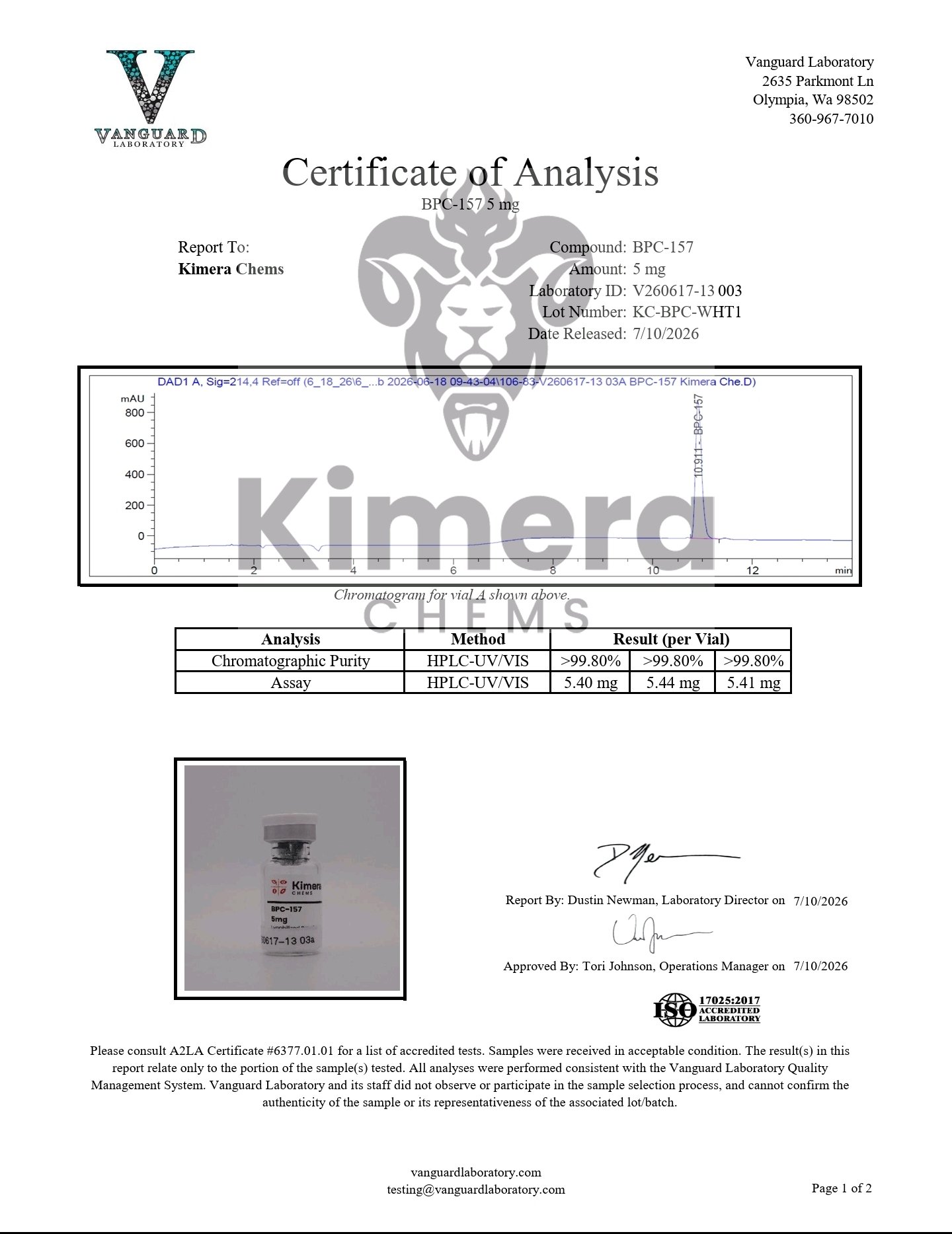
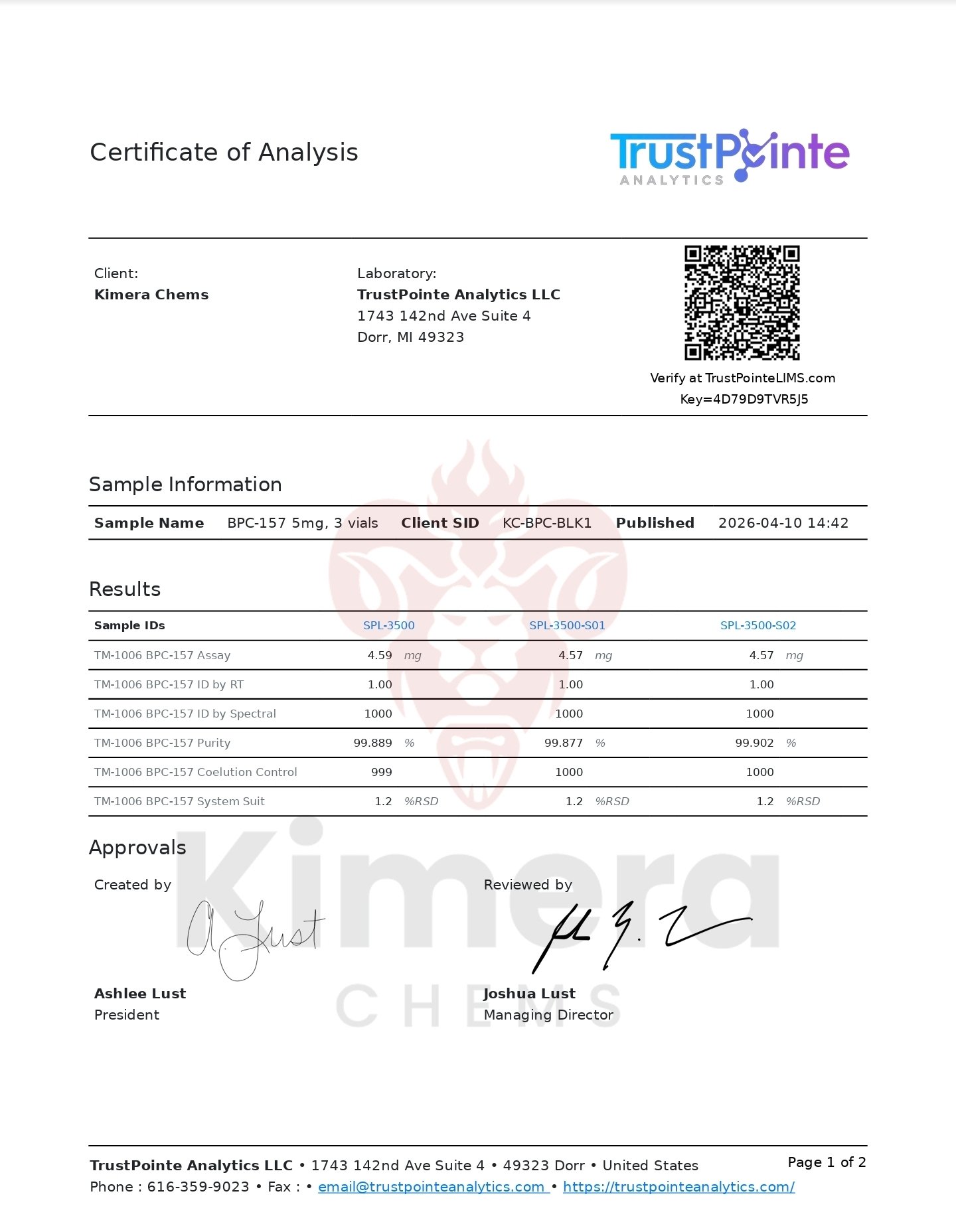
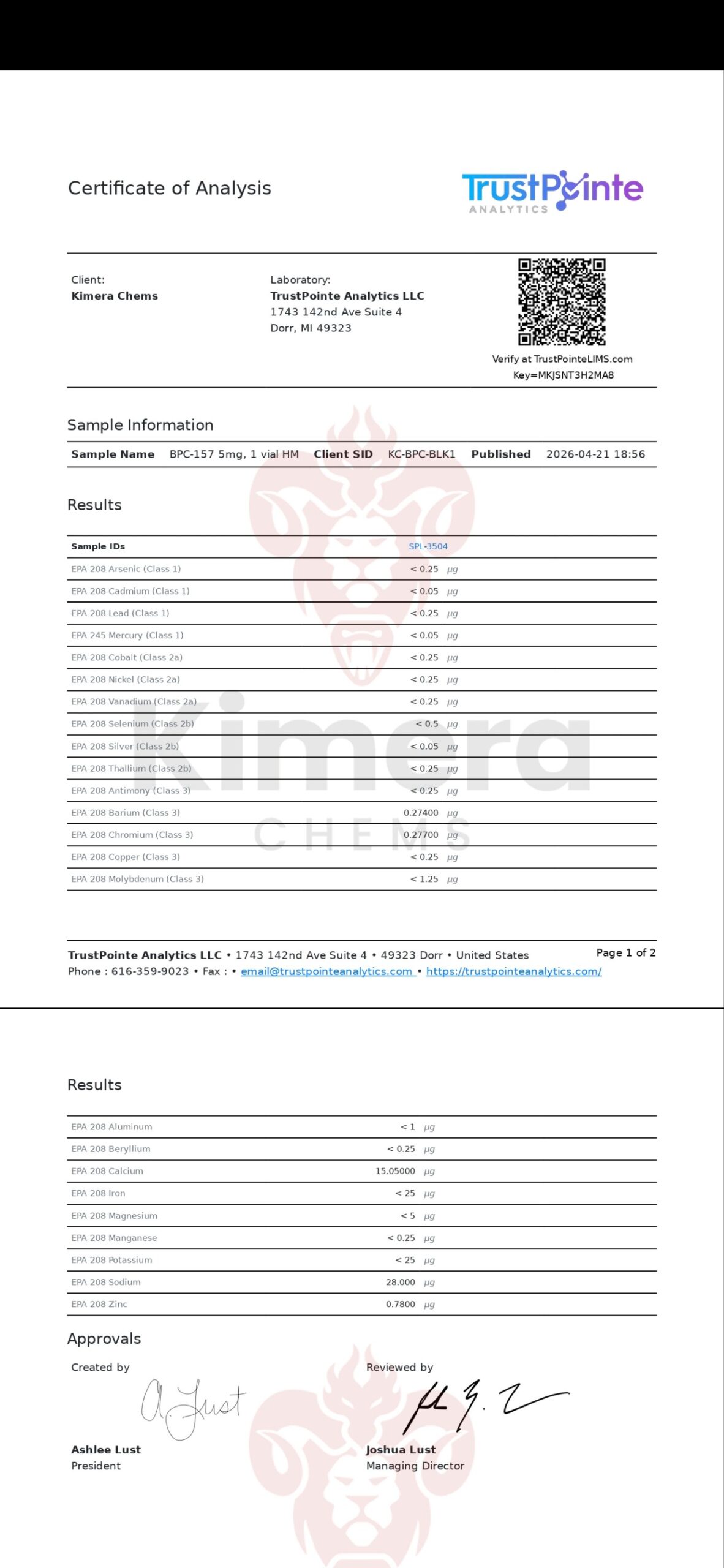
| Assay Purity | ≥98% (HPLC & CHN Verified) |
Research Applications & Mechanism of Interest
In advanced laboratory testing, BPC-157 provides an essential core baseline for monitoring how specific peptide architectures interface with intracellular messaging loops. Research published in prominent vascular biology and molecular medicine journals documents its proposed interaction with growth factor receptors and nitric oxide synthesis pathways, rendering it highly relevant for cell growth, structural migration, and tissue-protective studies.
Primary investigative workflows include:
-
Cell Migration Assays: Tracking and mapping cell movement, directional velocity, and recruitment patterns within isolated cellular models.
-
Angiogenesis Modeling: Examining endothelial cell culture lineages to observe how the specific peptide sequence modulates vascular endothelial growth factor receptor 2 (VEGFR2) expressions and downstream signaling cascades.
-
Growth Factor Interactions: Investigating modulating effects on baseline fibroblastic growth factors and early response gene expressions during structural communication.
-
In Vitro Wound Modeling: Exploring cellular signaling thresholds, cell survival under induced oxidative stress, and scratch assay protocol compliance.
-
Receptor Interaction Mapping: Deploying competitive binding assays to map specific binding partners, structural tolerance thresholds, and molecular footprints across tissue models.
Storage & Handling Guidelines
To prevent premature degradation of the peptide bonds and ensure absolute baseline reproducibility across analytical workflows, adhere to the following protocols:
-
Thermal Regulation: For long-term chemical preservation, maintain the compound under deeply frozen conditions (-20°C or lower). For short-term experimental deployment, ambient or standard cool parameters are sufficient if completely protected from thermal spikes.
-
Atmospheric Separation: Store the target chemical exclusively inside its original, tightly sealed containment unit, completely isolated from ambient humidity, moisture, and localized airflow.
-
Photolytic Barriers: Protect the compound from direct light and UV exposure by keeping it inside opaque or amber laboratory vessels.
-
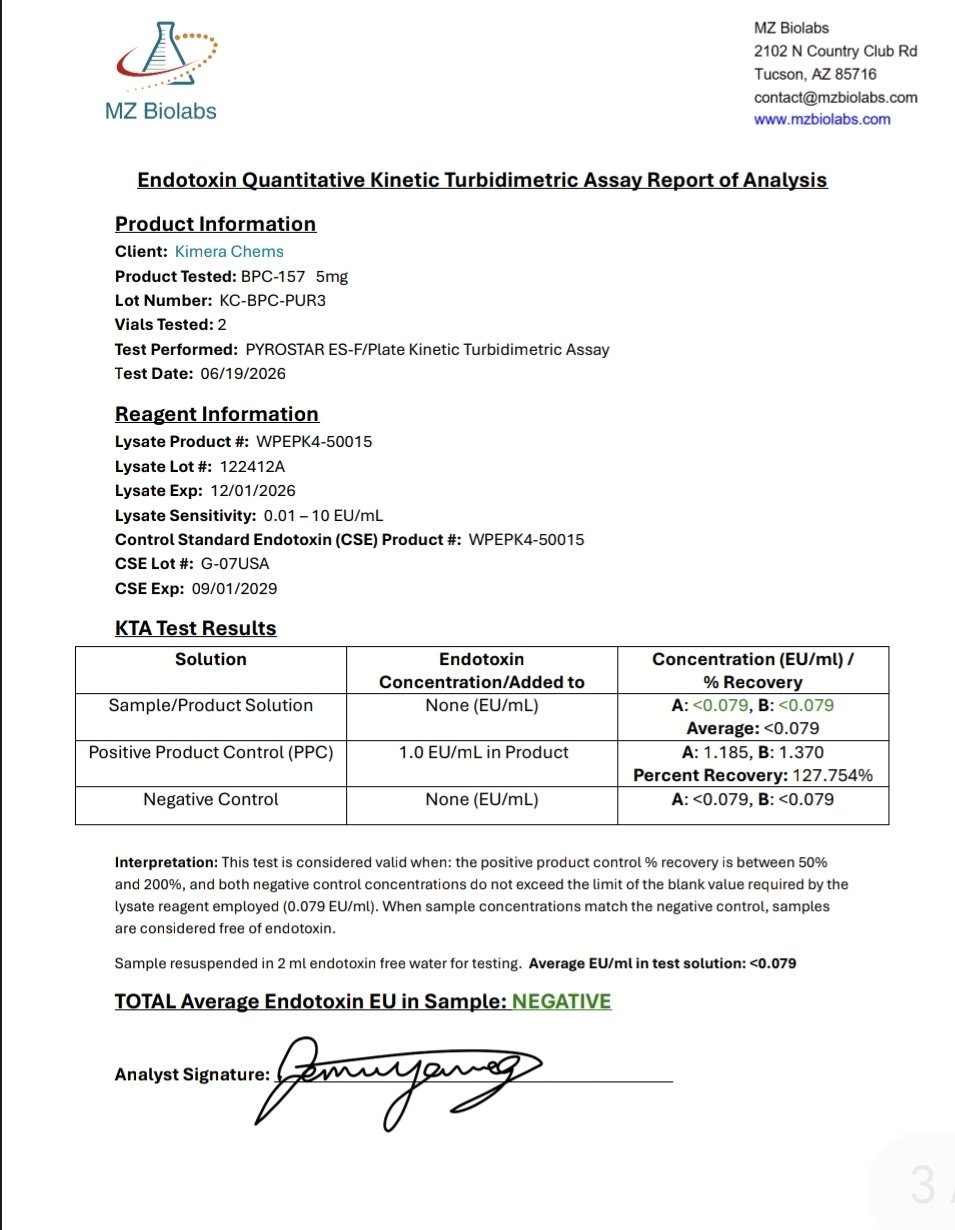
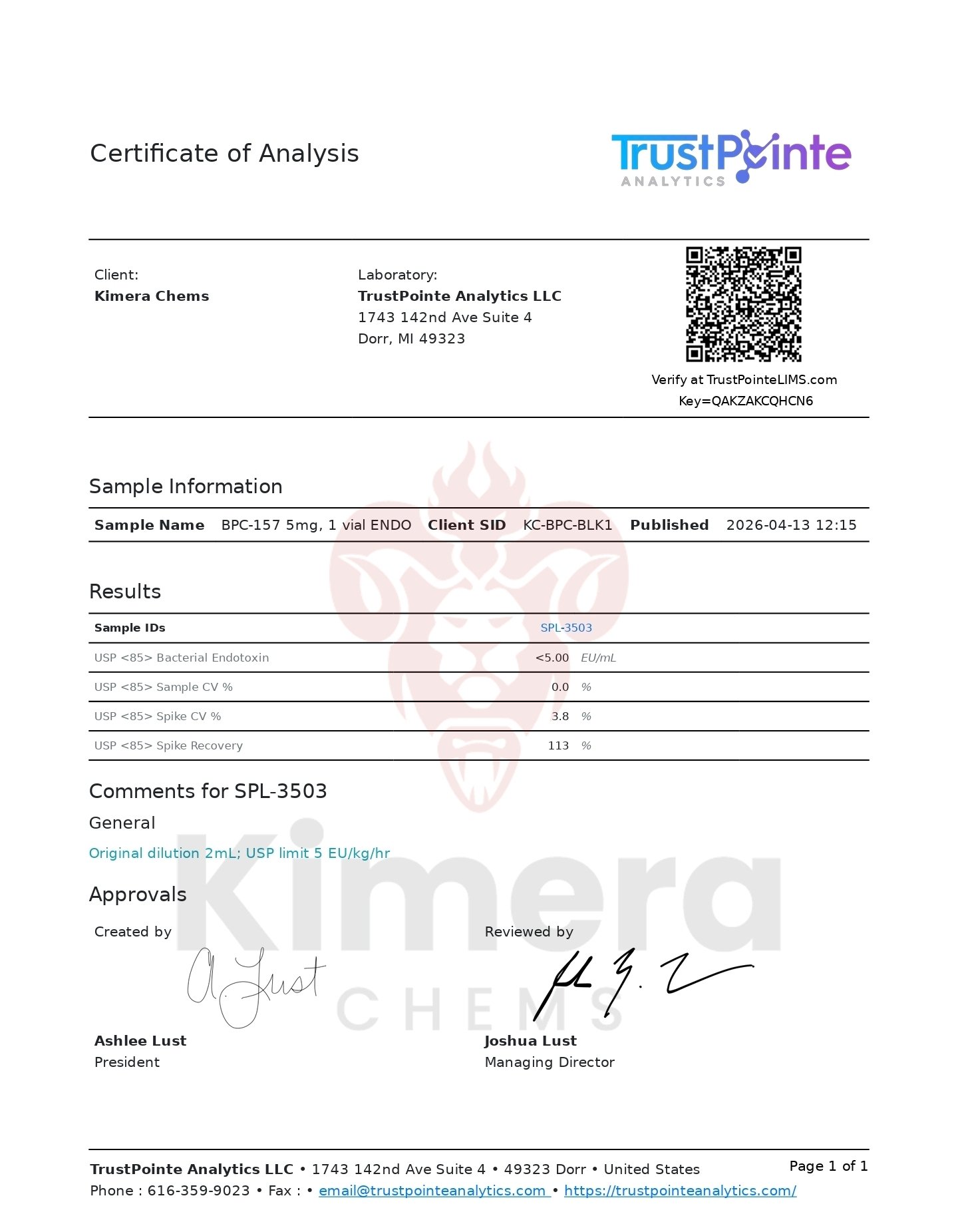
Analytical Auditing: Kimera Chems implements a strict dual-method verification protocol, combining High-Performance Liquid Chromatography (HPLC) with CHN elemental analysis to independently audit the net mass and absolute purity of our research compounds.
Research Use Only Disclaimer: This product is distributed and sold strictly as a Research Use Only (RUO) compound intended exclusively for in vitro laboratory evaluation and academic investigation. It is not an FDA-approved drug, licensed medication, dietary supplement, or cosmetic agent, and is strictly prohibited for human or veterinary consumption. Improper use of laboratory reference materials can present significant biological hazards. Kimera Chems supplies these materials exclusively to qualified scientific institutions and professional investigators.
Scientific References
-
Chang, C. H., Tsai, W. C., Lin, M. S., Hsu, Y. H., & Pang, J. H. (2011). “The promoting effect of pentadecapeptide BPC 157 on tendon healing involves tendon outgrowth, cell survival, and cell migration.” Journal of Applied Physiology, 110(3), 774–780. DOI: 10.1152/japplphysiol.00945.2010.
-
Hsieh, C. H., et al. (2017). “Pentadecapeptide BPC 157 enhances endothelial cell migration and angiogenesis via VEGFR2 activation.” Journal of Molecular Medicine, 95(3), 323-333. DOI: 10.1007/s00109-016-1488-y.
-
He, L., Feng, D., Guo, H., et al. (2022). “Pharmacokinetics, distribution, metabolism, and excretion of body-protective compound 157, a potential drug for treating various wounds, in rats and dogs.” Frontiers in Pharmacology, 13, 1026182. DOI: 10.3389/fphar.2022.1026182.
| CAS Number | 137525-51-0 |
| Other Names | BPC157, BPC 157, Bepecin, 8ED8NXK95P, Bpc 15, PLD-116, PL-14736, pl-10, Booly protection compound 15 |
| IUPAC Name | (4S)-4-[(2-aminoacetyl)amino]-5-[(2S)-2-[(2S)-2-[(2S)-2-[[2-[[(2S)-6-amino-1-[(2S)-2-[[(2S)-1-[[(2S)-3-carboxy-1-[[(2S)-3-carboxy-1-[[(2S)-1-[[2-[[(2S)-1-[[(1S)-1-carboxy-2-methylpropyl]amino]-4-methyl-1-oxopentan-2-yl]amino]-2-oxoethyl]amino]-1-oxopropan-2-yl]amino]-1-oxopropan-2-yl]amino]-1-oxopropan-2-yl]amino]-1-oxopropan-2-yl]carbamoyl]pyrrolidin-1-yl]-1-oxohexan-2-yl]amino]-2-oxoethyl]carbamoyl]pyrrolidine-1-carbonyl]pyrrolidine-1-carbonyl]pyrrolidin-1-yl]-5-oxopentanoic acid |
| Molecular Formula | C₆₂H₉₈N₁₆O₂₂ |
| Molecular Weight | 1419.5 |
Product FAQs
What is BPC-157 supplied for?
This material is supplied strictly for controlled, non-clinical laboratory and analytical research. It is not intended for human or animal consumption.
Which formats are available for BPC-157?
The current listing shows these options: Dry-Fill Capsule Arginate Form 500mcg/60ct/30mg, Liquid Arginate Form 30ml/1000mcg Per ml/30mg, Peptide (Lypholized) 5mg, Transdermal Gel (50ml/500mcg Per 1ml Pump/25mg). Availability can change, so confirm the selector above before ordering.
Where can I review product documentation?
Where available, batch documentation can be reviewed in the Certificate of Analysis library before ordering.
Research Documentation Guides
Review these supporting analytical guides before evaluating this material for a controlled research protocol:
Related products

Peptides


Peptides

Peptides

Peptides

Peptides

Peptides

Peptides


Peptides