

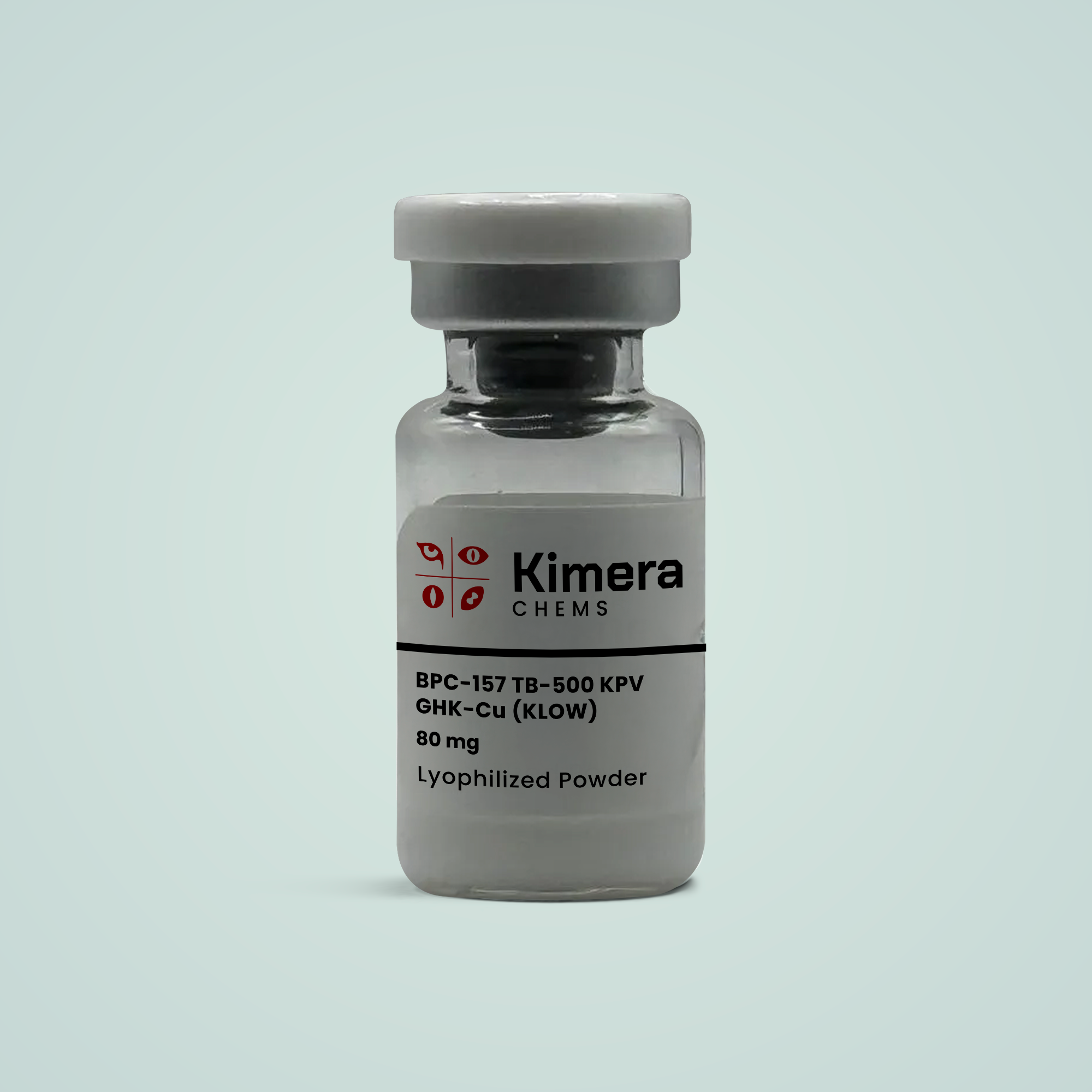


BPC-157 TB-500 KPV GHK-Cu (KLOW)

$99.99
Kimerachems BPC-157 TB-500 KPV GHK-Cu (KLOW) for sale. Intended for controlled laboratory and analytical research only.
Review available formats, product specifications and batch documentation before ordering. Not for human consumption.
999 in stock
Kimerachems BPC-157 TB-500 KPV GHK-Cu (KLOW) for sale. This material is supplied exclusively for controlled laboratory and analytical research. Review available formats, technical specifications and batch documentation before ordering. Not for human consumption.
KLOW Peptide Blend
The KLOW Peptide Blend is a highly specialized, multi-component research formulation engineered for advanced laboratory evaluation of concurrent cellular signaling networks. Combining four unique investigational molecules—KPV, BPC-157, Thymosin β4 (TB-500), and GHK-Cu—this matrix serves as a vital tool for investigators exploring complex receptor cross-talk, cellular communication, and parallel tissue-protective pathways. By presenting these peptides within a unified testing framework, the blend allows for the precise mapping of combined molecular interactions in in vitro and cell culture systems.
Technical Specifications
Because the KLOW blend represents a multi-target chemical matrix, its properties are defined by its constituent active peptides:
| Component | CAS Number | Molecular Formula | Molecular Weight | Chemical Class |
| KPV | 67727-97-3 | C₁₆H₃₀N₄O₄ | 342.43 g/mol | C-Terminal α-MSH Tripeptide Derivative |
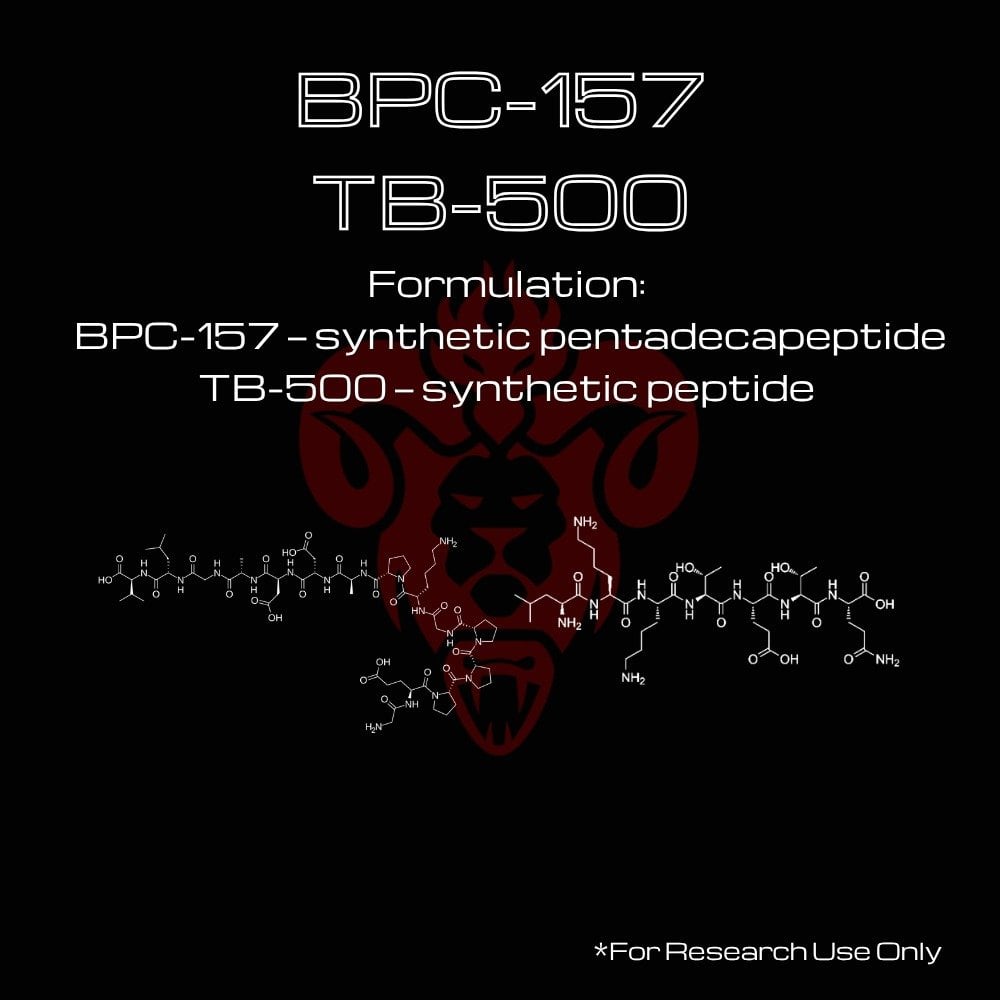
| BPC-157 | 137525-51-0 | C₆₂H₉₈N₁₆O₂₂ | 1419.56 g/mol | Synthetic Pentadecapeptide |
| Thymosin β4 | 77591-33-4 | C₂₁₂H₃base₅₀N₅₆O₇₈S | 4963.50 g/mol | 43-Amino Acid Actin-Sequestering Peptide |
| GHK-Cu | 89030-95-5 | C₁₄H₂₂CuN₆O₄ | 403.93 g/mol | Copper-Chelated Metallopeptide Complex |
Component Amino Acid Sequences:
-
KPV: Lys-Pro-Val
-
BPC-157: Gly-Glu-Pro-Pro-Pro-Gly-Lys-Pro-Ala-Asp-Asp-Ala-Gly-Leu-Val
-
Thymosin β4 (TB-500): Ac-Ser-Asp-Lys-Pro-Asp-Met-Ala-Glu-Ile-Glu-Lys-Phe-Asp-Lys-Ser-Lys-Leu-Lys-Lys-Thr-Glu-Thr-Gln-Glu-Lys-Asn-Pro-Leu-Pro-Ser-Lys-Glu-Thr-Ile-Glu-Gln-Glu-Lys-Gln-Ala-Gly-Glu-Ser
-
GHK-Cu: Gly-His-Lys (chelated with Copper(II) ion)
Note: Kimera Chems implements a strict verification standard, combining High-Performance Liquid Chromatography (HPLC) with CHN elemental analysis to independently audit each constituent peptide before blending, ensuring a component baseline purity of ≥98% and a precise, homogeneous mass ratio.
Research Applications & Mechanism of Interest
The primary utility of the KLOW matrix lies in its multi-pathway configuration. Rather than examining isolated cellular events, researchers apply this blend to track how distinct structural cascades influence or complement one another simultaneously inside advanced tissue models.
Each constituent targets a specific biochemical pathway:
-
Inflammatory Signaling Modulation: The KPV tripeptide is studied for its capacity to enter cells via specific peptide transporters (such as PepT1) to investigate internal NF-κB transcription factor modulation independent of melanocortin receptors.
-
Growth Factor & Nitric Oxide Cascades: BPC-157 serves as a key reference ligand for tracking vascular endothelial growth factor receptor 2 (VEGFR2) activation, early response gene expressions, and downstream nitric oxide synthesis.
-
Cytoskeletal Structural Organization: As a full-length 43-amino acid peptide, Thymosin β4 (TB-500) is utilized to examine G-actin sequestering mechanics, cellular migration, and cell survival under induced oxidative stress.
-
Extracellular Matrix Interactions: GHK-Cu functions as a copper-transporting metallopeptide, allowing researchers to evaluate copper-dependent remodeling, collagen synthesis up-regulation, and feedback loops within the extracellular matrix.
Primary fields of investigative research include:
-
Multi-Pathway Cell Studies: Executing parallel signaling analyses to track downstream cross-talk between structural, protective, and regulatory pathways.
-
Synergistic Matrix Modeling: Observing how combining different peptide architectures changes the localized molecular footprint and binding kinetics in cell culture systems.
-
Advanced In Vitro Modeling: Deploying the compound matrix within complex, differentiated cell lines or scratch assay models to measure competitive ligand-receptor behaviors.
Storage & Handling Guidelines
To maintain complete molecular uniformity, protect the integrity of the peptide bonds, and prevent premature degradation of the copper-peptide complex during analytical workflows:
-
Thermal Controls: For long-term chemical stabilization, store the material in a deeply frozen environment maintained at -20°C or lower. Short-term analytical baselines should be continuously refrigerated at 2–8°C.
-
Atmospheric & Moisture Safeguards: Keep the compound sealed tightly inside an airtight environment completely isolated from ambient humidity and moisture. Utilize internal desiccants where necessary.
-
Photolytic Barriers: Due to the light-sensitive nature of copper-bound metallopeptides, the compound must be continuously maintained inside opaque or amber laboratory vessels to fully mitigate light-induced degradation.
-
Workflow Mitigation: Minimize repeated environmental exposure and eliminate unnecessary thermal fluctuations to protect the precise structural ratio of the components.
Research Use Only Disclaimer: This product is engineered, distributed, and sold strictly as a Research Use Only (RUO) compound. It is not an FDA-approved drug, licensed medication, dietary supplement, or cosmetic agent, and is strictly prohibited for human or veterinary consumption. Kimera Chems supplies these reference materials exclusively to qualified scientific institutions and professional investigators for use within controlled laboratory frameworks.
Frequently Asked Research Questions
Why does the KLOW blend utilize the 43-amino acid Thymosin β4 sequence?
While short fragments are sometimes evaluated for localized binding, utilizing the complete 43-amino acid chain of native Thymosin β4 ensures that researchers can observe the full, unhindered actin-sequestering mechanisms and cell-migration signaling loops typical of the complete biological sequence.
How does GHK-Cu affect the properties of the blend?
GHK-Cu introduces a chelated copper(II) ion into the matrix, which transitions the electronic and spectral behavior of the system. This allows investigators to analyze copper-dependent tissue-remodeling interactions alongside standard peptide signaling pathways.
Scientific References
-
Dalmasso, G., Charrier-Hisamuddin, L., Nguyen, H. T., Yan, Y., Sitaraman, S., & Merlin, D. (2008). “PepT1-mediated transport of the tripeptide KPV modulates intestinal inflammation.” American Journal of Physiology-Gastrointestinal and Liver Physiology, 295(2), G336–G344. DOI: 10.1152/ajpgi.90234.2008.
-
Hsieh, C. H., et al. (2017). “Pentadecapeptide BPC 157 enhances endothelial cell migration and angiogenesis via VEGFR2 activation.” Journal of Molecular Medicine, 95(3), 323–333. DOI: 10.1007/s00109-016-1488-y.
-
Goldstein, A. L., Hannappel, E., & Kleinman, H. K. (2005). “Thymosin β4: actin-sequestering protein and more.” Expert Opinion on Biological Therapy, 5(2), 233–246. DOI: 10.1517/14712598.5.2.233.
-
Pickart, L., Vasquez-Soltero, J. M., & Margolina, A. (2015). “The human tripeptide GHK-Cu in prevention of oxidative stress and tissue remodeling.” BioMed Research International, 2015, 648418. DOI: 10.1155/2015/648418.
No product specifications available.
Product FAQs
What is BPC-157 TB-500 KPV GHK-Cu (KLOW) supplied for?
This material is supplied strictly for controlled, non-clinical laboratory and analytical research. It is not intended for human or animal consumption.
Which formats are available for BPC-157 TB-500 KPV GHK-Cu (KLOW)?
Available formats or options are shown in the product selector above. Current availability can change.
Where can I review product documentation?
Where available, batch documentation can be reviewed in the Certificate of Analysis library before ordering.
Research Documentation Guides
Review these supporting analytical guides before evaluating this material for a controlled research protocol:
Related products


Peptides

Peptides

Peptides
Peptides
Peptides

Peptides


Peptides


Peptides