

CJC-1295 No DAC/Ipamorelin Blend

$71.99
Kimerachems CJC-1295 No DAC/Ipamorelin Blend for sale. Intended for controlled laboratory and analytical research only.
Review available formats, product specifications and batch documentation before ordering. Not for human consumption.
1000 in stock
Kimerachems CJC-1295 No DAC/Ipamorelin Blend for sale. This material is supplied exclusively for controlled laboratory and analytical research. Review available formats, technical specifications and batch documentation before ordering. Not for human consumption.
CJC-1295 No DAC / Ipamorelin Blend
The CJC-1295 No DAC / Ipamorelin Matrix is a sophisticated, multi-component research formulation engineered to evaluate the dual-receptor activation dynamics of the endocrine growth hormone axis. This combined preparation pairs a tetrasubstituted growth hormone-releasing hormone (GHRH) analogue with a highly selective growth hormone secretagogue receptor (GHSR / ghrelin receptor) agonist. By presenting these two distinct classes of signaling-active peptides within a unified analytical matrix, the formulation serves as a high-precision tool for investigators analyzing receptor cross-talk, downstream intracellular messaging amplification, and the synergistic mechanics of pulsatile cellular cascades in vitro.
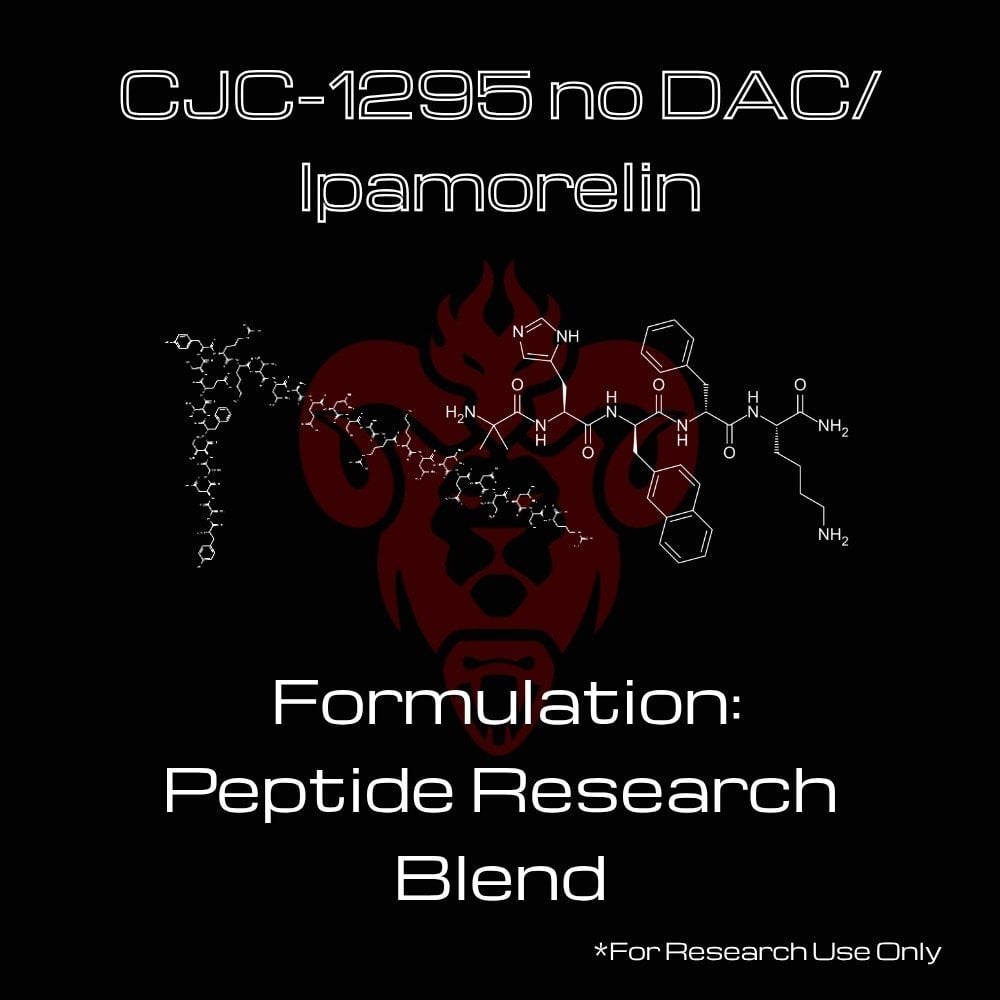
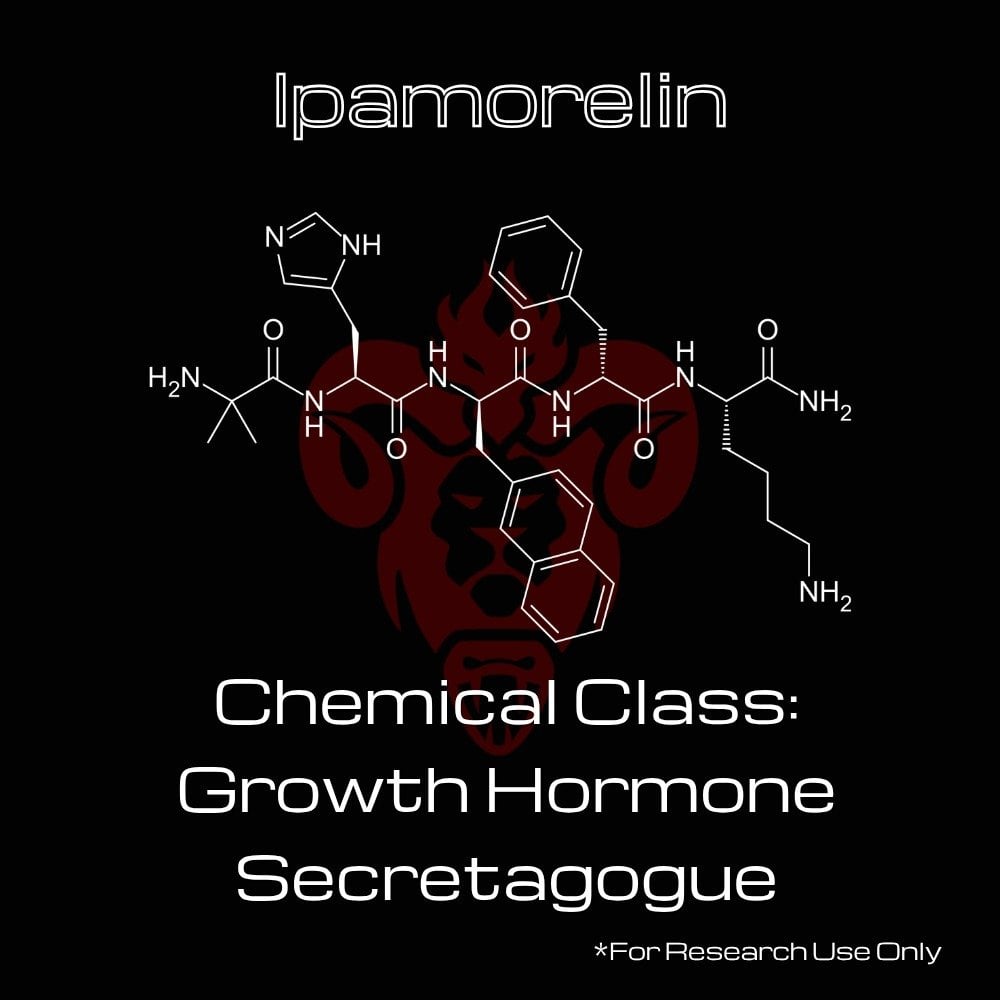
Structural Elements to Observe: The molecular diagram above shows the pentapeptide structure of Ipamorelin, a key constituent of this blend. Note its highly specific arrangement featuring a central 2-naphthylalanine and a terminal D-phenylalanine motif. This unique spatial layout allows it to selectively bind the ghrelin receptor (GHSR-1a) without cross-reacting with ACTH or cortisol pathways, providing a clean baseline when blended with the larger 29-amino acid chain of CJC-1295 No DAC.
Technical Specifications
Because this matrix represents a blended peptide formulation, its physical and chemical properties are defined by its dual constituent profiles:
| Component | CAS Number | Molecular Formula | Molecular Weight | Chemical Class / Target |
| CJC-1295 No DAC | 863288-34-0 | C₁₅₂H₂₅₂N₄₄O₄₂ | 3367.90 g/mol | Tetrasubstituted GHRH Receptor Agonist |
| Ipamorelin | 170851-70-4 | C₃₈H₄₉N₉O₅ | 711.90 g/mol | Pentapeptide Ghrelin Receptor (GHSR) Agonist |
Component Amino Acid Sequences:
-
CJC-1295 No DAC: Tyr-D-Ala-Asp-Ala-Ile-Phe-Thr-Gln-Ser-Tyr-Arg-Lys-Val-Leu-Ala-Gln-Leu-Ser-Ala-Arg-Lys-Leu-Leu-Gln-Asp-Ile-Leu-Ser-Arg-NH₂
-
Ipamorelin: Aib-His-D-2-Nal-D-Phe-Lys-NH₂ (where Aib = α-aminoisobutyric acid, 2-Nal = 2-naphthylalanine)
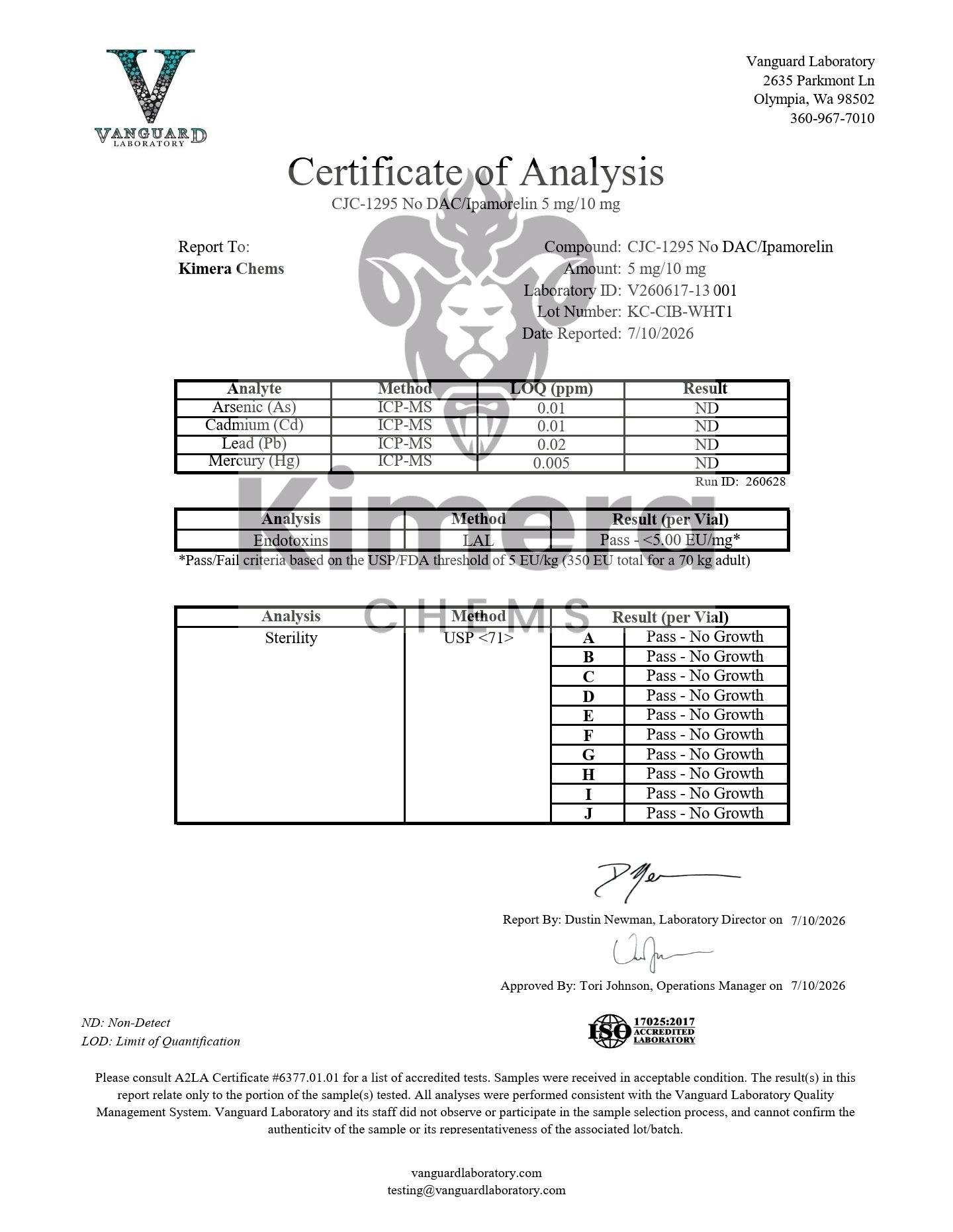
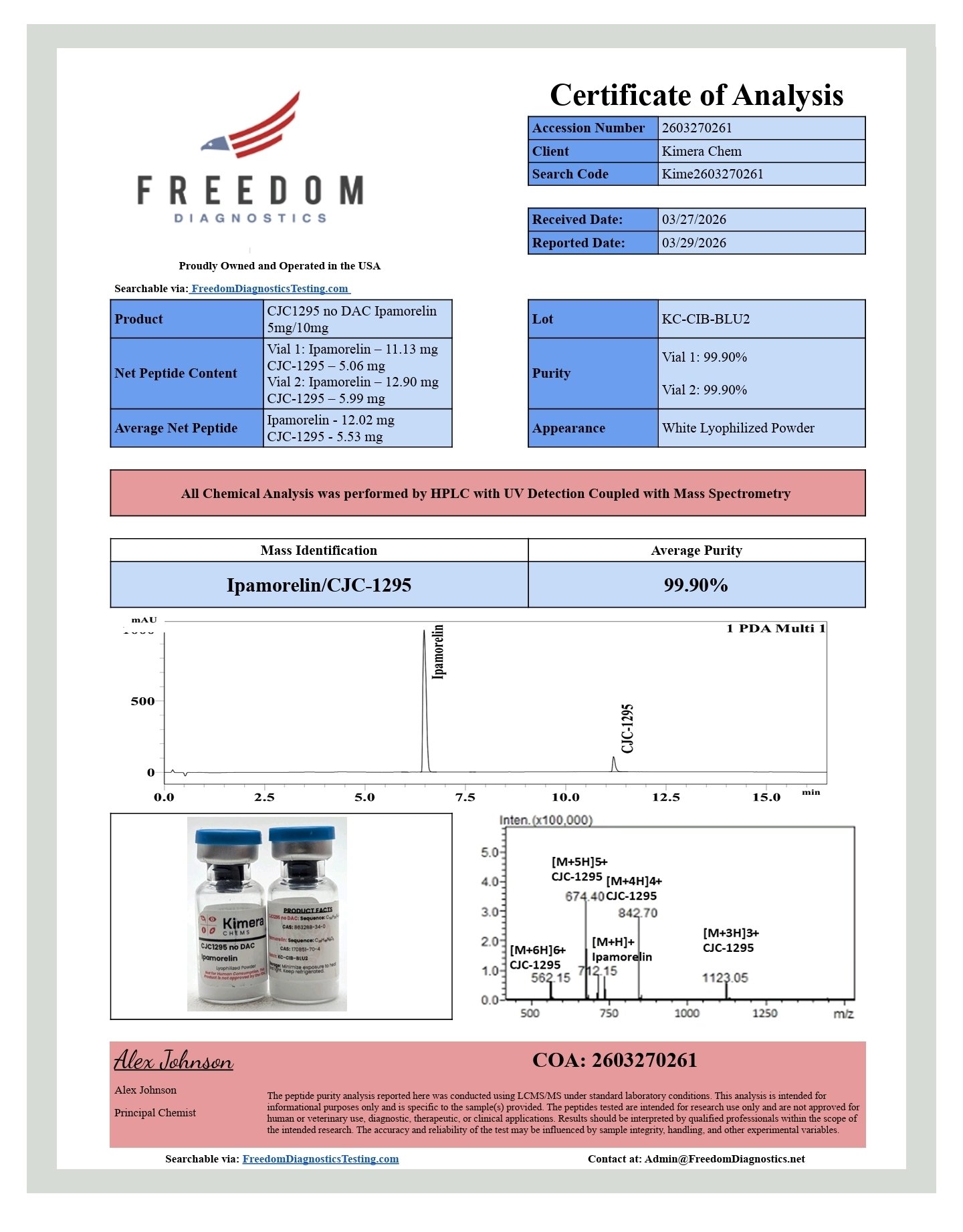
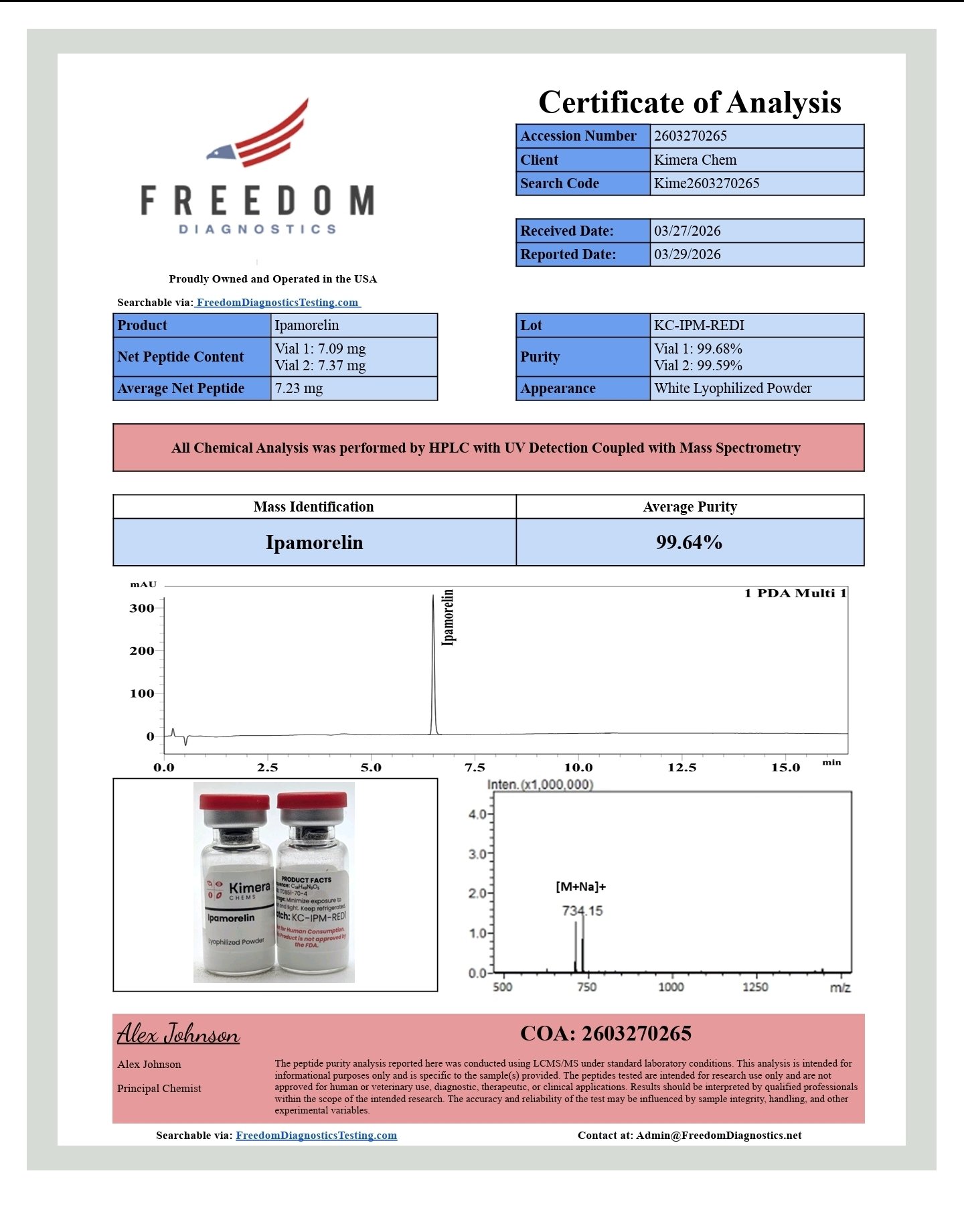
Note: Kimera Chems implements a strict quality assurance standard. Every component peptide is independently verified via High-Performance Liquid Chromatography (HPLC) and CHN elemental analysis to ensure an individual baseline purity of ≥98% before undergoing a highly controlled blending process to achieve complete batch homogeneity.
Research Applications & Synergistic Mechanics
The primary focus of the CJC-1295 No DAC / Ipamorelin blend in preclinical research is the observation of synergistic pathway signaling. In native biology, growth hormone release from pituitary somatotrophs is regulated via two separate, complementary pathways: GHRH stimulates the production and release of growth hormone, while ghrelin acts to amplify the signal amplitude and suppress downstream inhibitory signals (like somatostatin).
Primary fields of investigative research include:
-
Dual-Receptor Cascade Kinetics: Evaluating cell culture models to measure how the concurrent activation of the G-protein coupled receptors GHRHR and GHSR alters intracellular cyclic adenosine monophosphate (cAMP) accumulation and phospholipase C (PLC) activation loops.
-
Short-Duration Pulse Modeling: Utilizing the non-conjugated “No DAC” version of the GHRH analogue to model transient, acute receptor occupancy thresholds without causing the persistent receptor desensitization seen in long-acting formulas.
-
Comparative Secretagogue Affinity: Benchmarking combined ligand-binding behaviors against monocomponent applications to track changes in downstream transcription factors and early response genes.
-
Multi-Ligand Chromatographic Separations: Serving as a complex analytical standard for resolving two peptides with a massive mass disparity (~3,367 g/mol vs. ~711 g/mol) simultaneously on a single column gradient.
Storage & Handling Guidelines
To preserve the delicate peptide bonds of both molecules and ensure complete uniformity across analytical workflows:
-
Thermal Preservation: Keep the dry, lyophilized formulation in a deeply frozen environment maintained at -20°C or below for long-term stability.
-
Reconstituted Fluid Handling: Once dissolved in sterile, molecular-grade laboratory buffers, store the liquid assay continuously in the refrigerator at 2–8°C. Avoid repeated freeze-thaw cycles, which can mechanically split the heavier peptide chains.
-
Atmospheric Boundaries: Peptides are highly sensitive to moisture. Keep containers tightly sealed inside a desiccated environment to prevent atmospheric condensation.
-
Photolytic Mitigation: Protect from direct ultraviolet and light arrays by utilizing opaque or high-grade amber laboratory containment vessels.
Research Use Only Disclaimer: This product is engineered, blended, and sold strictly as a Research Use Only (RUO) compound. It is not an FDA-approved drug, licensed medication, active pharmaceutical ingredient, or dietary supplement, and is strictly prohibited for human or veterinary use. No dosing schedules, safety parameters, or clinical protocols are provided or implied. Kimera Chems supplies these reference standards exclusively to accredited institutional laboratories and certified scientific investigators for in vitro analytical research.
Frequently Asked Research Questions
Why are these two specific peptides combined in endocrine models?
In cellular modeling, utilizing a single agonist only activates one arm of the growth hormone secretagogue system. Combining a GHRH agonist (CJC-1295 No DAC) with a ghrelin receptor agonist (Ipamorelin) replicates the natural dual-activation mechanism of the pituitary axis. Preclinical data indicates that activating both receptors simultaneously yields a synergistic signaling response that is significantly greater than the mathematical sum of both parts applied individually.
How does the mass difference affect solution preparation?
Because CJC-1295 No DAC has a molecular weight roughly 4.7 times greater than Ipamorelin, a 1:1 mass ratio blend in a vial contains significantly more molecules of Ipamorelin than of the GHRH analogue. Researchers calculating exact molarity thresholds for cell-free binding assays must adjust their liquid handling volumes based on the specific molecular weights provided in the technical profile.
Scientific References
-
Popovic, V., Damjanovic, S., Micic, D., Djurovic, M., Dieguez, C., & Casanueva, F. F. (1995). “Blunted growth hormone (GH) response to maximal co-administration of GH-releasing hormone plus GH-releasing peptide-6 in mans.” Clinical Endocrinology, 43(2), 229–235. DOI: 10.1111/j.1365-2265.1995.tb01920.x.
-
Raun, K., Hansen, B. S., Johansen, N. L., Thøgersen, H., Madsen, K., Ankersen, M., & Andersen, P. H. (1998). “Ipamorelin, the first selective growth hormone secretagogue.” European Journal of Endocrinology, 139(5), 552–561. DOI: 10.1530/eje.0.1390552.
-
Teichman, S. L., Neale, A., Lawrence, B., Gagnon, C., Castaigne, J. P., & Cleland, G. R. (2006). “Prolonged stimulation of growth hormone (GH) and insulin-like growth factor I secretion by CJC-1295, a long-acting analog of GH-releasing hormone, in healthy subjects.” The Journal of Clinical Endocrinology & Metabolism, 91(3), 799–805. DOI: 10.1210/jc.2005-1536.
| CAS Number | 863288-34-0 (CJC-1295 No DAC) – 170851-70-4 (Ipamorelin) |
| Other Names | CJC-1295 (No DAC) and Ipamorelin 5mg/5mg Blend |
| IUPAC Name | CJC-1295 (No DAC): 4-[[1-[[1-[[1-[[1-[[5-amino-1-[[1-[[1-[[1-[[6-amino-1-[[1-[[1-[[1-[[5-amino-1-[[1-[[1-[[1-[[1-[[6-amino-1-[[1-[[1-[[5-amino-1-[[1-[[1-[[1-[[1-[(1-amino-5-carbamimidamido-1-oxopentan-2-yl)amino]-3-hydroxy-1-oxopropan-2-yl]amino]-4-methyl-1-oxopentan-2-yl]amino]-3-methyl-1-oxopentan-2-yl]amino]-3-carboxy-1-oxopropan-2-yl]amino]-1,5-dioxopentan-2-yl]amino]-4-methyl-1-oxopentan-2-yl]amino]-4-methyl-1-oxopentan-2-yl]amino]-1-oxohexan-2-yl]amino]-5-carbamimidamido-1-oxopentan-2-yl]amino]-1-oxopropan-2-yl]amino]-3-hydroxy-1-oxopropan-2-yl]amino]-4-methyl-1-oxopentan-2-yl]amino]-1,5-dioxopentan-2-yl]amino]-1-oxopropan-2-yl]amino]-4-methyl-1-oxopentan-2-yl]amino]-3-methyl-1-oxobutan-2-yl]amino]-1-oxohexan-2-yl]amino]-5-carbamimidamido-1-oxopentan-2-yl]amino]-3-(4-hydroxyphenyl)-1-oxopropan-2-yl]amino]-3-hydroxy-1-oxopropan-2-yl]amino]-1,5-dioxopentan-2-yl]amino]-3-hydroxy-1-oxobutan-2-yl]amino]-1-oxo-3-phenylpropan-2-yl]amino]-3-methyl-1-oxopentan-2-yl]amino]-1-oxopropan-2-yl]amino]-3-[2-[[2-amino-3-(4-hydroxyphenyl)propanoyl]amino]propanoylamino]-4-oxobutanoic acidIpamorelin: (2S)-6-amino-2-[[(2R)-2-[[(2R)-2-[[(2S)-2-[(2-amino-2-methylpropanoyl)amino]-3-(1H-imidazol-5-yl)propanoyl]amino]-3-naphthalen-2-ylpropanoyl]amino]-3-phenylpropanoyl]amino]hexanamide |
| Molecular Formula | FormulaCJC-1295 No DAC C₁₅₂H₂₅₂N₄₄O₄₂ – Ipamorelin C₃₈H₄₉N₉O₅ |
| Molecular Weight | CJC-1295 (No DAC) 3367.9 – Ipamorelin 711.9 |
Product FAQs
What is CJC-1295 No DAC/Ipamorelin Blend supplied for?
This material is supplied strictly for controlled, non-clinical laboratory and analytical research. It is not intended for human or animal consumption.
Which formats are available for CJC-1295 No DAC/Ipamorelin Blend?
Available formats or options are shown in the product selector above. Current availability can change.
Where can I review product documentation?
Where available, batch documentation can be reviewed in the Certificate of Analysis library before ordering.
Research Documentation Guides
Review these supporting analytical guides before evaluating this material for a controlled research protocol:
Related products
Peptides


Peptides

Peptides

Peptides

Peptides


Peptides
Peptides


Peptides