


Oxytocin


$29.99
Kimerachems Oxytocin for sale. Intended for controlled laboratory and analytical research only.
Review available formats, product specifications and batch documentation before ordering. Not for human consumption.
1000 in stock
Kimerachems Oxytocin for sale. This material is supplied exclusively for controlled laboratory and analytical research. Review available formats, technical specifications and batch documentation before ordering. Not for human consumption.
Oxytocin Research Standard
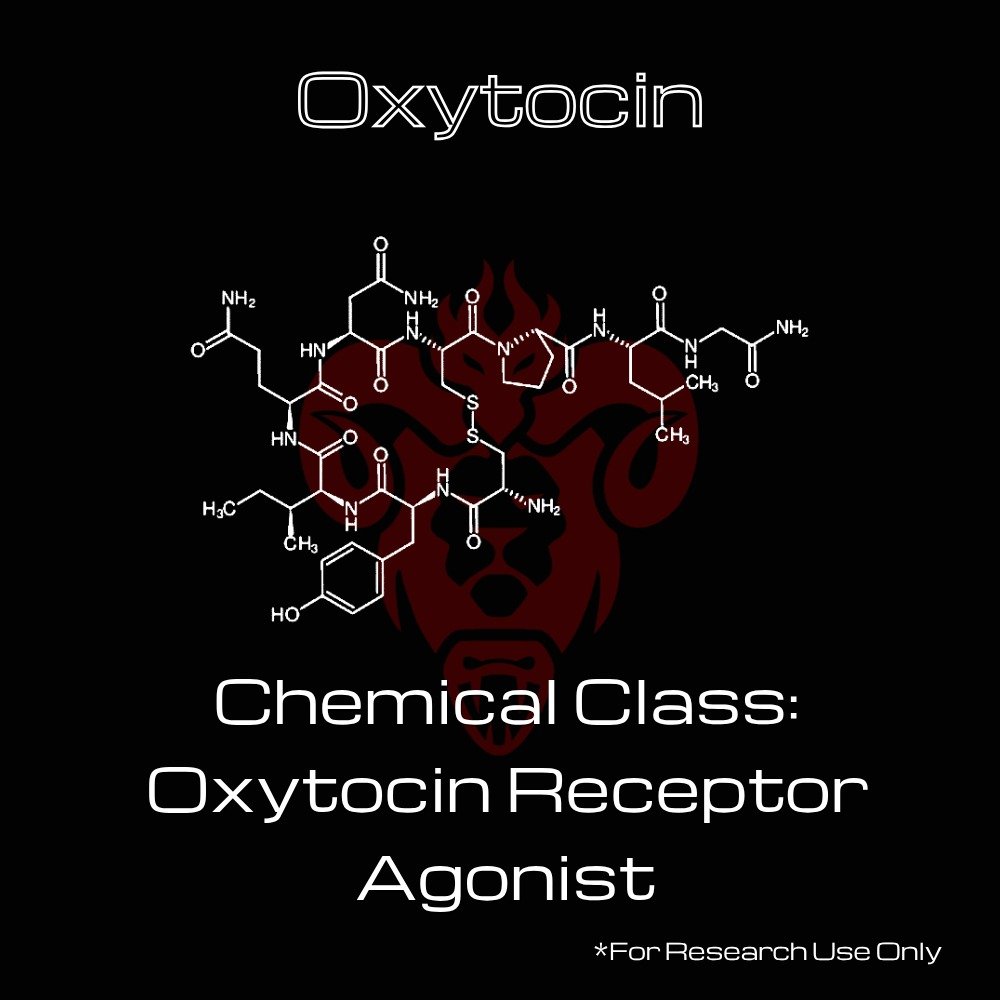
Oxytocin is a synthetic cyclic nonapeptide utilized as a high-precision research reagent in molecular biology and pharmacology. Structurally characterized by nine amino acids and a distinctive disulfide bridge between two cysteine residues, this molecule creates a cyclic ring essential for its biological activity. In controlled laboratory environments, oxytocin is primarily employed as a reference ligand to study the structural determinants of receptor-ligand docking, particularly its interaction with the G-protein-coupled oxytocin receptor (OXTR). Its defined conformation and stability make it an essential tool for mapping peptide signaling pathways and receptor pharmacology.
Technical Specifications
| Property | Specification |
| Product Name | Oxytocin |
| Chemical Formula | C₄₃H₆₆N₁₂O₁₂S₂ |
| Molecular Weight | 1007.2 g/mol |
| Chemical Class | Cyclic nonapeptide |
| Physical Appearance | White lyophilized solid |
| Assay Purity | ≥ 98% (HPLC verified) |
Mechanism of Action & Research Context
Oxytocin operates as a signaling molecule through high-affinity binding to the oxytocin receptor (OXTR). Its structural integrity—specifically the cyclic loop—is critical for its receptor interaction.
-
Cyclic Structure: The disulfide bond between the cysteine residues at positions 1 and 6 constrains the peptide backbone. This cyclic conformation is necessary for effective binding to the OXTR, allowing the molecule to fit precisely into the receptor’s orthosteric binding pocket.
-
Receptor Interaction: By acting as a potent agonist in in vitro models, the molecule initiates G-protein-coupled signaling cascades. Researchers utilize this synthetic version to probe the spatial requirements and structural flexibility of the OXTR binding site.
-
Signaling Pathways: The ligand-receptor association is often measured by downstream intracellular calcium mobilization or other marker activation, providing data on the efficacy and potency of synthetic peptide derivatives.
Research Applications
Oxytocin is a specialized tool for structural biology and receptor mapping.
Primary fields of in vitro laboratory investigation include:
-
Receptor Binding Studies: Quantifying the affinity of the peptide for specific cell-surface receptor models using competitive radioligand or fluorescence binding assays.
-
Structural Biology: Investigating peptide folding and the thermodynamic stability of the disulfide bridge within varying solvent environments.
-
Molecular Interaction Mapping: Using computational and empirical models to observe the physical docking and orientation of the nonapeptide within the OXTR pocket.
-
Signaling Pathway Analysis: Evaluating the chemical steps and kinetic responses that follow the peptide-receptor association in controlled cell culture systems.
Storage & Handling Guidelines
To maintain the chemical stability and experimental reliability of the peptide:
-
Lyophilized Storage: Store in a cool, dry place. For long-term integrity, storage in a freezer (typically -20 °C) is recommended. Keep away from direct light.
-
Reconstituted Storage: If the sample is reconstituted, it should be kept refrigerated (2–8 °C) and used promptly to avoid degradation.
-
Environmental Control: Use airtight containers, ideally with a desiccant, to maintain a dry environment. Keep the lid tightly closed to prevent hydration of the lyophilized powder.
-
Aseptic Technique: Utilize sterile laboratory tools and equipment when handling the powder to prevent cross-contamination.
Research Use Disclaimer
Research Use Only Disclaimer: This product is developed and distributed strictly as a Research Use Only (RUO) laboratory reference chemical intended exclusively for non-clinical analytical and scientific investigation. It is not an FDA-approved drug, medical treatment, dietary supplement, or food ingredient, and is strictly prohibited for human or animal consumption. Kimera Chems supplies this high-purity research material solely to qualified institutions and professional investigators for authorized laboratory research.
| CAS Number | 50-56-6 |
| Other Names | Pitocin, Endopituitrina, Ocytocin |
| IUPAC Name | (2S)-1-[(4R,7S,10S,13S,16S,19R)-19-amino-7-(2-amino-2-oxoethyl)-10-(3-amino-3-oxopropyl)-13-[(2S)-butan-2-yl]-16-[(4-hydroxyphenyl)methyl]-6,9,12,15,18-pentaoxo-1,2-dithia-5,8,11,14,17-pentazacycloicosane-4-carbonyl]-N-[(2S)-1-[(2-amino-2-oxoethyl)amino]-4-methyl-1-oxopentan-2-yl]pyrrolidine-2-carboxamide |
| Molecular Formula | C₄₃H₆₆N₁₂O₁₂S₂ |
| Molecular Weight | 1007.2 |
Product FAQs
What is Oxytocin supplied for?
This material is supplied strictly for controlled, non-clinical laboratory and analytical research. It is not intended for human or animal consumption.
Which formats are available for Oxytocin?
Available formats or options are shown in the product selector above. Current availability can change.
Where can I review product documentation?
Where available, batch documentation can be reviewed in the Certificate of Analysis library before ordering.
Research Documentation Guides
Review these supporting analytical guides before evaluating this material for a controlled research protocol:
Related products
Peptides


Peptides


Peptides


Peptides

Peptides
Peptides
Peptides

Peptides