


Piracetam

Price range: $31.99 through $51.99
Kimerachems Piracetam for sale. Intended for controlled laboratory and analytical research only.
Review available formats, product specifications and batch documentation before ordering. Not for human consumption.
Kimerachems Piracetam for sale. This material is supplied exclusively for controlled laboratory and analytical research. Review available formats, technical specifications and batch documentation before ordering. Not for human consumption.
Piracetam (2-Oxo-1-pyrrolidineacetamide) Research Standard
Piracetam (2-oxo-1-pyrrolidineacetamide) is a cyclic derivative of the endogenous neurotransmitter GABA and serves as the foundational parent compound of the racetam class. As the archetype for this series, it has been a cornerstone of neuropharmacological research since 1964. Its defining characteristic in scientific literature is its complex, unresolved mechanism of action, which continues to drive investigations into membrane biophysics, neuronal excitability, and mitochondrial bioenergetics. Because it acts as an all-encompassing scaffold for the entire racetam series, it remains a requisite reference standard for structure-activity relationship (SAR) studies.
Technical Specifications
| Property | Specification |
| Product Name | Piracetam |
| IUPAC Name | 2-oxo-1-pyrrolidineacetamide |
| Chemical Formula | C₆H₁₀N₂O₂ |
| Molecular Weight | 142.16 g/mol |
| CAS Number | 7491-74-9 |
| Chemical Class | Pyrrolidinone (Racetam class parent) |
| Physical Appearance | White crystalline powder |
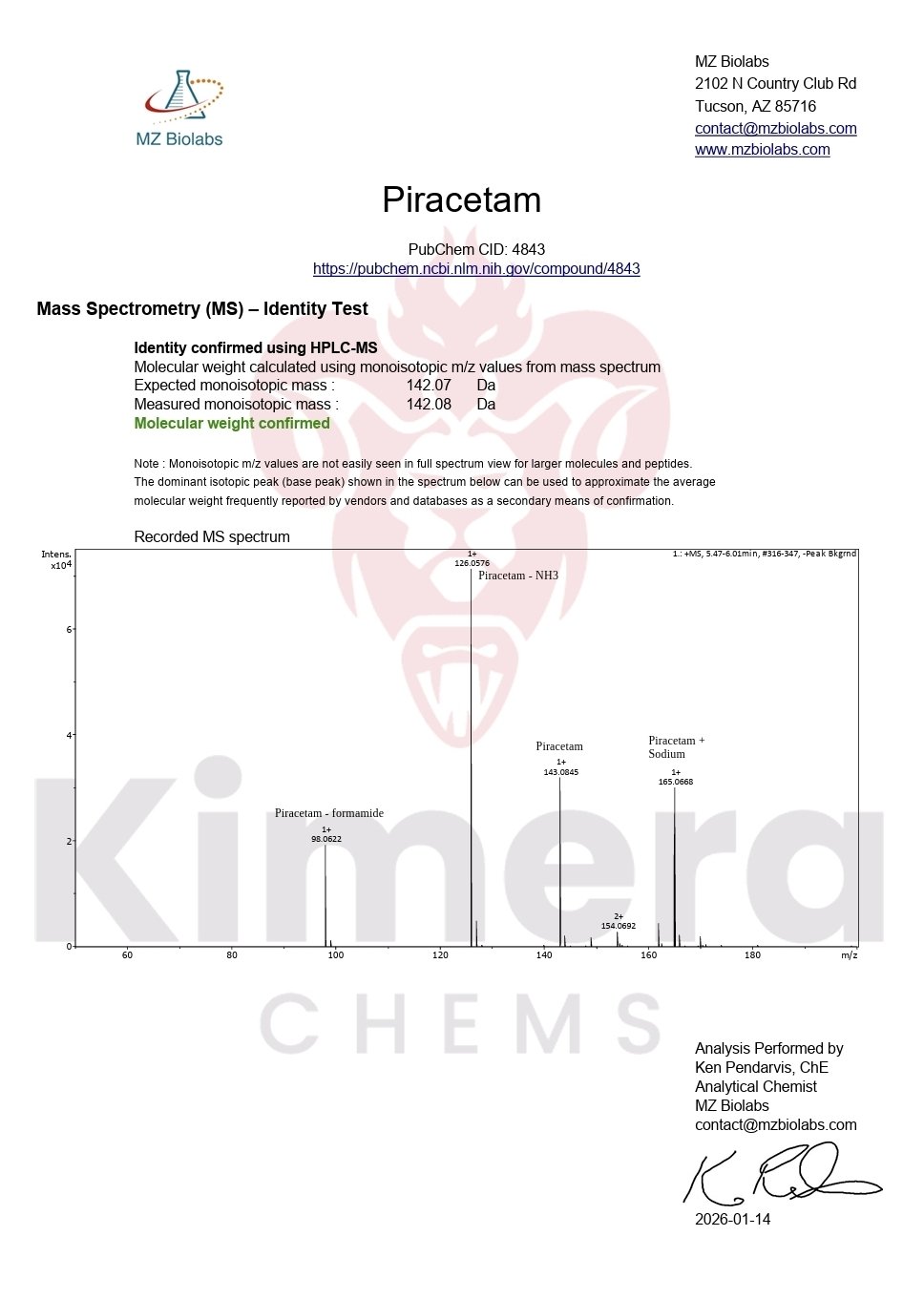
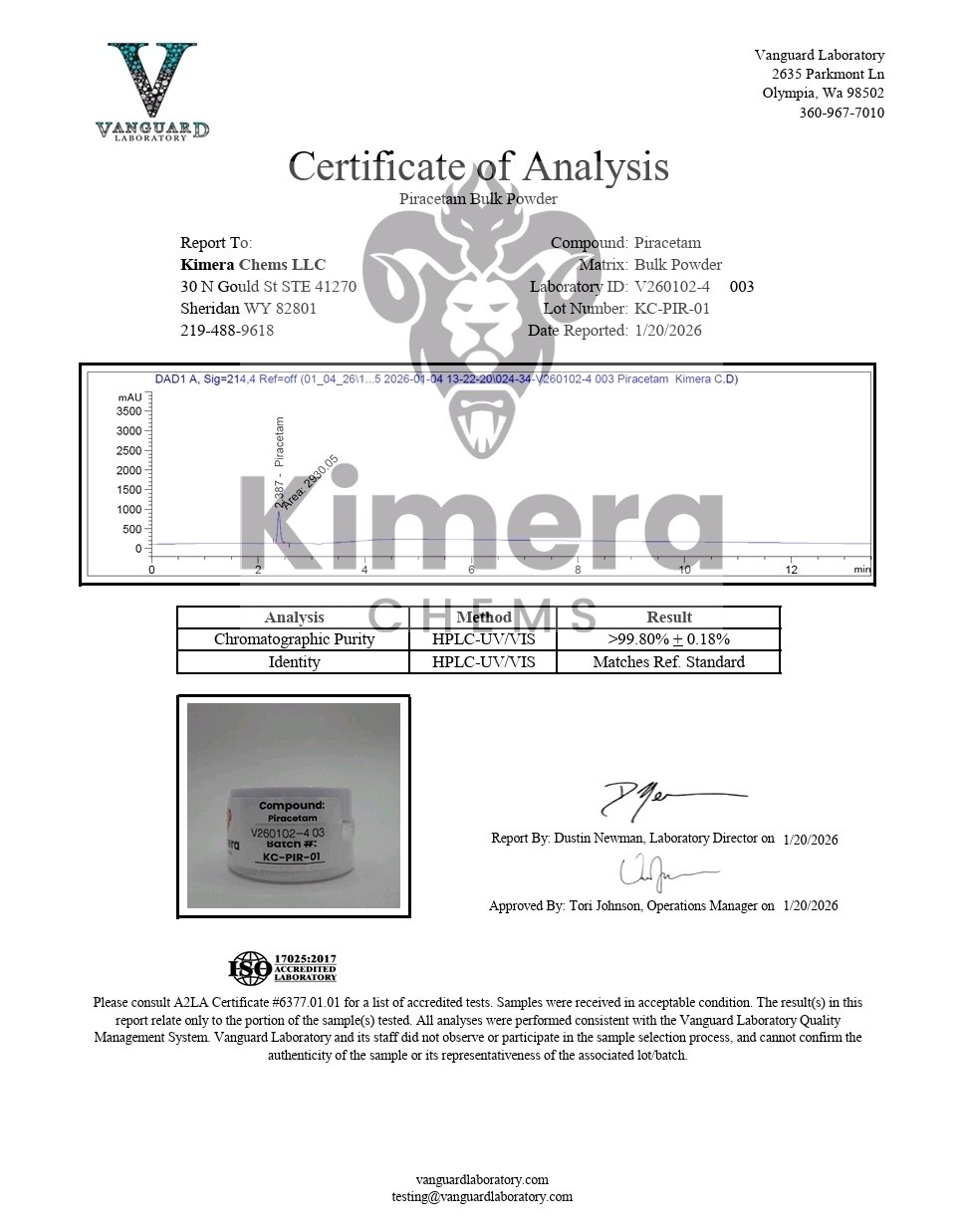
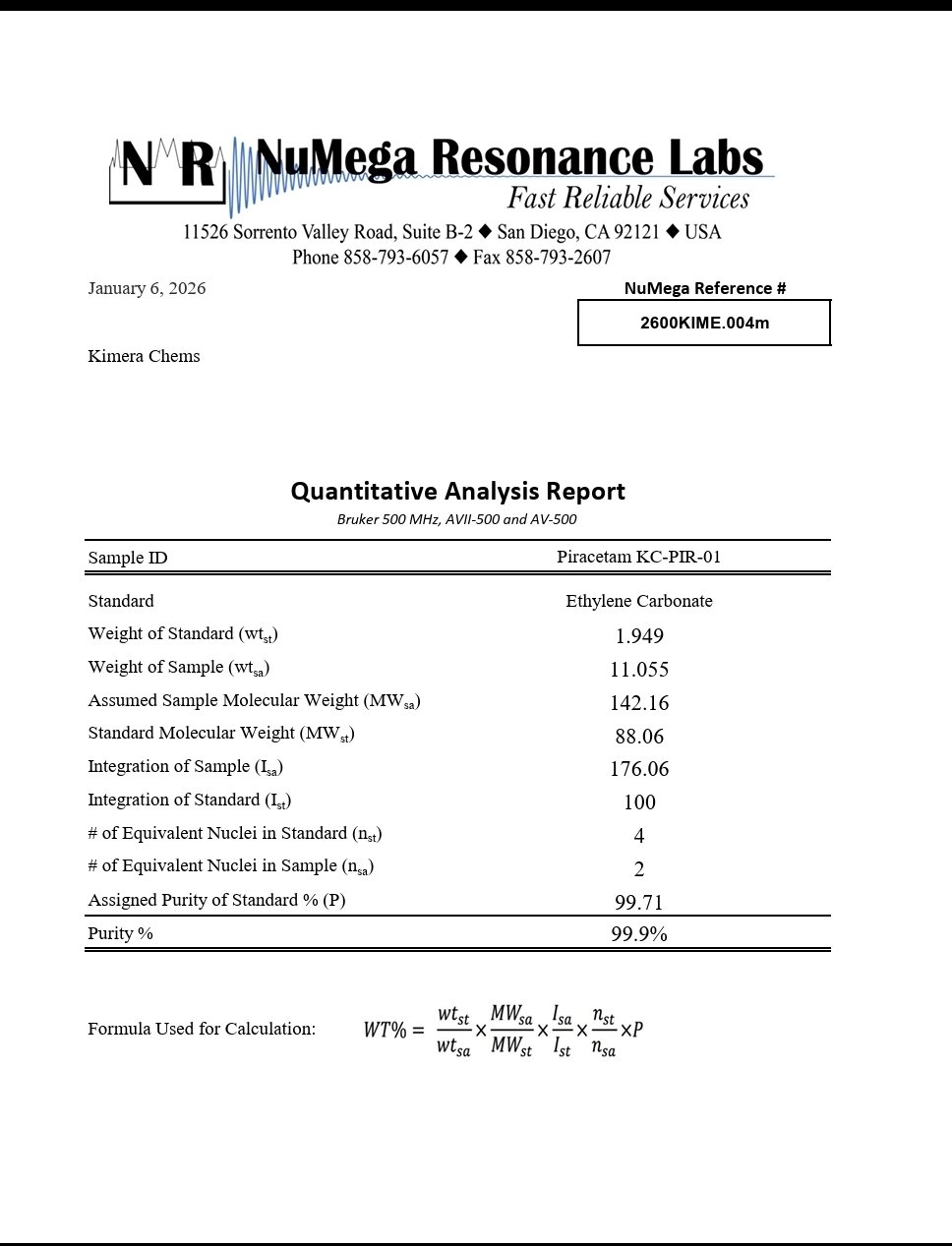
| Assay Purity | ≥ 99% (HPLC verified) |
Mechanism of Action & Research Context
Piracetam’s pharmacology remains a subject of active study. It does not function as a direct agonist or antagonist at any single identified receptor, which distinguishes it from more targeted pharmaceutical agents.
-
Membrane Biophysics: Research investigates the compound’s interaction with the phospholipid bilayer, hypothesizing that it modulates neuronal membrane fluidity, which may indirectly influence receptor protein function and cellular signaling efficiency.
-
AMPA Receptor Modulation: Studies have explored the allosteric modulation of AMPA-type glutamate receptors, proposing that piracetam may influence receptor density or sensitivity in specific neuronal populations.
-
Mitochondrial Bioenergetics: Investigations into mitochondrial function suggest that piracetam may influence oxygen and glucose consumption pathways, providing a stable model for studying cellular energy metabolism under stress.
Research Applications
Piracetam is utilized primarily as a standardized reference compound in comparative neuropharmacology and biophysical studies.
Primary fields of in vitro laboratory investigation include:
-
Membrane Biophysics: Mapping the interactions between pyrrolidinone derivatives and phospholipid model systems to understand how chemical structure influences bilayer dynamics.
-
AMPA Receptor Signaling: Using piracetam as a comparative tool in glutamate receptor modulation assays.
-
Mitochondrial Respirometry: Measuring bioenergetic shifts and ATP production efficiency in cellular cultures exposed to varying concentrations of the parent racetam scaffold.
-
Structure–Activity Relationship (SAR) Research: Serving as the definitive control molecule when evaluating the binding affinity or signaling modulation of newer, higher-potency racetam derivatives.
Storage & Handling Guidelines
To maintain the chemical stability and experimental reliability of the compound:
-
Hygroscopic Management: Piracetam is highly hygroscopic. Exposure to humidity causes the powder to cake, which compromises weighing accuracy. Ensure the storage bottle is kept tightly closed with a desiccant pack included.
-
Storage Environment: Keep in a cool, dry, and dark place.
-
Aseptic Technique: Use clean, dry spatulas or weighing tools. Prevent any moisture ingress, as the material readily absorbs atmospheric water.
-
Inspection: Verify the consistency of the powder before use; if caking occurs, re-assess the sample for moisture contamination.
References
-
Giurgea C. (1973) “The ‘nootropic’ approach to the pharmacology of the integrative activity of the brain.” Cond. Reflex. 8(2): 108–115.
-
Malykh AG, Sadaie MR. (2010) “Piracetam and piracetam-like drugs: from basic science to novel clinical applications to CNS disorders.” Drugs. 70(3): 287–312.
Research Use Disclaimer
Research Use Only Disclaimer: This product is developed and distributed strictly as a Research Use Only (RUO) laboratory reference chemical intended exclusively for non-clinical analytical and scientific investigation. It is not an FDA-approved drug, medical treatment, dietary supplement, or food ingredient, and is strictly prohibited for human or animal consumption. Kimera Chems supplies this high-purity research material solely to qualified institutions and professional investigators for authorized laboratory research.
| CAS Number | 7491-74-9 |
| Other Names | Nootropil, Nootropyl, Pyracetam, Normabrain, Gabacet, Pyramem, Ciclofalina |
| IUPAC Name | 2-(2-Oxopyrrolidin-1-yl)acetamide |
| Molecular Formula | C₆H₁₀N₂O₂ |
| Molecular Weight | 142.16 |
Product FAQs
What is Piracetam supplied for?
This material is supplied strictly for controlled, non-clinical laboratory and analytical research. It is not intended for human or animal consumption.
Which formats are available for Piracetam?
The current listing shows these options: 50-grams-powder, dry-fill-capsules-400mg-120ct-48g. Availability can change, so confirm the selector above before ordering.
Where can I review product documentation?
Where available, batch documentation can be reviewed in the Certificate of Analysis library before ordering.
Research Documentation Guides
Review these supporting analytical guides before evaluating this material for a controlled research protocol:
Related products

Nootropics

Nootropics


Nootropics

Nootropics


Nootropics

Peptides


Nootropics

Peptides