

Semax
Price range: $26.99 through $81.99
Kimerachems Semax for sale. Intended for controlled laboratory and analytical research only.
Review available formats, product specifications and batch documentation before ordering. Not for human consumption.
Kimerachems Semax for sale. This material is supplied exclusively for controlled laboratory and analytical research. Review available formats, technical specifications and batch documentation before ordering. Not for human consumption.
Semax (ACTH 4-7 Analog) Research Standard
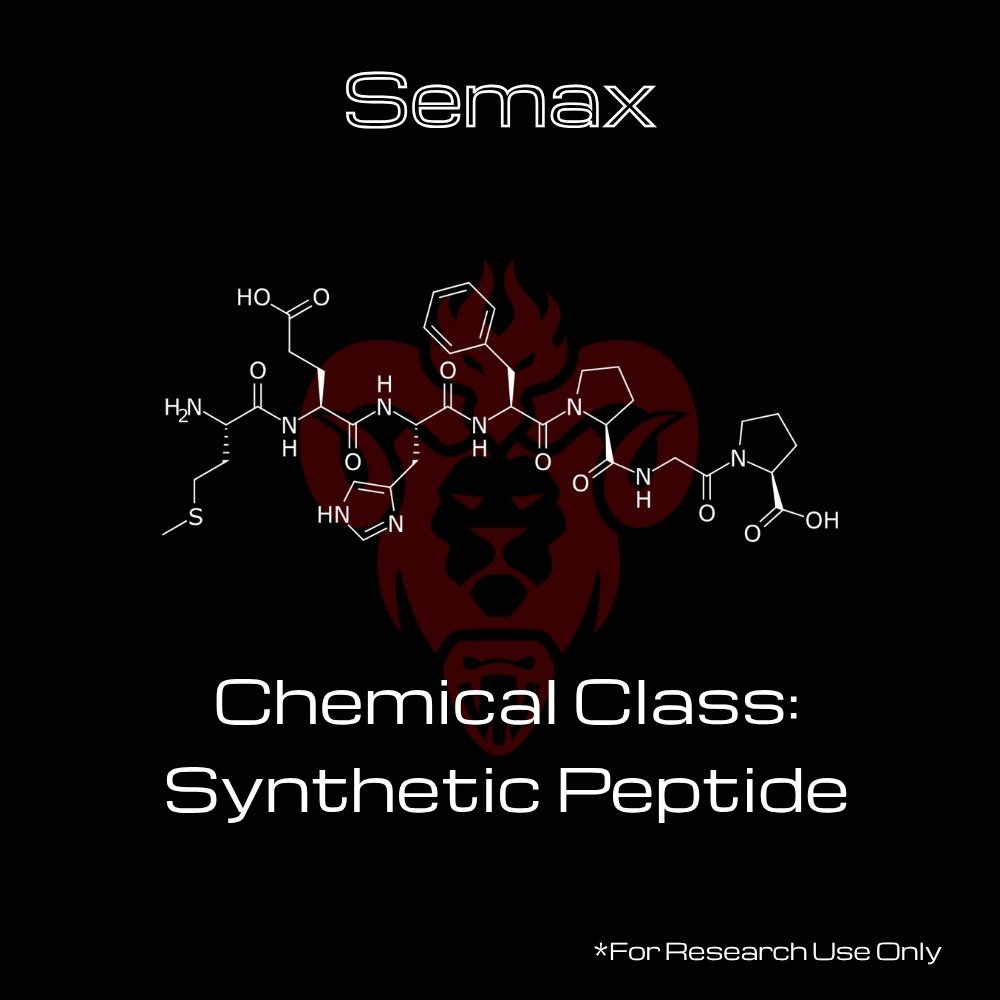
Semax is a synthetic heptapeptide derived from the ACTH(4–7) fragment of the adrenocorticotropic hormone. By retaining the core Met–Glu–His–Phe sequence and appending a C-terminal Pro–Gly–Pro tripeptide, the molecule gains significant resistance to enzymatic proteolysis. In laboratory and animal-model research, Semax is utilized as a reference compound to investigate neurotrophin expression, specifically brain-derived neurotrophic factor (BDNF), its receptor TrkB, and nerve growth factor (NGF).
Technical Specifications
| Property | Specification |
| Product Name | Semax |
| Sequence | Met–Glu–His–Phe–Pro–Gly–Pro (MEHFPGP) |
| CAS Number | 80714-61-0 |
| Chemical Formula | C₃₇H₅₁N₉O₁₀ |
| Molecular Weight | 813.9 g/mol |
| Chemical Class | Linear synthetic heptapeptide |
| Physical Appearance | White to off-white lyophilized powder |
| Solubility | Water and buffered aqueous solutions |
Mechanism of Action & Research Context
Semax’s primary research interest lies in its structural stability and observed effects on neurotrophic signaling.
-
Enzymatic Resistance: The C-terminal Pro–Gly–Pro tripeptide substitution is the most consistently reproduced property in literature, conferring stability against proteolysis that would typically degrade shorter ACTH fragments.
-
Neurotrophic Signaling: Published rodent hippocampal studies report modulation of BDNF, TrkB, and NGF expression. These findings position Semax as a tool for studying the maintenance and regulation of neurotrophic factor levels in neural tissue.
-
Regulatory & Evidence Status: Semax is a registered pharmaceutical in the Russian Federation but is not FDA-approved for any indication in the United States. Current research evidence supports its chemically defined structure and rodent-model neurotrophin findings; however, claims regarding cognitive improvement or stress modulation in humans lack a robust, replicated Western evidence base.
Research Applications
Semax serves as a specialized reference material for neurobiological investigation.
Primary fields of in vitro and animal-model laboratory investigation include:
-
Neurotrophin Expression Studies: Analyzing the impact of the peptide on BDNF and NGF production in hippocampal cells.
-
Peptide Stability Research: Utilizing the Pro–Gly–Pro tail as a model to study the resistance of heptapeptides to enzymatic degradation.
-
Signaling Pathways: Investigating potential melanocortin-receptor interactions, though evidence in this area remains limited and is a subject of ongoing mechanistic study.
-
Analytical Benchmarking: Establishing LC-MS/MS protocols for the identification and quantification of synthetic ACTH-analog peptides.
Storage & Handling Guidelines
To maintain the chemical stability and experimental viability of the peptide:
-
Storage Environment: Store in its lyophilized form in a cold, dry place. Maintain at temperatures below 0°C (typically -20°C) for long-term stability.
-
Light Protection: Protect strictly from direct light to prevent degradation of the peptide chain.
-
Integrity: Ensure the container is kept tightly sealed to prevent moisture ingress.
-
Aseptic Technique: Handle with clean, sterile laboratory equipment. Once reconstituted in buffered solutions, minimize freeze-thaw cycles by creating appropriate aliquots.
Research Use Disclaimer
Research Use Only Disclaimer: This product is developed and distributed strictly as a Research Use Only (RUO) laboratory reference chemical intended exclusively for non-clinical analytical and scientific investigation. It is not an FDA-approved drug, medical treatment, dietary supplement, or food ingredient, and is strictly prohibited for human or animal consumption. Kimera Chems supplies this high-purity research material solely to qualified institutions and professional investigators for authorized laboratory research.
| CAS Number | 80714-61-0 |
| Other Names | ACTH (4-7), Pro-Gly-Pro-ACTH (4-7), prolyl-glycyl-proline-Pro-Gly-Pro-ACTH (4-7) |
| IUPAC Name | (2S)-1-[2-[[(2S)-1-[(2S)-2-[[(2S)-2-[[(2S)-2-[[(2S)-2-amino-4-methylsulfanylbutanoyl]amino]-4-carboxybutanoyl]amino]-3-(1H-imidazol-5-yl)propanoyl]amino]-3-phenylpropanoyl]pyrrolidine-2-carbonyl]amino]acetyl]pyrrolidine-2-carboxylic acid |
| Molecular Formula | C₃₇H₅₁N₉O₁₀S |
| Molecular Weight | 813.9 |
Product FAQs
What is Semax supplied for?
This material is supplied strictly for controlled, non-clinical laboratory and analytical research. It is not intended for human or animal consumption.
Which formats are available for Semax?
The current listing shows these options: 30mg, 5mg. Availability can change, so confirm the selector above before ordering.
Where can I review product documentation?
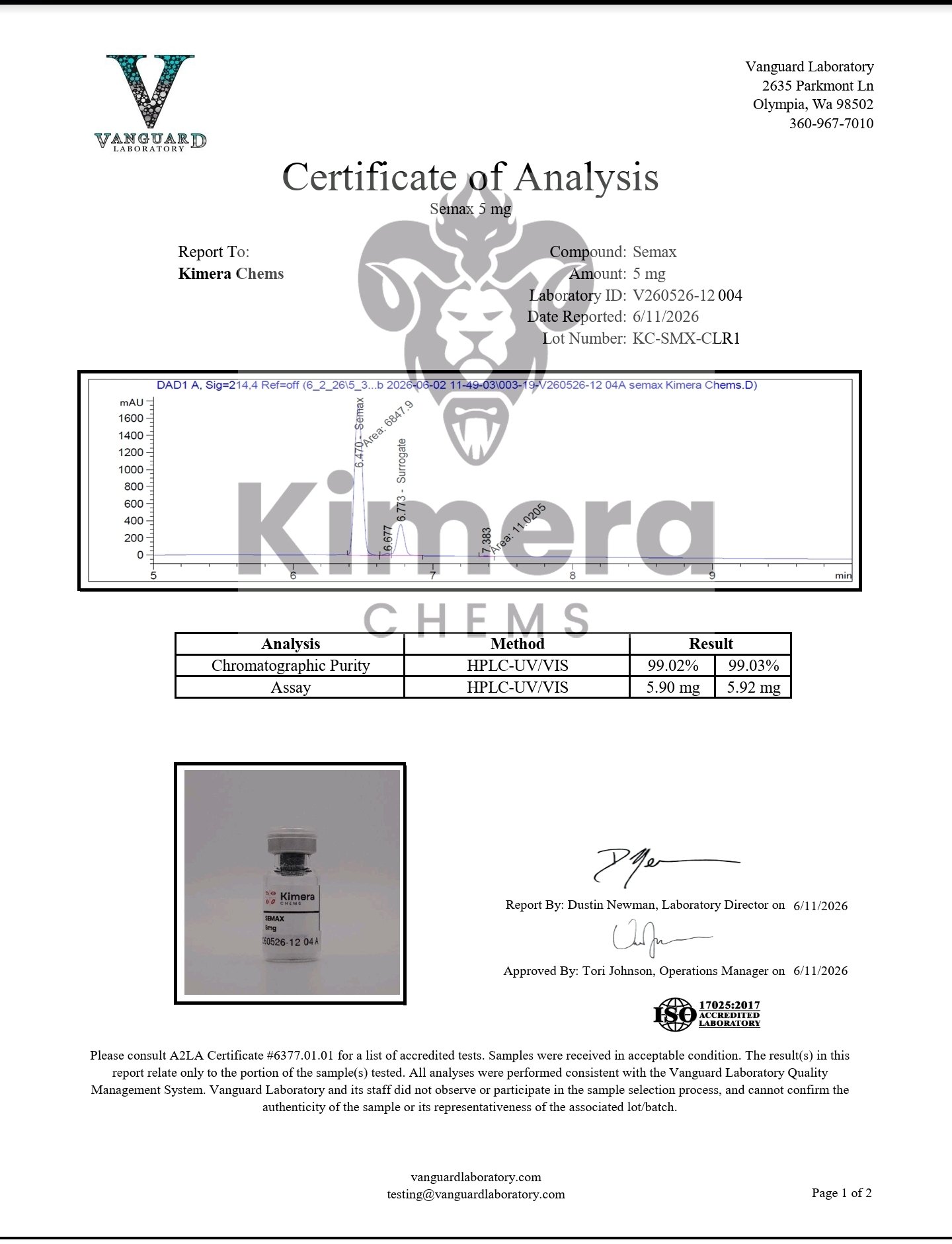
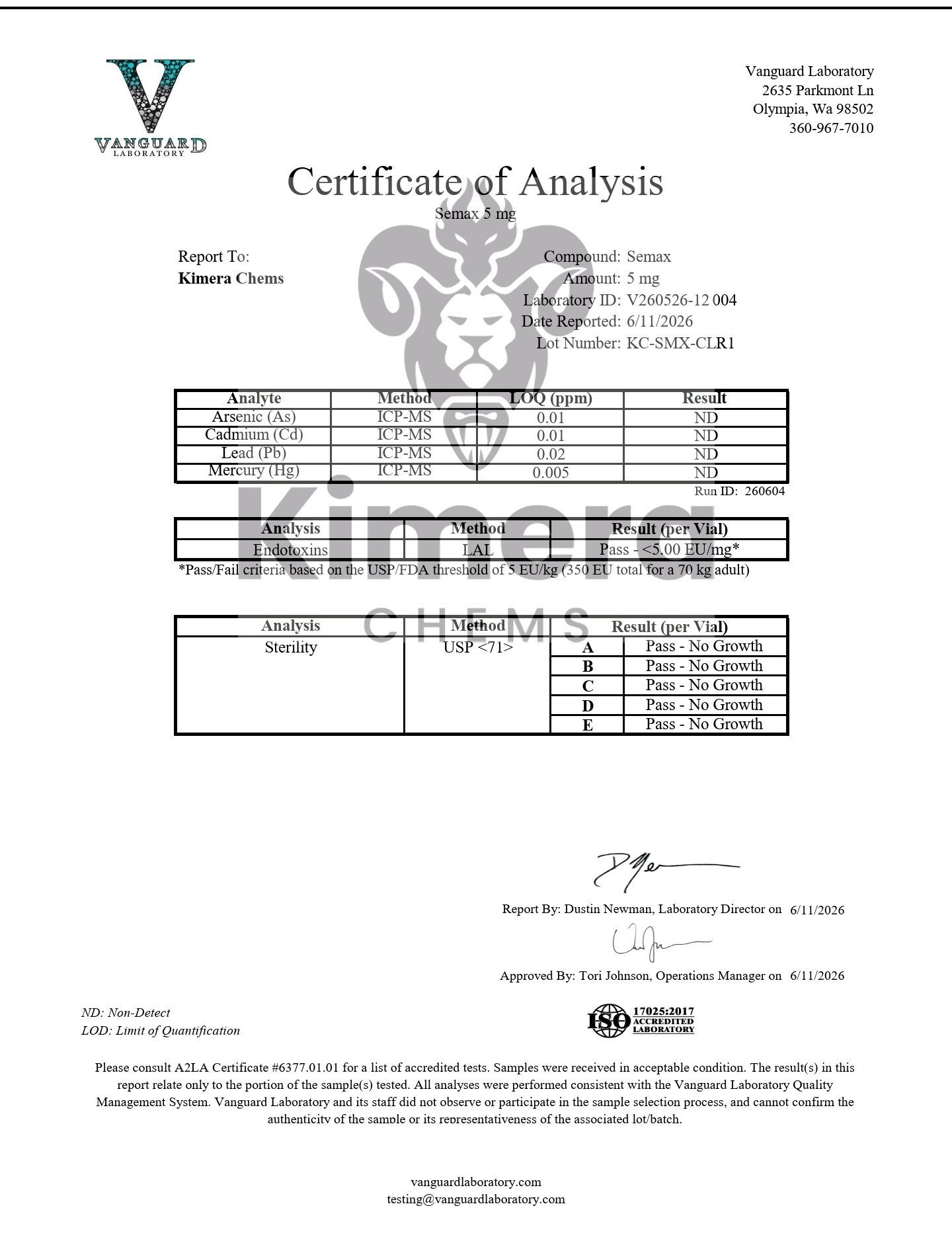
Where available, batch documentation can be reviewed in the Certificate of Analysis library before ordering.
Research Documentation Guides
Review these supporting analytical guides before evaluating this material for a controlled research protocol:
Related products

Nootropics


Nootropics


Nootropics


Nootropics

Nootropics

Peptides

Nootropics

Nootropics