

L-Tetrahydropalmatine (L-THP)
Price range: $36.99 through $51.99
Kimerachems L-Tetrahydropalmatine (L-THP) for sale. Intended for controlled laboratory and analytical research only.
Review available formats, product specifications and batch documentation before ordering. Not for human consumption.
Kimerachems L-Tetrahydropalmatine (L-THP) for sale. This material is supplied exclusively for controlled laboratory and analytical research. Review available formats, technical specifications and batch documentation before ordering. Not for human consumption.
L-Tetrahydropalmatine (L-THP)
L-Tetrahydropalmatine (L-THP) is the levorotatory enantiomer of tetrahydropalmatine, a tetracyclic protoberberine-type isoquinoline alkaloid isolated from plants of the Corydalis and Stephania genera. As an isolated stereoisomer, L-THP is utilized in receptor-based research due to the distinct pharmacological activity of the (−)-enantiomer compared to its racemate or the (+)-enantiomer. It is primarily used as a multi-receptor probe in monoamine receptor research.
Technical Specifications
| Property | Specification |
| Product Name | L-Tetrahydropalmatine (L-THP) |
| IUPAC Name | (−)-Tetrahydropalmatine |
| CAS Number | 2934-97-6 |
| Molecular Formula | C21H25NO4 |
| Molecular Weight | 355.43 g/mol |
| Chemical Class | Protoberberine isoquinoline alkaloid |
| Appearance | White to off-white crystalline powder |
| Solubility | Poor in water; soluble in DMSO and organic solvents |
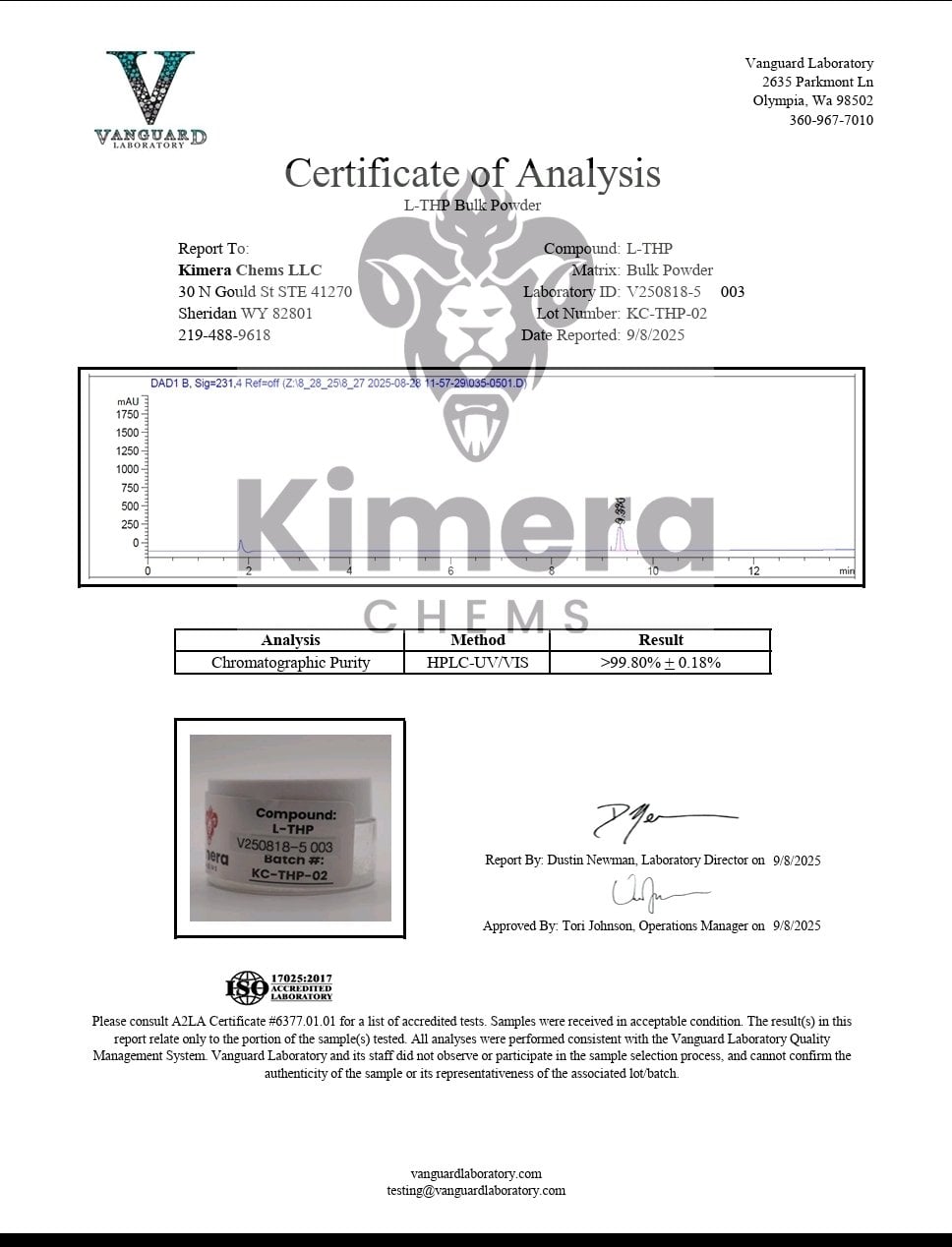
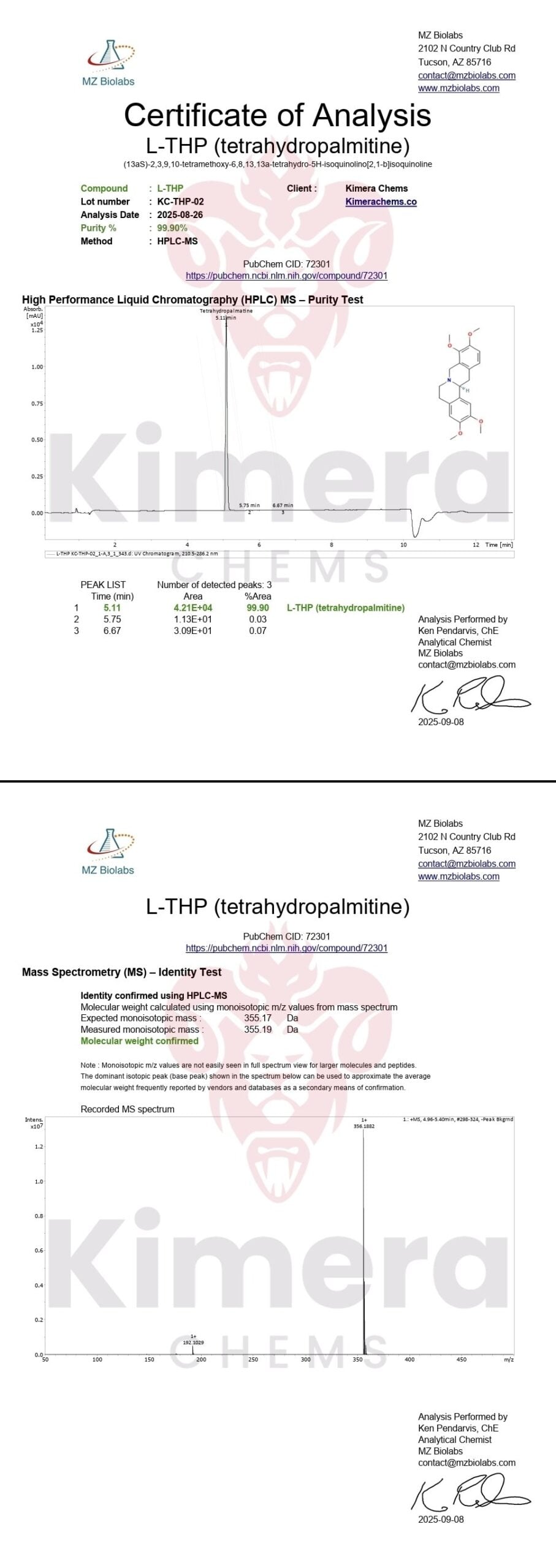
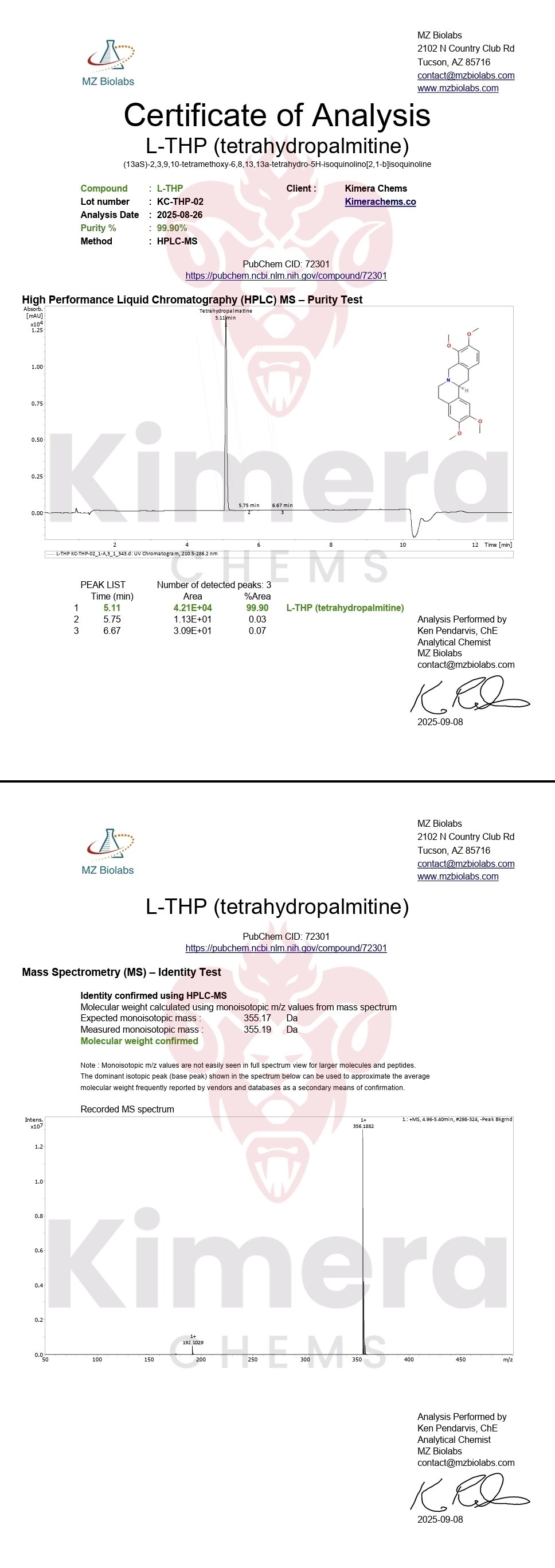
| Assay Purity | Established by HPLC-UV with MS confirmation |
Pharmacology & Research Context
L-THP is characterized by broad, moderate-affinity engagement across multiple monoamine receptor families, acting as an antagonist at dopamine D1, D2, and D3 receptors, with additional affinity at α-adrenergic and serotonergic sites. Consequently, it functions effectively as a multi-receptor probe in in vitro assays rather than a highly selective tool compound.
Safety Warning: Hepatotoxicity
L-THP is a documented cause of drug-induced liver injury. It has been associated with cases of acute hepatitis and, in historical contexts involving traditional preparations, serious toxicological events. L-THP is not FDA-approved for any indication. Investigators should treat this compound as a known hepatotoxin and utilize appropriate laboratory safety protocols when handling.
Research Applications
L-THP is utilized for its role in investigating dopaminergic signaling and monoamine receptor dynamics.
Primary fields of in vitro laboratory investigation include:
-
Receptor Binding Studies: Mapping affinity profiles across dopamine, adrenergic, and serotonergic receptor families.
-
Monoamine System Probing: Utilizing the compound as a multi-receptor agent in neurobiological cell models.
-
Structural/Enantiomeric Analysis: Comparative research between L-THP, the racemate, and the (+)-enantiomer.
Storage & Handling Guidelines
To maintain the structural integrity and enantiomeric purity of the compound:
-
Storage Environment: Store in a dry, cool environment protected from light.
-
Solvent Preparation: Due to poor aqueous solubility, prepare stock solutions in DMSO or other suitable organic solvents.
-
Analytical Documentation: Refer to the lot-specific Certificate of Analysis (COA) for purity and enantiomeric composition data.
Research Use Disclaimer
Research Use Only Disclaimer: This product is developed and distributed strictly as a Research Use Only (RUO) laboratory reference chemical intended exclusively for non-clinical analytical and scientific investigation. It is not an FDA-approved drug, food, cosmetic, or dietary supplement, and is strictly prohibited for human or animal consumption. Kimera Chems supplies these high-purity research materials solely to accredited institutional laboratories and qualified scientific investigators.
| CAS Number | 483-14-7 |
| Other Names | L-THP, Rotundine, 5,8,13,13aS-tetrahydro-2,3,9,10-tetramethoxy-6H-dibenzo[a,g]quinolizine |
| IUPAC Name | (13aS)-2,3,9,10-tetramethoxy-6,8,13,13a-tetrahydro-5H-isoquinolino[2,1-b]isoquinoline |
| Molecular Formula | C21H25NO4 |
| Molecular Weight | 355.434 g/mol |
Product FAQs
What is L-Tetrahydropalmatine (L-THP) supplied for?
This material is supplied strictly for controlled, non-clinical laboratory and analytical research. It is not intended for human or animal consumption.
Which formats are available for L-Tetrahydropalmatine (L-THP)?
The current listing shows these options: 10-grams-powder, dry-fill-capsule-50mg-60ct-3g. Availability can change, so confirm the selector above before ordering.
Where can I review product documentation?
Where available, batch documentation can be reviewed in the Certificate of Analysis library before ordering.
Research Documentation Guides
Review these supporting analytical guides before evaluating this material for a controlled research protocol:
Related products


Nootropics
Nootropics


Nootropics

Nootropics


Nootropics


Nootropics

Nootropics


Nootropics