


BAM15

Price range: $101.99 through $151.99
BAM15 is supplied by Kimerachems for controlled laboratory and analytical research only.
Review available formats, product specifications and our terms and conditions before ordering. Not for human consumption.
BAM15 is available from Kimerachems for controlled laboratory and analytical research. Review the product-specific information, available formats and documentation below before ordering.
BAM15 Research Standard
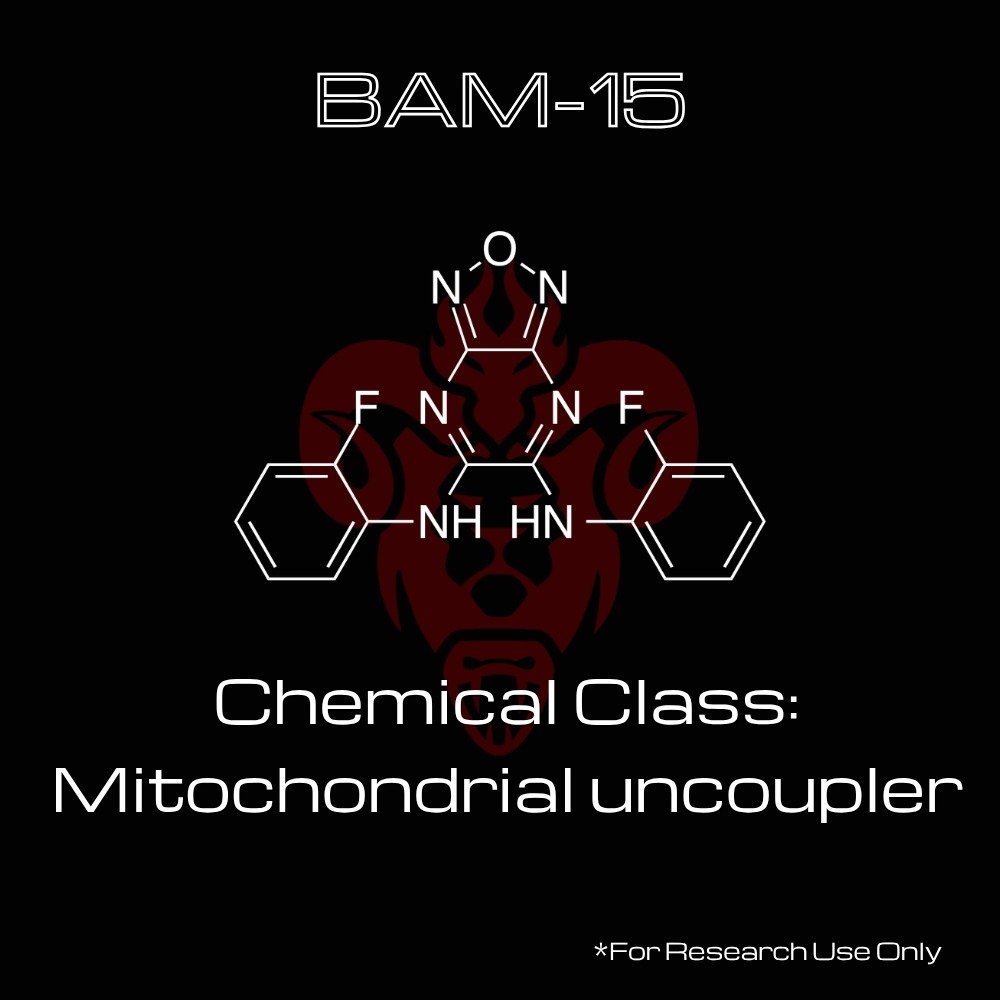
BAM15 (N5,N6-bis(2-fluorophenyl)-1,2,3-thiadiazole-5,6-diamine) is a potent, small-molecule mitochondrial uncoupler. Unlike classical uncouplers that can exhibit significant cytotoxicity or have limited tissue specificity, BAM15 is characterized by its ability to facilitate proton transport across the inner mitochondrial membrane without significantly altering cellular viability or inducing the severe side effects often associated with older generation uncouplers (e.g., DNP). In laboratory research, it serves as a critical probe for investigating mitochondrial bioenergetics, metabolic regulation, and the potential therapeutic modulation of obesity and fatty liver disease.
Technical Specifications
| Property | Specification |
| Product Name | BAM15 |
| CAS Number | 168671-55-4 |
| Chemical Formula | C14H10F2N4S |
| Molecular Weight | 304.32 g/mol |
| Chemical Class | Thiadiazole-diamine (Mitochondrial Uncoupler) |
| Physical Appearance | Off-white to yellow solid |
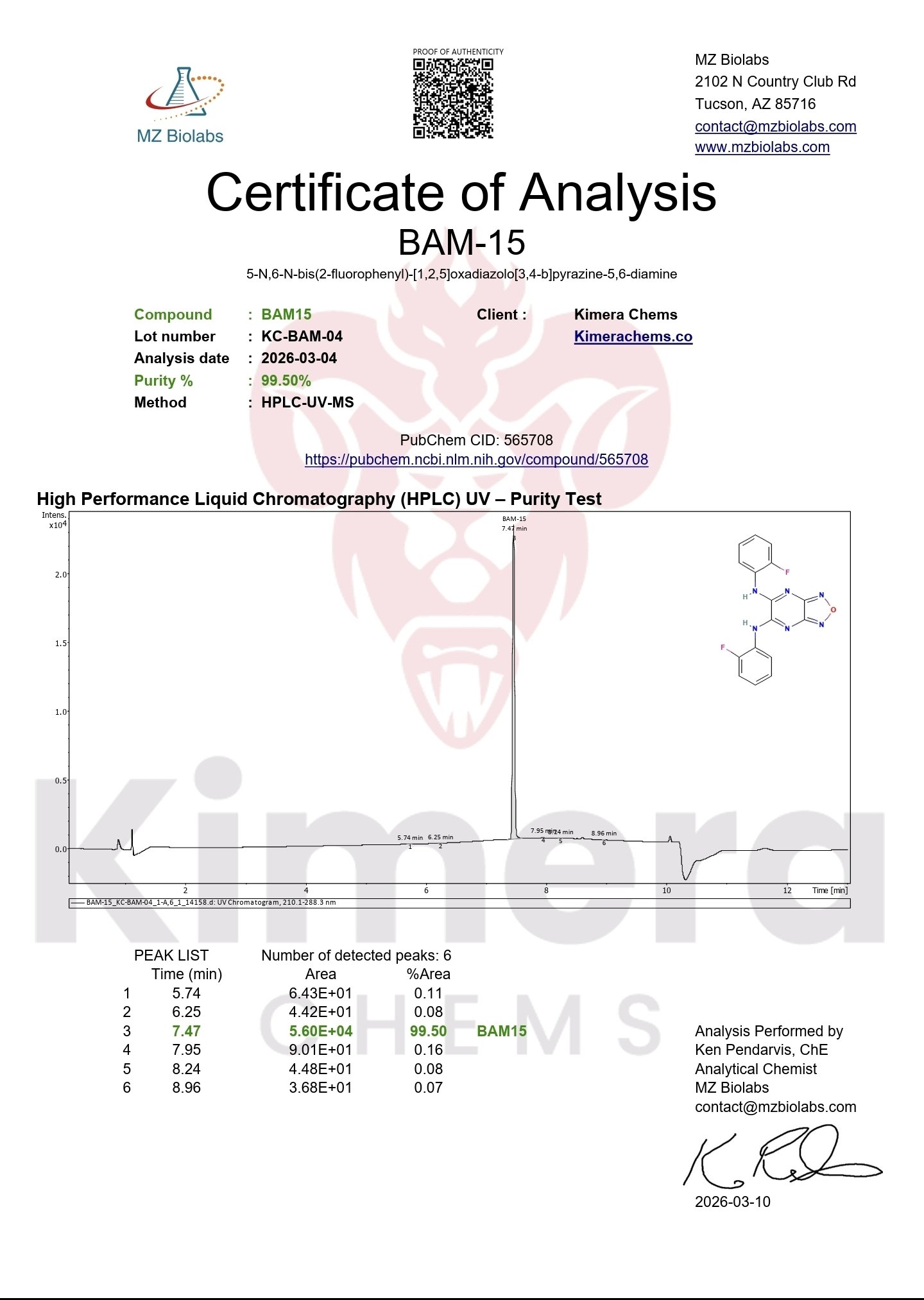
| Assay Purity | >= 98% (HPLC verified) |
Mechanism of Action & Research Context
BAM15 is a protonophore that selectively uncouples oxidative phosphorylation from ATP synthesis.
-
Mitochondrial Uncoupling: BAM15 facilitates the translocation of protons across the inner mitochondrial membrane, bypassing ATP synthase. This dissipates the electrochemical proton gradient (ΔΨm), leading to a compensatory increase in mitochondrial oxygen consumption and substrate oxidation.
-
Metabolic Flux Modulation: By forcing the mitochondria to consume more fuel (fatty acids, glucose) to attempt to maintain the proton gradient, BAM15 increases the metabolic rate. Research focuses on its ability to stimulate fatty acid oxidation while sparing ATP levels from critical depletion, avoiding the rapid cytotoxicity observed with other agents.
-
Insulin Sensitivity & Metabolic Health: Investigations into BAM15 often center on its capacity to alleviate metabolic dysregulation. It is frequently studied in models of insulin resistance, diet-induced obesity, and non-alcoholic fatty liver disease (NAFLD/NASH), where it is hypothesized to reduce lipid accumulation and improve systemic metabolic markers.
Research Applications
BAM15 is a specialized reagent essential for modern metabolic and mitochondrial research.
Primary fields of in vitro and in vivo laboratory investigation include:
-
Bioenergetic Profiling: Utilizing Seahorse XF analysis to quantify the compound’s effect on mitochondrial respiration, basal respiration, and spare respiratory capacity.
-
Metabolic Disease Research: Evaluating the potential of BAM15 to reduce body weight and improve glucose tolerance in diet-induced obesity (DIO) animal models.
-
Lipid Metabolism: Analyzing the impact of induced mitochondrial uncoupling on triglyceride accumulation in hepatic or adipose tissue cell lines.
-
Cellular Viability Studies: Comparing the toxicity profiles of BAM15 against classical uncouplers to determine the therapeutic window for metabolic modulation.
Storage & Handling Guidelines
To maintain the chemical stability and experimental reliability of the compound:
-
Storage Environment: Store at -20°C in a dry, dark environment.
-
Environmental Control: Protect strictly from light and moisture. As a sensitive bioenergetic reagent, degradation may lead to loss of potency.
-
Handling: Allow the container to equilibrate to room temperature before opening to minimize moisture condensation. Utilize standard laboratory safety practices and appropriate PPE.
-
Aseptic Technique: Ensure the use of sterile laboratory tools to prevent cross-contamination during preparation of solutions for cellular assays.
Research Use Disclaimer
Research Use Only Disclaimer: This product is developed and distributed strictly as a Research Use Only (RUO) laboratory reference chemical intended exclusively for non-clinical analytical and scientific investigation. It is not an FDA-approved drug, medical treatment, dietary supplement, or food ingredient, and is strictly prohibited for human or animal consumption. Kimera Chems supplies this high-purity research material solely to qualified institutions and professional investigators for authorized laboratory research.
| CAS Number | 210302-17-3 |
| Other Names | BAM 15, BAM15, Oprea1_627044, Oprea1_627044, CHEMBL3627755, SCHEMBL17240563 |
| IUPAC Name | N5,N6-Bis(2-fluorophenyl)[2,1,3]oxadiazolo[4,5-b]pyrazine-5,6-diamine |
| Molecular Formula | C₁₆H₁₀F₂N₆O |
| Molecular Weight | 340.29 |
| Liquid Concentration And Solution | 50mg/ml (PEG400, DMSO, Ethanol) |
| Aliquot Concentration And Solution | NA |
Product FAQs
What is BAM15 supplied for?
This material is supplied strictly for controlled, non-clinical laboratory and analytical research. It is not intended for human or animal consumption.
Which formats are available for BAM15?
The current listing shows these options: 5-grams-powder, dry-fill-capsule-50mg-60ct-3g. Availability can change, so confirm the selector above before ordering.
Where can I review product documentation?
Where available, batch documentation can be reviewed in the Certificate of Analysis library before ordering.
Related products

Analytical Reagents


Analytical Reagents


Analytical Reagents

Analytical Reagents


Analytical Reagents

Analytical Reagents

Analytical Reagents


Analytical Reagents