

HBT1 (YDL233C)


Price range: $71.99 through $81.99
Kimerachems HBT1 (YDL233C) for sale. Intended for controlled laboratory and analytical research only.
Review available formats, product specifications and batch documentation before ordering. Not for human consumption.
Kimerachems HBT1 (YDL233C) for sale. This material is supplied exclusively for controlled laboratory and analytical research. Review available formats, technical specifications and batch documentation before ordering. Not for human consumption.
HBT1 (YDL233C)
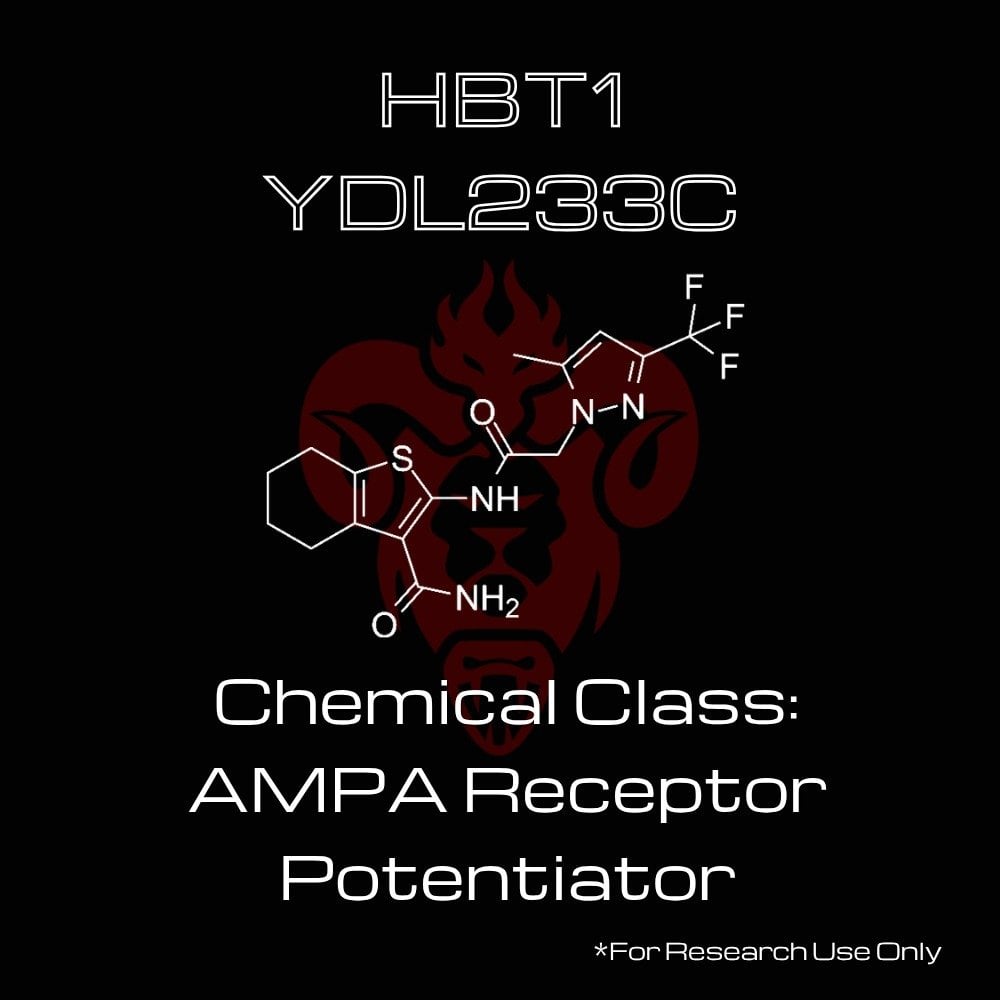
HBT1, also recognized by its screening identifier YDL233C, is a synthetic small-molecule AMPA receptor positive allosteric modulator. The designation YDL233C stems from internal compound indexing during early developmental screenings and does not indicate a yeast origin or any biological derivation. In neuroscience and neuropharmacology research, HBT1 is widely used as a tool compound to investigate the mechanics of excitatory synaptic transmission, cognitive signaling pathways, and long-term potentiation (LTP) models.
Technical Specifications
| Property | Specification |
| Product Name | HBT1 (YDL233C) |
| CAS Number | 489408-02-8 |
| Molecular Formula | C16H13N3O2S |
| Molecular Weight | 311.36 g/mol |
| Chemical Class | Heterocyclic AMPAkine-like Compound |
| Physical Appearance | White to off-white solid |
| Solubility | Soluble in DMSO and common organic solvents; limited aqueous solubility |
Mechanism of Action & Research Utility
HBT1 functions specifically as a positive allosteric modulator of AMPA-type glutamate receptors (AMPAR). Rather than operating as a direct agonist, it amplifies endogenous, glutamate-mediated AMPAR signaling. This distinct heterocyclic scaffold allows investigators to explore targeted receptor-ligand interactions and central nervous system penetration dynamics in experimental models.
In controlled laboratory settings, this allosteric interaction results in:
-
Increased AMPA receptor-mediated synaptic currents.
-
Prolonged receptor open time dynamics.
-
Enhanced excitatory neurotransmission without direct receptor overstimulation.
Research Focus Areas
As a reference standard for synaptic plasticity, HBT1 is primarily examined across several in vitro and laboratory research applications:
-
AMPA Receptor Modulation: Mapping the precise binding pockets and structural kinetics associated with allosteric AMPAkine modulation.
-
Excitatory Synaptic Transmission: Measuring baseline adjustments in synaptic strength and neurotransmitter responses.
-
Synaptic Plasticity & LTP Models: Using the compound to establish cellular baselines for long-term potentiation and synaptic remodeling studies.
-
Neuropharmacology Research: Investigating small-molecule pathways linked to cognitive signaling and neurochemical communication.
Storage & Handling Guidelines
To secure the baseline purity and structural integrity of the chemical solid:
-
Environmental Safeguards: Store the material under dry, cool, and climate-controlled conditions.
-
Photolytic Protections: Keep the compound shielded from direct light exposure within light-protected or secondary opaque storage containment.
-
Solvent Handling: Reconstitution should be conducted using high-grade DMSO or verified organic solvents, accounting for its limited solubility in pure aqueous systems.
Research Use Only Disclaimer: HBT1 (YDL233C) is intended strictly for research use only. It is a specialized chemical supplied exclusively for non-clinical laboratory analysis and scientific investigation, and is not for human consumption, therapeutic use, or diagnostic application. All handling, compounding, and experimental protocols must comply strictly with regional laws, laboratory safety standards, and qualified investigator regulations.
| CAS Number | 489408-02-8 |
| Other Names | AKOS024270212, BS-47734, 2-[[2-[5-Methyl-3-(trifluoromethyl)pyrazol-1-yl]acetyl]amino]-4,5,6,7-tetrahydro-1-benzothiophene-3-carboxamide |
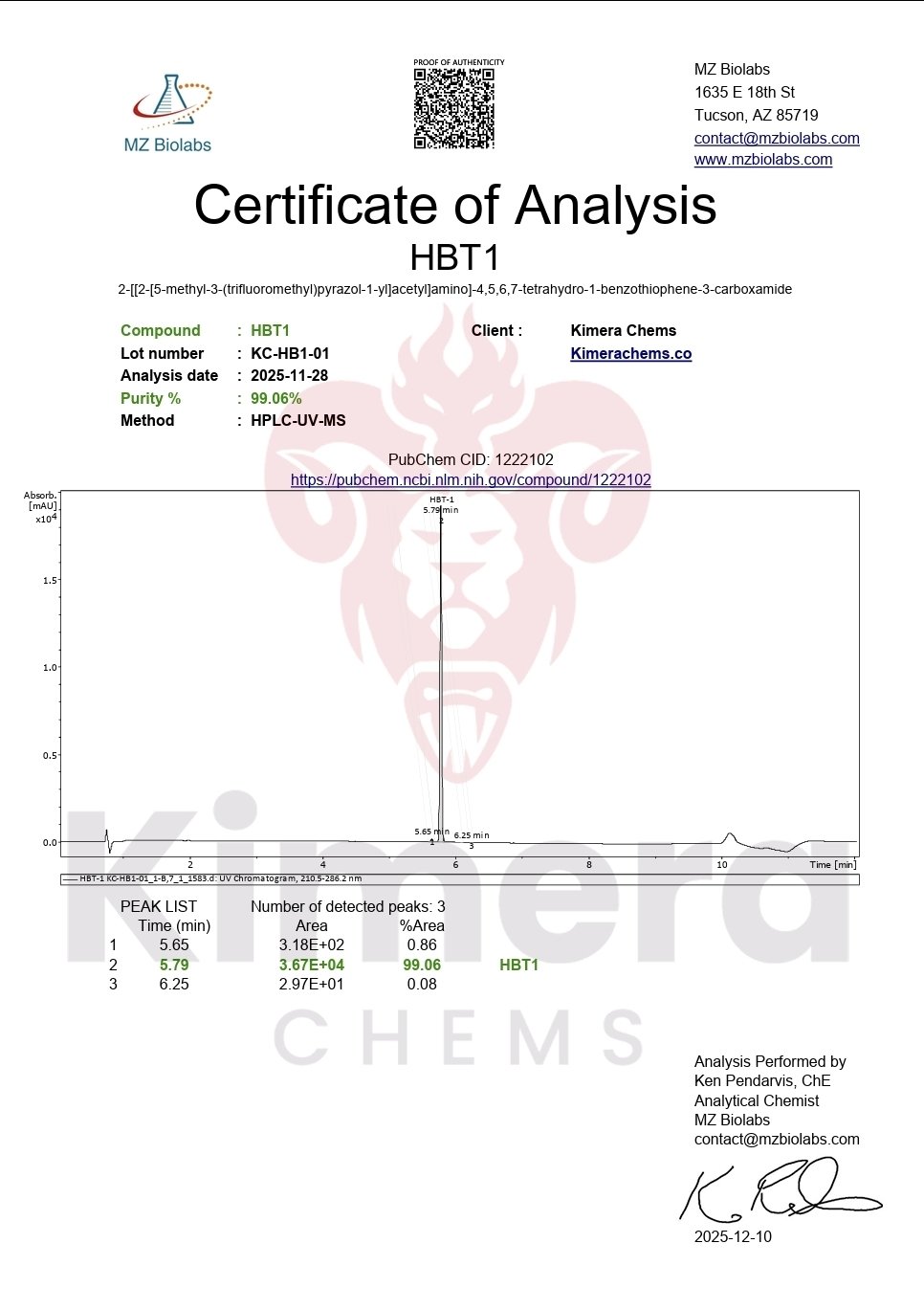
| IUPAC Name | 2-[[2-[5-methyl-3-(trifluoromethyl)pyrazol-1-yl]acetyl]amino]-4,5,6,7-tetrahydro-1-benzothiophene-3-carboxamide |
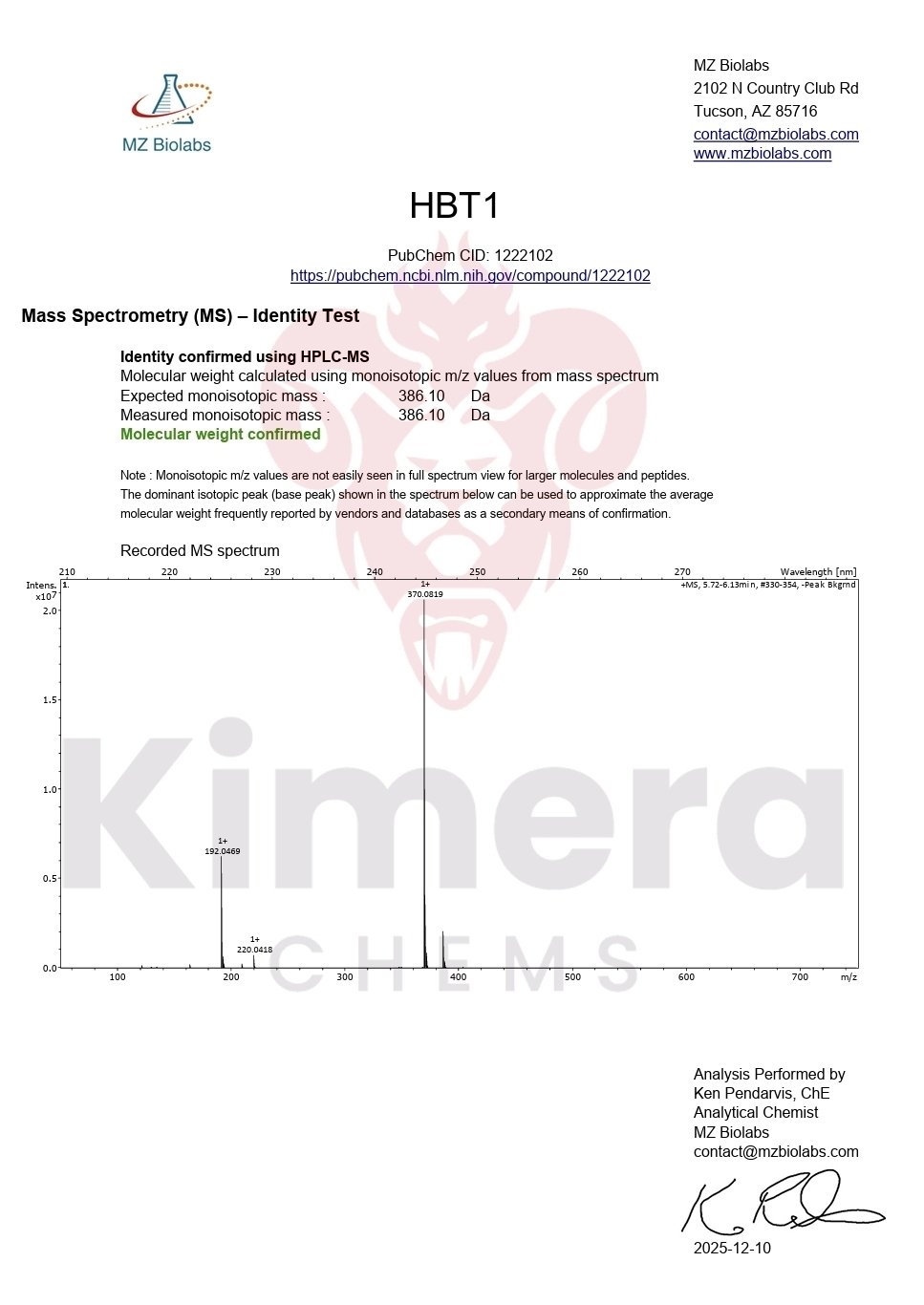
| Molecular Formula | C₁₆H₁₇F₃N₄O₂S |
| Molecular Weight | 386.39 |
| Liquid Concentration And Solution | 20mg/ml, PEG400, DMSO |
| Aliquot Concentration And Solution | NA |
Product FAQs
What is HBT1 (YDL233C) supplied for?
This material is supplied strictly for controlled, non-clinical laboratory and analytical research. It is not intended for human or animal consumption.
Which formats are available for HBT1 (YDL233C)?
The current listing shows these options: 1 Gram Powder, Liquid 30mL/20mg Per mL/600mg. Availability can change, so confirm the selector above before ordering.
Where can I review product documentation?
Where available, batch documentation can be reviewed in the Certificate of Analysis library before ordering.
Research Documentation Guides
Review these supporting analytical guides before evaluating this material for a controlled research protocol:
Related products

Nootropics


Peptides


Nootropics

Nootropics


Nootropics


Nootropics
Nootropics

Nootropics