
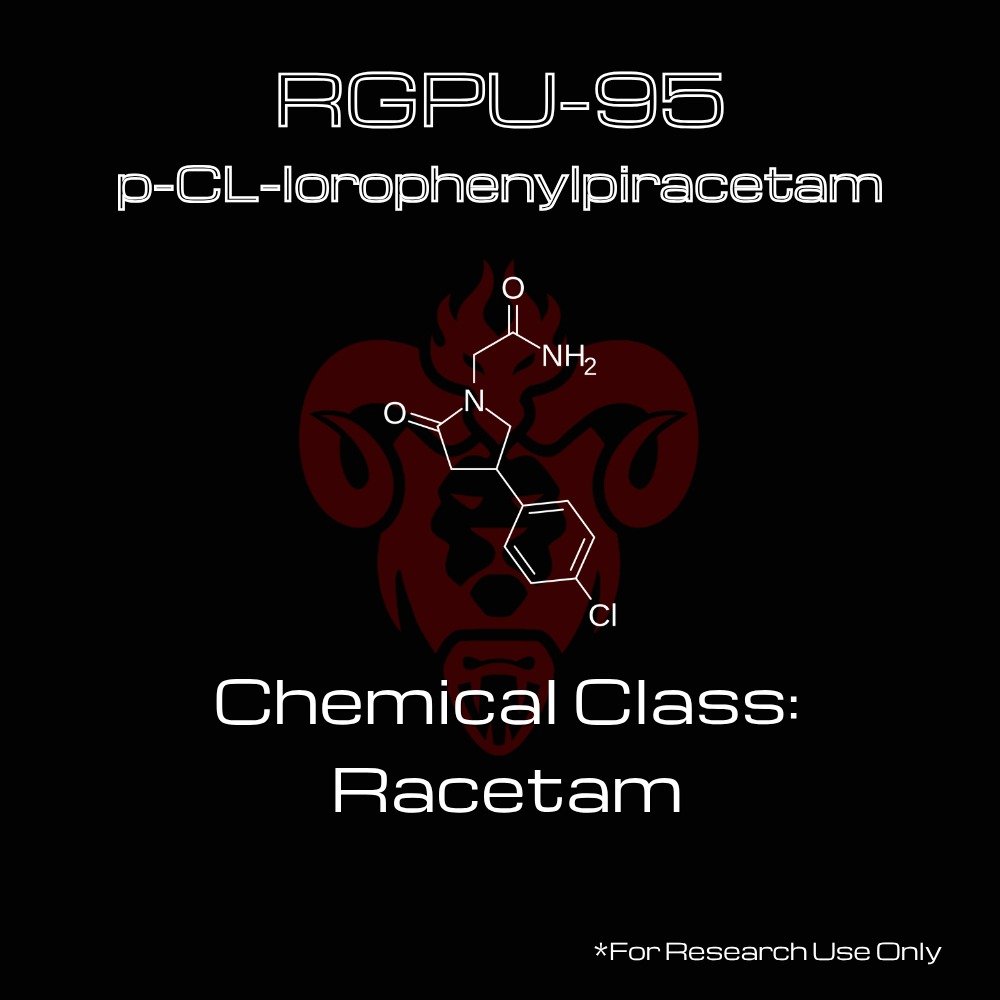
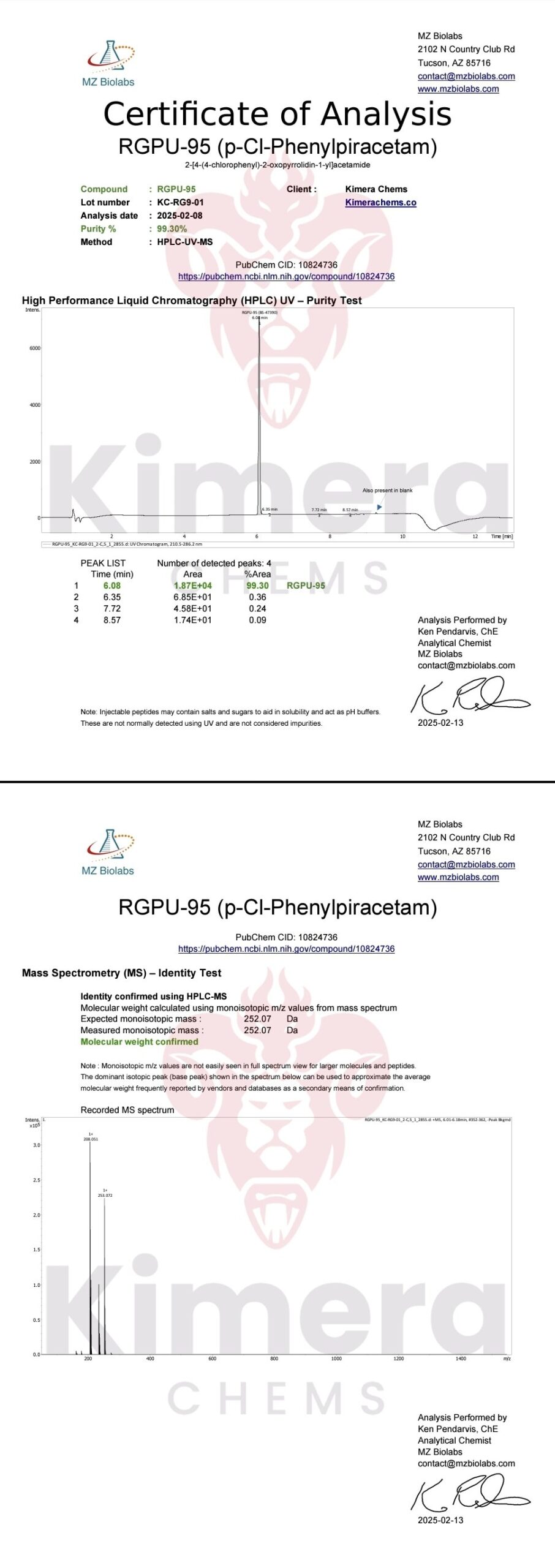
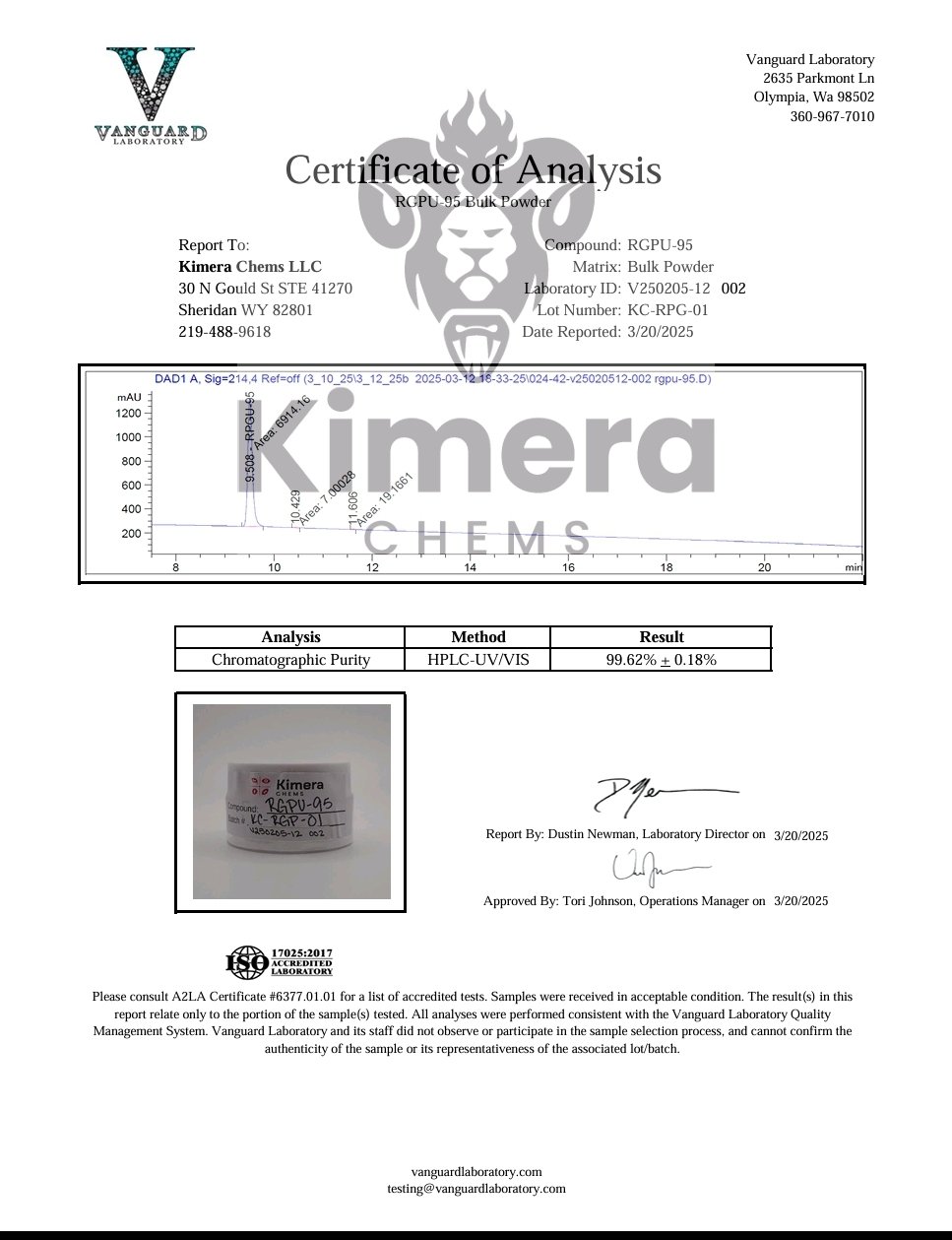

RGPU-95 (p-CL-Phenylpiracetam)

Price range: $51.99 through $71.99
Kimerachems RGPU-95 (p-CL-Phenylpiracetam) for sale. Intended for controlled laboratory and analytical research only.
Review available formats, product specifications and batch documentation before ordering. Not for human consumption.
Kimerachems RGPU-95 (p-CL-Phenylpiracetam) for sale. This material is supplied exclusively for controlled laboratory and analytical research. Review available formats, technical specifications and batch documentation before ordering. Not for human consumption.
RGPU-95 (p-Cl-Phenylpiracetam) Research Standard
RGPU-95 (p-Cl-Phenylpiracetam) is a synthetic racetam-class compound characterized by the addition of a chlorine atom to the phenylpiracetam scaffold. This structural modification is a focal point in pharmacological research, specifically investigated for how it alters the compound’s stability, lipophilicity, and pharmacological potency in in vitro models. In laboratory settings, RGPU-95 is utilized as a high-potency tool for mapping signal transmission dynamics within nerve tissue and observing cellular responses to stressors in controlled experimental environments.
Technical Specifications
| Property | Specification |
| Product Name | RGPU-95 (p-Cl-Phenylpiracetam) |
| Chemical Formula | $C_{12}H_{13}ClN_2O_2$ |
| Molecular Weight | ~238.67 g/mol |
| Chemical Class | Racetam derivative (Chlorinated) |
| Physical Appearance | Fine white powder |
| Assay Purity | $ge 99%$ (HPLC verified) |
Mechanism of Action & Research Context
The chemical modification of phenylpiracetam with a para-chlorine substituent provides a stable and robust scaffold for long-term laboratory investigations.
-
Structural Stability: The chlorinated phenyl ring confers increased structural toughness, making RGPU-95 an ideal candidate for long-term in vitro experiments where compound stability over several months is required.
-
Signaling Modulation: Research focuses on the compound’s interaction with neurotransmitter pathways, particularly its ability to modulate signal velocity and transduction efficiency between neurons in cultured tissue.
-
Cellular Resilience: Because the compound is utilized to study cells under “pressure,” it acts as a valuable reference in experiments measuring how neural tissue maintains viability or signaling integrity when exposed to thermal or metabolic stress.
Research Applications
RGPU-95 is a specialized reference material for cognitive science and neuropharmacology.
Primary fields of in vitro laboratory investigation include:
-
GABAergic Signaling: Investigating the modulation of GABA receptor activity in isolated nerve tissue models.
-
Bioenergetic Stress Testing: Examining energy utilization in neural cells under low-temperature (cold stress) conditions.
-
Permeability Studies: Investigating the kinetics of the compound’s movement across cellular barriers and membrane systems.
-
Signal Speed Dynamics: Quantifying changes in signal propagation speed between nerve cells in controlled culture environments.
-
Comparative Neuropharmacology: Utilizing the chlorinated scaffold to compare binding and activity profiles against the parent phenylpiracetam molecule.
Storage & Handling Guidelines
To maintain the chemical integrity of the material:
-
Environment: Store the container in a cool, dry laboratory environment.
-
Light Sensitivity: Protect from direct sunlight; store in a dark cabinet to prevent UV-induced degradation of the molecular structure.
-
Container Integrity: Ensure the lid is twisted on tightly immediately after use to prevent moisture absorption.
-
Handling: Use a dry scoop (for powder) or a clean, calibrated dropper (for liquid) to avoid contamination. Maintain a clean, dedicated workspace to prevent cross-contamination with other research reagents.
Research Use Disclaimer
Research Use Only Disclaimer: This product is developed and distributed strictly as a Research Use Only (RUO) laboratory reference chemical intended exclusively for non-clinical analytical and scientific investigation. It is not an FDA-approved drug, medical treatment, dietary supplement, or food ingredient, and is strictly prohibited for human or animal consumption. Kimera Chems supplies this high-purity research material solely to qualified institutions and professional investigators for authorized laboratory research.
| CAS Number | 213178-69-9 |
| Other Names | 1-Pyrrolidineacetamide, 4-(4-chlorophenyl)-2-oxo; RGPU-95 |
| IUPAC Name | 2-(2-oxo-4-(4-chlorophenyl)-pyrrolidin-1-yl)acetamide2-(2-oxo-4-(4-chlorophenyl)-pyrrolidin-1-yl)acetamide |
| Molecular Formula | C₁₂H₁₃ClN₂O₂ |
| Molecular Weight | 252.7 g/mol |
| Liquid Concentration And Solution | 20mg/ml – Solution: PEG400, DMSO |
Product FAQs
What is RGPU-95 (p-CL-Phenylpiracetam) supplied for?
This material is supplied strictly for controlled, non-clinical laboratory and analytical research. It is not intended for human or animal consumption.
Which formats are available for RGPU-95 (p-CL-Phenylpiracetam)?
The current listing shows these options: 1 Gram Powder, Dry-Fill Capsule 10mg/60ct/600mg, Liquid 30mL/20mg Per mL/600mg. Availability can change, so confirm the selector above before ordering.
Where can I review product documentation?
Where available, batch documentation can be reviewed in the Certificate of Analysis library before ordering.
Research Documentation Guides
Review these supporting analytical guides before evaluating this material for a controlled research protocol:
Related products


Nootropics

Nootropics

Nootropics
Nootropics

Nootropics

Nootropics


Nootropics

Nootropics