


1,3 DMAA

$41.99
Kimerachems 1-3 DMAA for sale. Intended for controlled laboratory and analytical research only.
Review available formats, product specifications and batch documentation before ordering. Not for human consumption.
Kimerachems 1-3 DMAA for sale. This material is supplied exclusively for controlled laboratory and analytical research. Review available formats, technical specifications and batch documentation before ordering. Not for human consumption.
1,3-DMAA (Methylhexanamine) Research Standard
1,3-DMAA (1,3-dimethylamylamine; methylhexanamine) is a synthetic aliphatic amine utilized in neuropharmacological and adrenergic research. Structurally categorized as a sympathomimetic amine, 1,3-DMAA acts primarily as an indirect adrenergic agonist. In laboratory research, it serves as a specialized ligand for investigating the structure-activity relationship (SAR) of phenethylamine-like scaffolds and the modulation of norepinephrine release within adrenergic signaling pathways.
Technical Specifications
| Property | Specification |
| Product Name | 1,3-DMAA (Methylhexanamine) |
| IUPAC Name | 4-methylhexan-2-amine |
| CAS Number | 105-41-9 |
| Chemical Formula | C7H17N |
| Molecular Weight | 115.22 g/mol |
| Chemical Class | Aliphatic amine |
| Physical Appearance | Crystalline solid |
| Solubility | Soluble in water and organic solvents |
Mechanism of Action & Research Context
The research interest in 1,3-DMAA is defined by its role as an indirect sympathomimetic agent.
-
Adrenergic Modulation: 1,3-DMAA acts by stimulating the release of norepinephrine from presynaptic nerve terminals. This mechanism mimics the activity of endogenous catecholamines, making it a useful probe for studying the adrenergic system.
-
Sympathomimetic Pharmacology: As a structural analog within the broader class of sympathomimetic amines, it is used to evaluate how small structural changes (such as the aliphatic chain arrangement in 1,3-DMAA) alter potency and efficacy compared to classical phenethylamines.
-
Receptor Interaction: Investigations focus on its ability to traverse synaptic membranes and influence catecholamine transporter systems, effectively increasing the concentration of norepinephrine available for post-synaptic adrenergic receptor binding.
Research Applications
1,3-DMAA is a specialized reagent essential for comparative pharmacology and adrenergic signaling research.
Primary fields of in vitro and laboratory investigation include:
-
Adrenergic Signaling Pathways: Evaluating the release kinetics and signaling outcomes of norepinephrine modulation in isolated neuronal preparations.
-
Structure-Activity Relationship (SAR) Panels: Utilizing 1,3-DMAA as a reference aliphatic amine to determine the influence of specific molecular structures on sympathomimetic activity.
-
Receptor Pharmacology: Benchmarking the compound’s activity against other adrenergic ligands to map receptor selectivity and potency within the adrenergic receptor system.
-
Molecular Docking & Transporter Analysis: Studying the interaction of the methylhexanamine scaffold with catecholamine transporters to elucidate mechanism-of-action nuances.
Storage & Handling Guidelines
To maintain the chemical stability and experimental reliability of the compound:
-
Storage Environment: Store in a cool, dry place. Protect strictly from light, moisture, and high temperatures, which may affect the stability of the aliphatic amine structure.
-
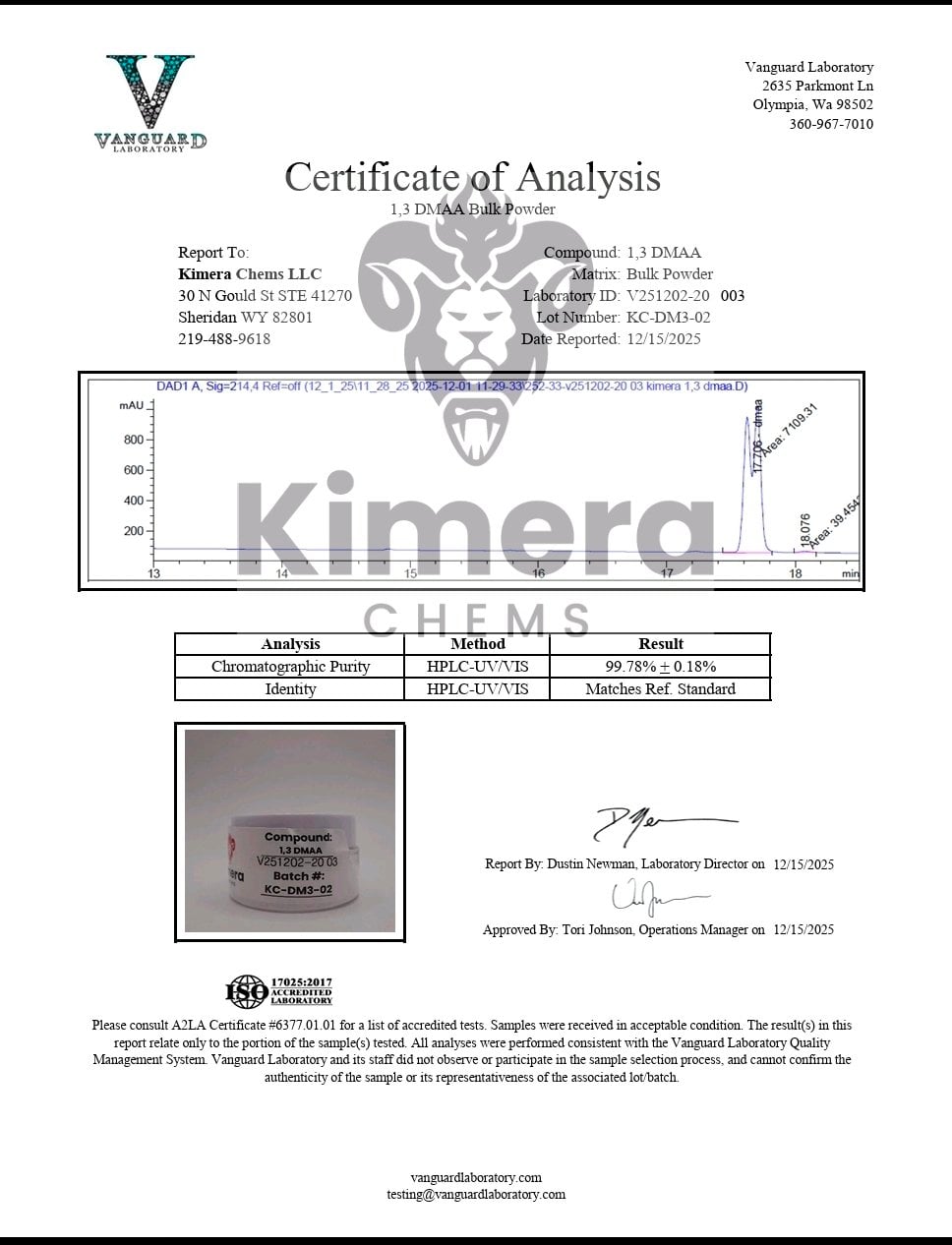
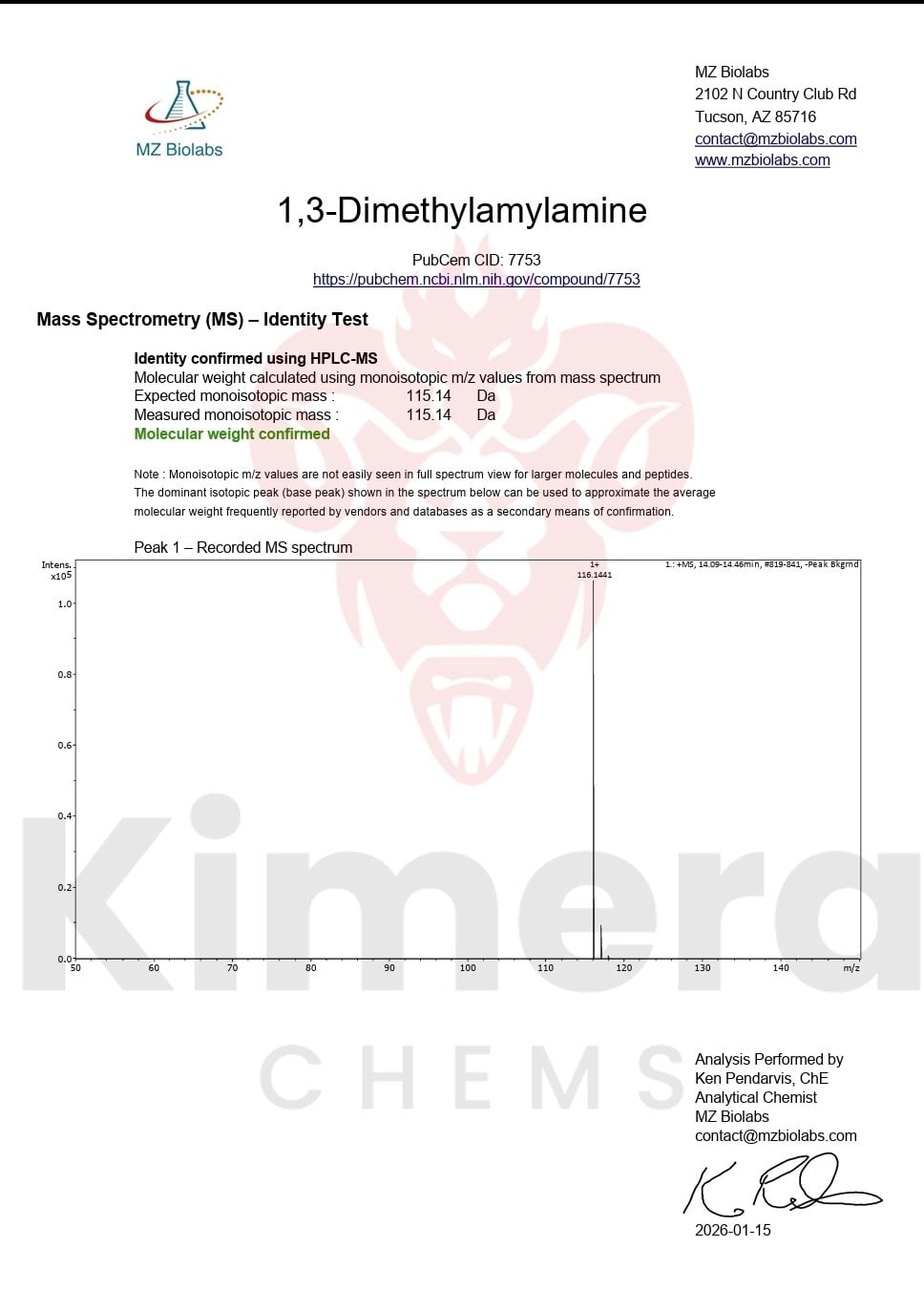
Lot Verification: Always consult the specific Lot Certificate of Analysis (COA) provided, as the physical state (liquid vs. crystalline salt form) may influence handling procedures.
-
Handling: Treat as a potent research chemical. Utilize standard laboratory safety practices, including appropriate PPE, and ensure adequate ventilation during preparation of solutions.
-
Container Integrity: Keep the container tightly sealed when not in use to prevent volatility and moisture ingress.
Research Use Disclaimer
Research Use Only Disclaimer: This product is developed and distributed strictly as a Research Use Only (RUO) laboratory reference chemical intended exclusively for non-clinical analytical and scientific investigation. It is not an FDA-approved drug, medical treatment, dietary supplement, or food ingredient, and is strictly prohibited for human or animal consumption. Kimera Chems supplies this high-purity research material solely to qualified institutions and professional investigators for authorized laboratory research.
| CAS Number | 105-41-9 |
| Other Names | 1,3-Dimethylpentylamine, 4-methylhexan-2-amine, 105-41-9, Methylhexaneamine, Forthane, 2-Amino-4- methylhexane, Forthan, 1,3-Dimethylamylamine, 2-Hexanamine, 4-methyl-, 4-Methyl-2-hexylamine, Methylhexanamine, Dimethylamylamine, NSC 1106, EINECS 203-296-1, BRN 1731697, AI3-16556, Geranamine, DMAA [Dietary Supplement], HSDB 8164, Pentylamine,3-dimethyl-, AC1L1PH3, AC1Q2S8H, 4-04-00-00747 (Beilstein Handbook Reference), SCHEMBL243596, 1,3-DIMETHYLPENTANAMINE, CTK4A3829, Methylhexanamine hydrochloride, W-108787, FT-0082691 |
| IUPAC Name | 4-methylhexan-2-amine; hydrochloride |
| Molecular Formula | C7H18ClN |
| Molecular Weight | 151.68 g/mol |
| Liquid Concentration And Solution | 100mg/ml. Deionized water, ethanol, PS80 |
Product FAQs
What is 1,3 DMAA supplied for?
This material is supplied strictly for controlled, non-clinical laboratory and analytical research. It is not intended for human or animal consumption.
Which formats are available for 1,3 DMAA?
The current listing shows these options: 5-grams-powder, liquid-30ml-100mg-per-ml-3g. Availability can change, so confirm the selector above before ordering.
Where can I review product documentation?
Where available, batch documentation can be reviewed in the Certificate of Analysis library before ordering.
Research Documentation Guides
Review these supporting analytical guides before evaluating this material for a controlled research protocol:
Related products

Analytical Reagents

Analytical Reagents


Analytical Reagents


Analytical Reagents


Analytical Reagents
Analytical Reagents


Analytical Reagents


Analytical Reagents