

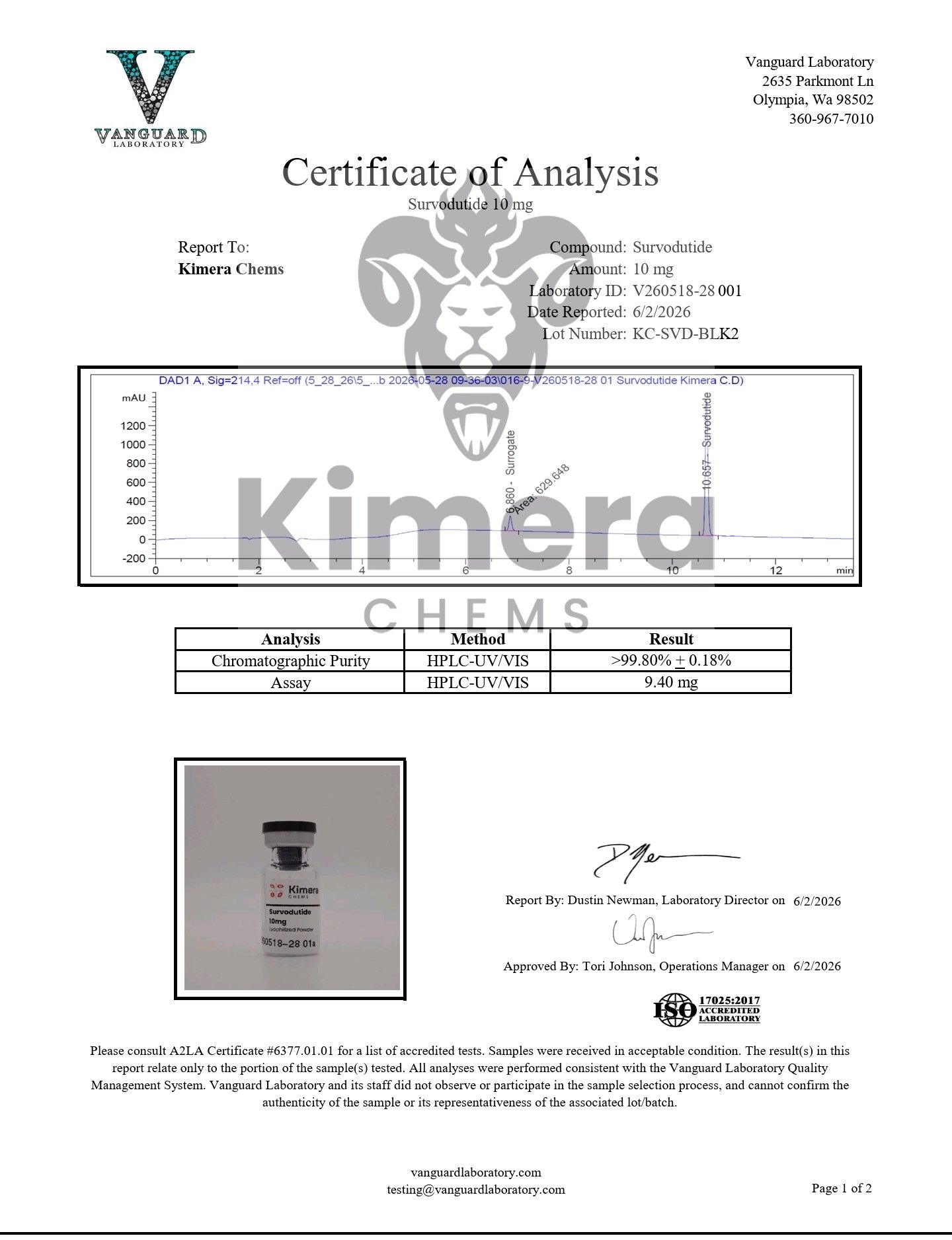

Survodutide

$89.99
Kimerachems Survodutide for sale. Intended for controlled laboratory and analytical research only.
Review available formats, product specifications and batch documentation before ordering. Not for human consumption.
1000 in stock
Kimerachems Survodutide for sale. This material is supplied exclusively for controlled laboratory and analytical research. Review available formats, technical specifications and batch documentation before ordering. Not for human consumption.
Survodutide (BI 456906) Research Standard
Survodutide (BI 456906) is a synthetic dual agonist peptide targeting both the glucagon-like peptide-1 receptor (GLP-1R) and the glucagon receptor (GCGR). By engaging these two distinct yet complementary signaling pathways, Survodutide offers a multifaceted approach to studying metabolic control. In laboratory and analytical research, it serves as a critical reference tool for investigating the synergistic effects of multi-incretin pathway modulation on appetite regulation, energy expenditure, and lipid utilization.
Technical Specifications
| Property | Specification |
| Product Name | Survodutide (BI 456906) |
| CAS Number | 2805997-46-8 |
| Chemical Formula | $C_{198}H_{308}N_{52}O_{60}$ |
| Molecular Weight | ~4,200 g/mol |
| Chemical Class | Synthetic dual GLP-1/GCGR agonist peptide |
| Physical Appearance | White to off-white lyophilized peptide |
| Solubility | Water and buffered aqueous solutions |
Mechanism of Action & Research Context
Survodutide is designed to mimic the integrated signaling of metabolic hormones, focusing on the interplay between satiety and energy expenditure.
-
GLP-1 Receptor Agonism: Interaction with GLP-1R is investigated for its role in modulating central appetite regulation, satiety signaling, and the support of glucose-dependent insulin pathways.
-
Glucagon Receptor Agonism: Simultaneously, GCGR activation is probed for its specific contributions to increasing energy expenditure, enhancing lipid utilization, and refining hepatic metabolic signaling.
-
Dual-Agonist Synergy: The laboratory research significance of Survodutide lies in the potential synergy between these two pathways. This provides a mechanism to study metabolic outcomes that are distinct from those observed in models utilizing single-pathway incretin analogs.
Research Applications
Survodutide is a specialized reagent essential for modern metabolic, endocrine, and pharmacological research.
Primary fields of in vitro and translational laboratory investigation include:
-
Metabolic Control Pathways: Analyzing the dual activation of GLP-1R and GCGR and their downstream effects on metabolic homeostasis.
-
Energy Expenditure Research: Quantifying the increase in metabolic efficiency and lipid utilization in cellular models of obesity and metabolic syndrome.
-
Comparative Incretin Studies: Serving as a comparative benchmark to distinguish the effects of dual-agonism against GLP-1-only peptides.
-
Hepatic Metabolism: Probing the role of glucagon receptor signaling in hepatic lipid handling and glucose regulation.
Storage & Handling Guidelines
To maintain the chemical stability and experimental reliability of the peptide:
-
Storage Environment: Store the lyophilized powder in a dry, cool environment. Maintain at temperatures below 0°C (typically -20°C) for long-term stability.
-
Environmental Control: Protect strictly from direct light and moisture to prevent the degradation of the peptide sequence.
-
Reconstitution: Use sterile, buffered aqueous solutions for reconstitution. Aliquot the solution immediately to minimize freeze-thaw cycles.
-
Aseptic Technique: Utilize clean, sterile laboratory equipment in a controlled environment to ensure experimental accuracy and prevent enzymatic contamination.
Research Use Disclaimer
Research Use Only Disclaimer: This product is developed and distributed strictly as a Research Use Only (RUO) laboratory reference chemical intended exclusively for non-clinical analytical and scientific investigation. It is not an FDA-approved drug, medical treatment, dietary supplement, or food ingredient, and is strictly prohibited for human or animal consumption. Kimera Chems supplies this high-purity research material solely to qualified institutions and professional investigators for authorized laboratory research.
| CAS Number | 2805997-46-8 |
| Other Names | BI 456906; EX-A7878 |
| IUPAC Name | 18-[[4-[[2-[[(2R)-1-[[2-[[(2R)-1-[[2-[[2-[[(5R)-5-[[(2S,3S)-2-[[(2S)-2-[[(2S)-2-[[(2S)-6-amino-2-[[(2S)-2-[[(2S)-2-[[(2S)-2-[[(2S)-2-[[(2S)-2-[[(2S)-2-[[(2R)-2-[[(2S)-6-amino-2-[[(2S)-2-[[(2S)-2-[[(2S)-2-[[(2S)-2-[[(2S,3R)-2-[[(2S)-2-[[(2S,3R)-2-[[2-[[(2S)-5-amino-2-[[1-[[(2S)-2-amino-3-(1H-imidazol-4-yl)propanoyl]amino]cyclobutanecarbonyl]amino]-5-oxopentanoyl]amino]acetyl]amino]-3-hydroxybutanoyl]amino]-3-phenylpropanoyl]amino]-3-hydroxybutanoyl]amino]-3-hydroxypropanoyl]amino]-3-carboxypropanoyl]amino]-3-(4-hydroxyphenyl)propanoyl]amino]-3-hydroxypropanoyl]amino]hexanoyl]amino]-3-(4-hydroxyphenyl)propanoyl]amino]-4-methylpentanoyl]amino]-3-carboxypropanoyl]amino]-4-carboxybutanoyl]amino]-5-carbamimidamidopentanoyl]amino]propanoyl]amino]propanoyl]amino]hexanoyl]amino]-3-carboxypropanoyl]amino]-3-phenylpropanoyl]amino]-3-methylpentanoyl]amino]-6-[[(2R)-1-[[(2R)-1-[[(2R)-1-[[(2R)-1-[[(2R)-1-amino-1-oxopropan-2-yl]amino]-3-hydroxy-1-oxopropan-2-yl]amino]-4-carboxy-1-oxobutan-2-yl]amino]-4-methyl-1-oxopentan-2-yl]amino]-3-(1H-indol-3-yl)-1-oxopropan-2-yl]amino]-6-oxohexyl]amino]-2-oxoethyl]amino]-2-oxoethyl]amino]-3-hydroxy-1-oxopropan-2-yl]amino]-2-oxoethyl]amino]-3-hydroxy-1-oxopropan-2-yl]amino]-2-oxoethyl]amino]-1-carboxy-4-oxobutyl]amino]-18-oxooctadecanoic acid |
| Molecular Formula | C₁₉₈H₃₀₈N₅₂O₆₀ |
| Molecular Weight | 4231.692 g·mol−1 |
Product FAQs
What is Survodutide supplied for?
This material is supplied strictly for controlled, non-clinical laboratory and analytical research. It is not intended for human or animal consumption.
Which formats are available for Survodutide?
Available formats or options are shown in the product selector above. Current availability can change.
Where can I review product documentation?
Where available, batch documentation can be reviewed in the Certificate of Analysis library before ordering.
Research Documentation Guides
Review these supporting analytical guides before evaluating this material for a controlled research protocol:
Related products

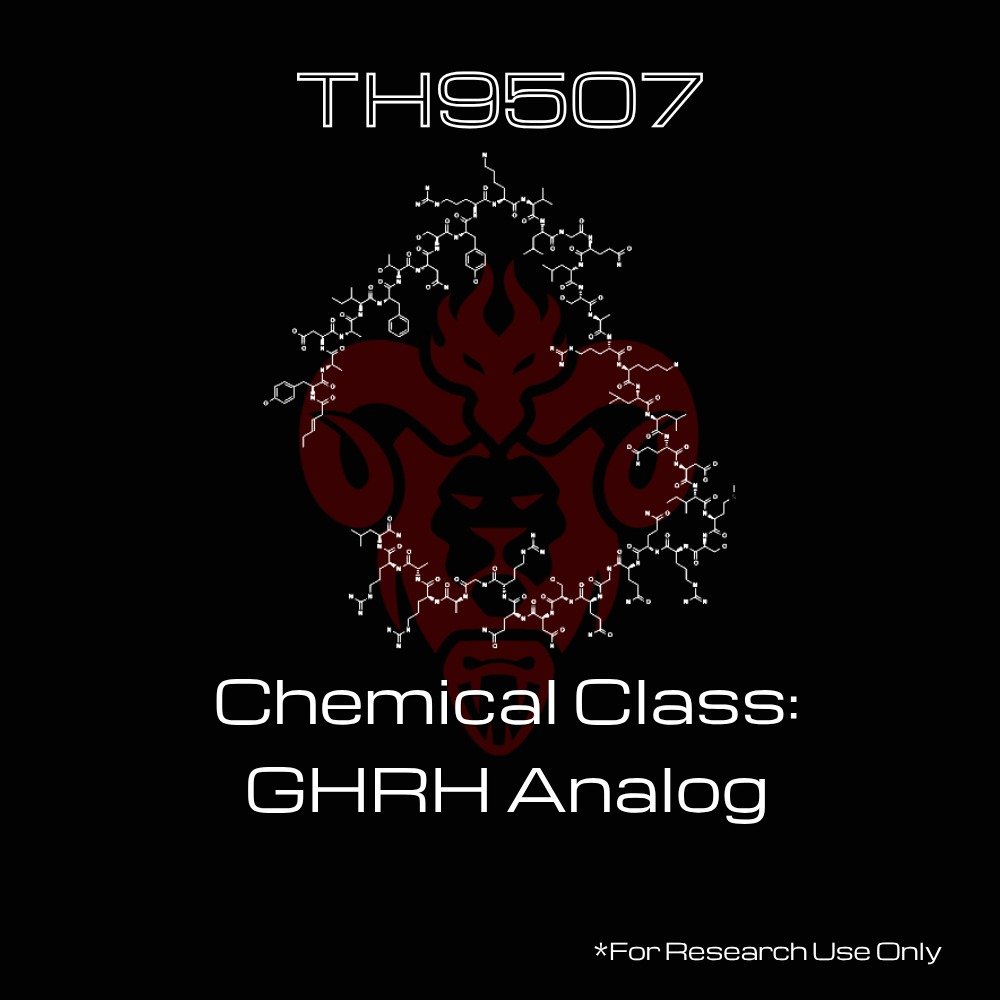
Peptides


Peptides

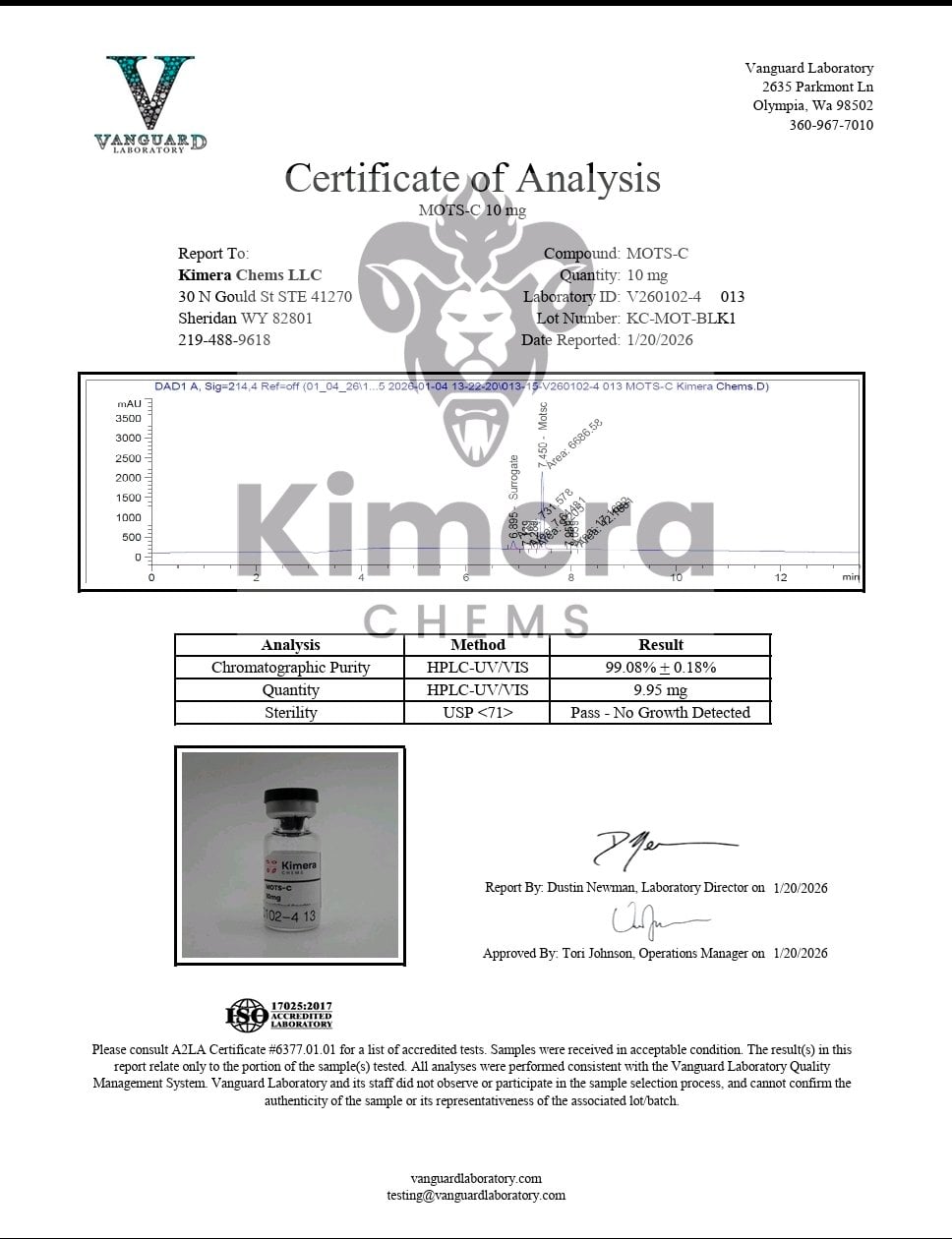
Peptides


Peptides


Peptides


Peptides

Peptides

Peptides