Tag Archives: Chromatography

HPLC Detection Wavelength Explained: UV Response, Sensitivity and Selectivity

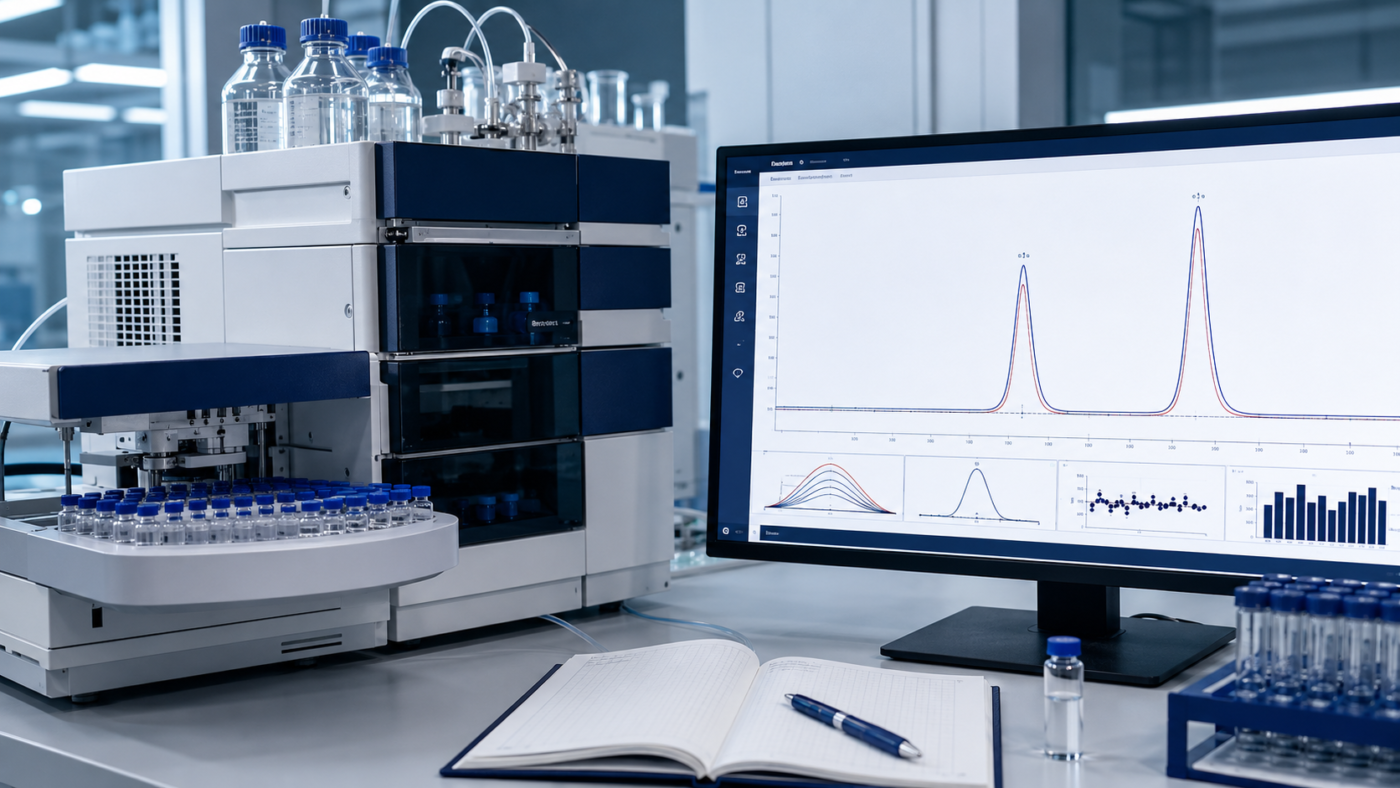
HPLC detection wavelength comparing UV response at different wavelengths

HPLC detection wavelength determines which UV-absorbing compounds produce measurable signals and how strongly they respond. Learn why chromatograms, impurity profiles and reported area percentages can change when a different wavelength is selected.
HPLC Peak Integration Explained: Baselines, Peak Areas and Manual Changes

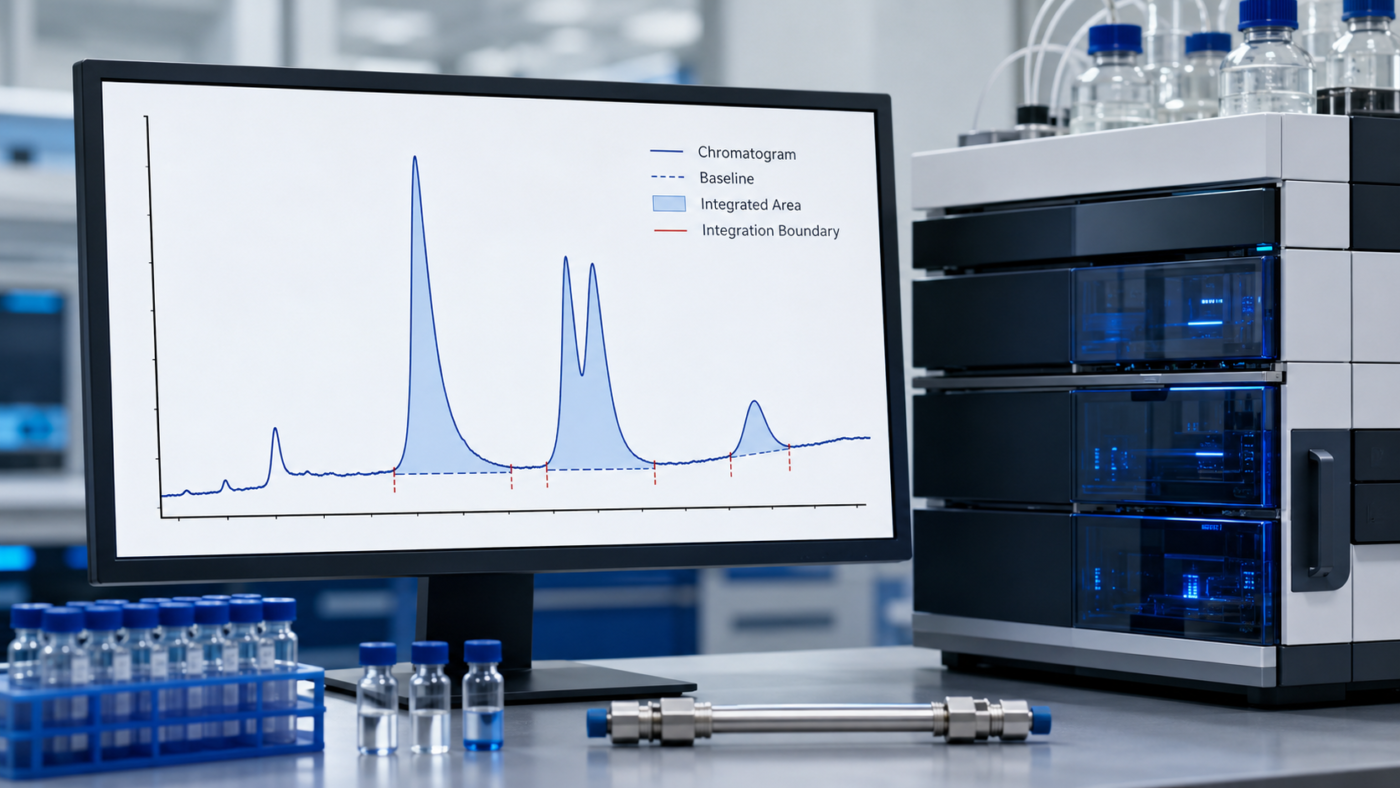
HPLC peak integration showing baseline selection and integrated peak areas

HPLC peak integration calculates chromatographic response between defined boundaries and a selected baseline. Learn how integration settings, baseline drift, overlapping peaks and manual changes can influence reported purity and assay results.

HPLC Peak Resolution Explained: Separation, Co-elution and Hidden Impurities

HPLC peak resolution comparing separated and co-eluting chromatographic peaks

HPLC peak resolution describes how effectively chromatographic components are separated. Learn how overlapping peaks and co-elution can affect identity, purity, integration and quantitative analytical results.

HPLC System Suitability Testing: Resolution, Tailing and Repeatability

HPLC system suitability testing for resolution tailing and repeatability

HPLC system suitability testing checks whether an instrument, column and analytical procedure are performing adequately before or during sample analysis. Learn how resolution, repeatability, tailing, retention and efficiency criteria are evaluated.

HPLC Purity Percentage Explained: What the Result Does—and Does Not—Prove

HPLC purity percentage shown on a laboratory chromatogram

An HPLC purity percentage describes the relative detector response assigned to a compound under a specific chromatographic method. Learn what this number can demonstrate, what can influence it, and which complementary tests are needed for stronger analytical confidence.