
04
Sep
Sep
HPLC LOD and LOQ describe different method-performance limits. Learn how detection and quantitation limits are estimated, why signal-to-noise ratios are not universal rules and what documentation should support reported values.

HPLC LOD and LOQ describe different method-performance limits. Learn how detection and quantitation limits are estimated, why signal-to-noise ratios are not universal rules and what documentation should support reported values.

Compare the principal HPLC detector types, including UV, PDA, fluorescence, refractive index and charged aerosol detection. Learn how analyte properties, mobile phases, sensitivity and analytical objectives determine which detector is appropriate.

HPLC detection wavelength determines which UV-absorbing compounds produce measurable signals and how strongly they respond. Learn why chromatograms, impurity profiles and reported area percentages can change when a different wavelength is selected.
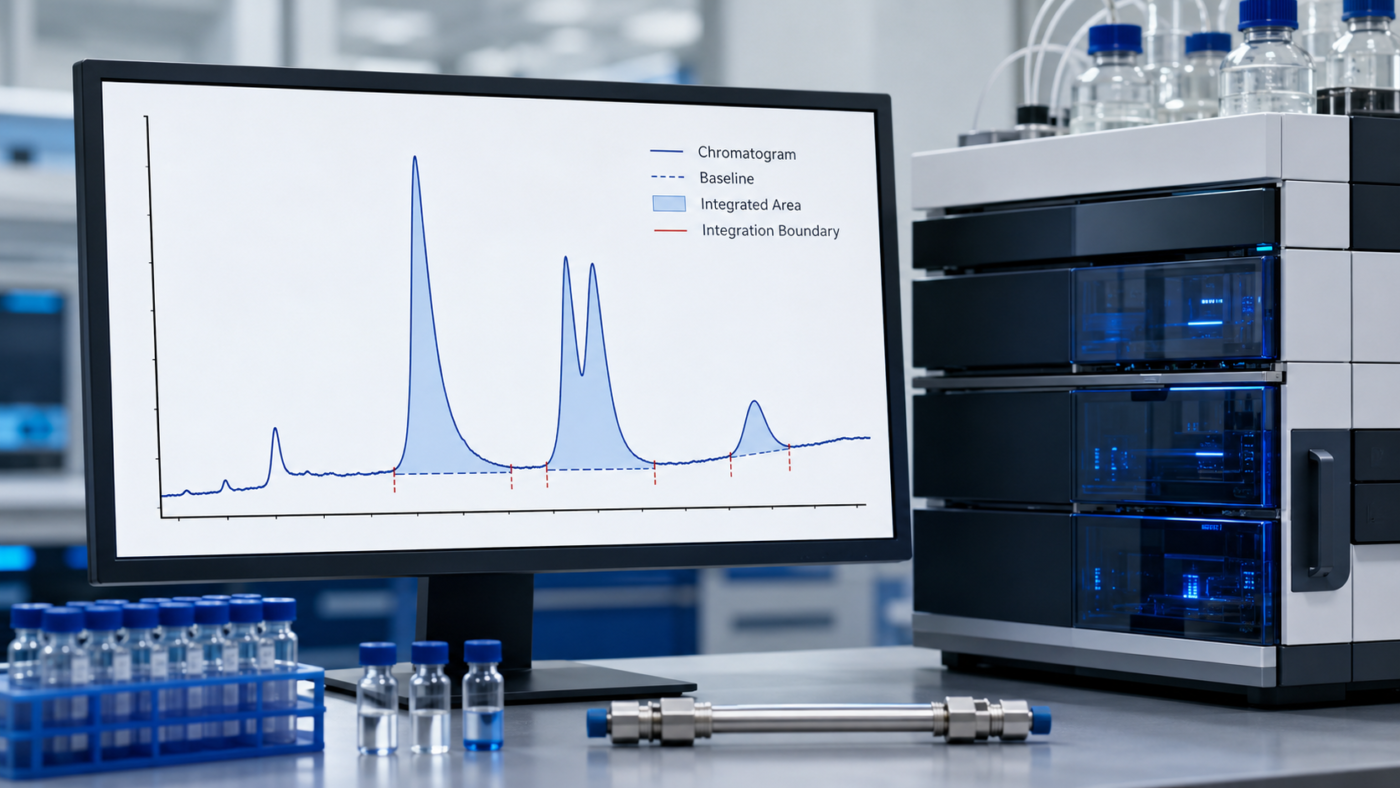
HPLC peak integration calculates chromatographic response between defined boundaries and a selected baseline. Learn how integration settings, baseline drift, overlapping peaks and manual changes can influence reported purity and assay results.

HPLC peak resolution describes how effectively chromatographic components are separated. Learn how overlapping peaks and co-elution can affect identity, purity, integration and quantitative analytical results.
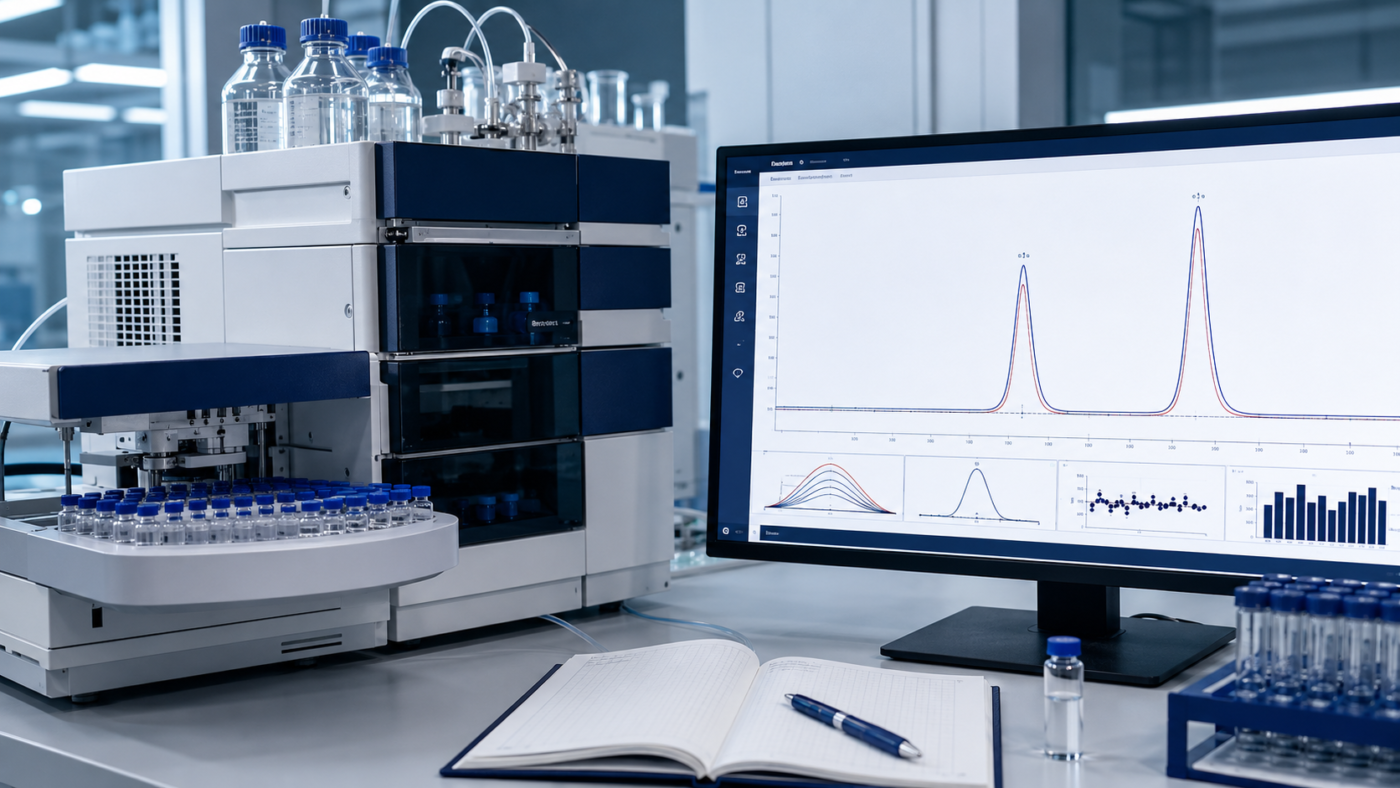
HPLC system suitability testing checks whether an instrument, column and analytical procedure are performing adequately before or during sample analysis. Learn how resolution, repeatability, tailing, retention and efficiency criteria are evaluated.

An HPLC calibration curve relates detector response to known analyte concentrations. Learn how laboratories prepare calibration standards, select a mathematical model and evaluate linearity, range, residuals and unknown samples.

Analytical reference standards support compound identification, instrument calibration and quantitative assay. Learn how reference materials are characterized, documented, qualified, stored and used to produce defensible laboratory results.

Quantitative NMR uses integrated spectral signals and a suitable reference to determine the amount of a defined compound. Learn how qNMR differs from routine structural NMR and HPLC area-purity analysis.

NMR solvent peaks and water signals can be mistaken for sample components or impurities. Learn how solvent identity, chemical shift, multiplicity and analytical conditions help researchers interpret these signals correctly.