Author Archives: Kimerachemss

2D NMR Spectroscopy Explained: How HSQC and HMBC Support Structure Identification

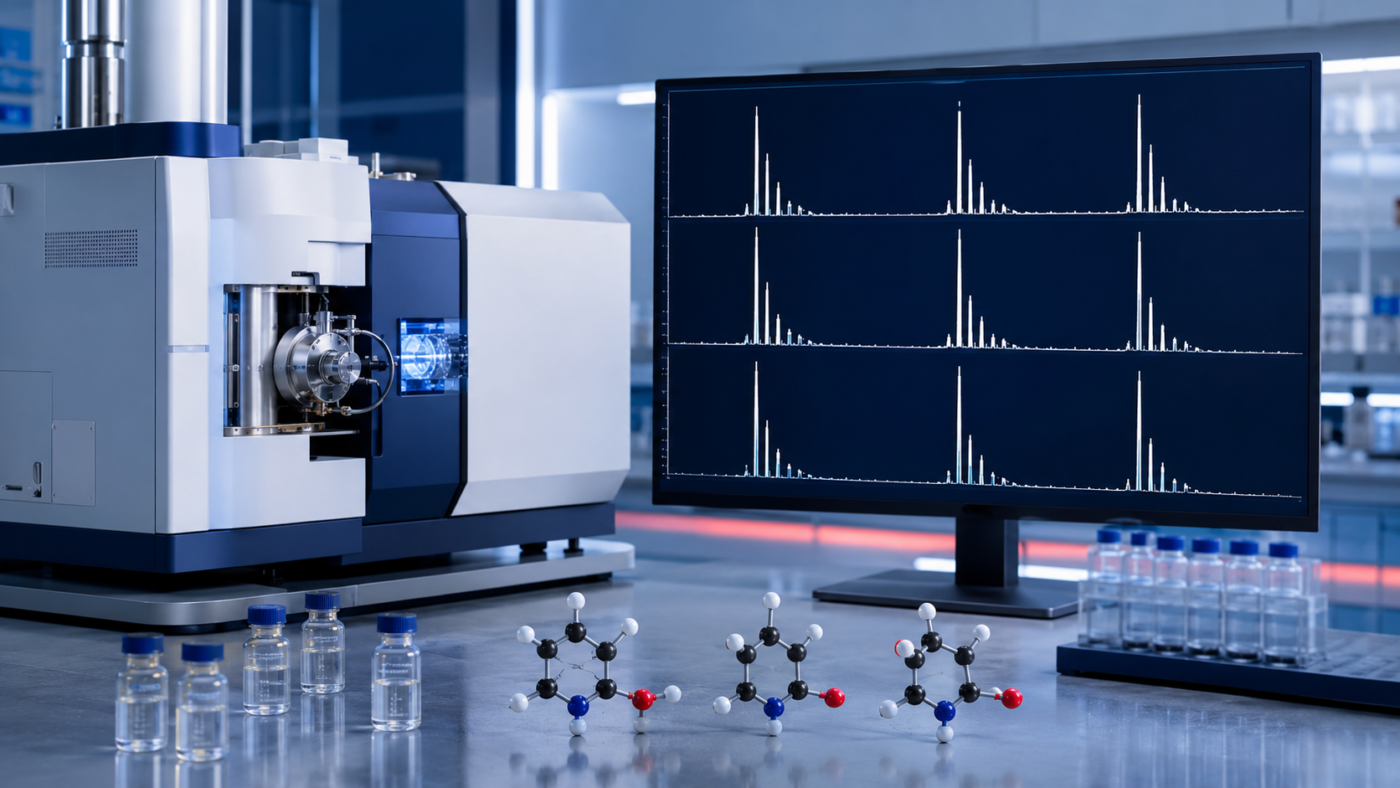
2D NMR spectroscopy showing HSQC and HMBC correlation spectra

Two-dimensional NMR spectroscopy helps researchers connect proton and carbon signals that may be difficult to assign from one-dimensional spectra alone. Learn how HSQC, HMBC and complementary experiments support molecular-structure identification.
Carbon-13 NMR Spectroscopy Explained: How to Interpret a ¹³C NMR Spectrum

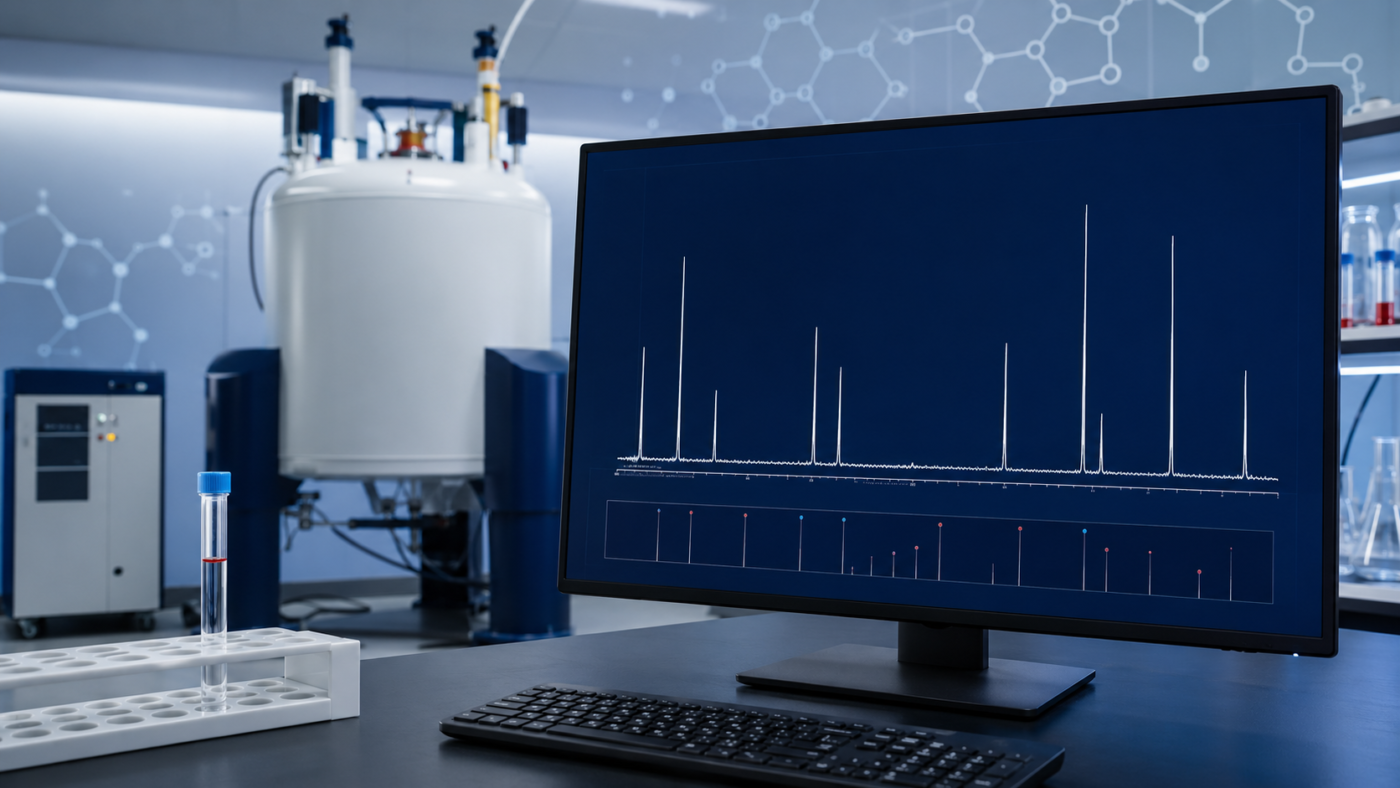
Carbon-13 NMR spectroscopy displayed on a ¹³C NMR spectrum

Carbon-13 NMR spectroscopy helps researchers evaluate distinct carbon environments within an organic compound. Learn how signal count, chemical shifts, broadband decoupling and DEPT experiments contribute to structural interpretation.

Proton NMR Chemical Shifts Explained: How to Read a ¹H NMR Spectrum

Proton NMR chemical shifts displayed on a ¹H NMR spectrum

Proton NMR chemical shifts show how hydrogen atoms respond to their molecular environments. Learn how chemical shift position, integration, multiplicity and coupling patterns provide complementary evidence for compound identification.

HPLC Purity Percentage Explained: What the Result Does—and Does Not—Prove

HPLC purity percentage shown on a laboratory chromatogram

An HPLC purity percentage describes the relative detector response assigned to a compound under a specific chromatographic method. Learn what this number can demonstrate, what can influence it, and which complementary tests are needed for stronger analytical confidence.